


Ranking The Stranglers’ 10 classic lineup albums

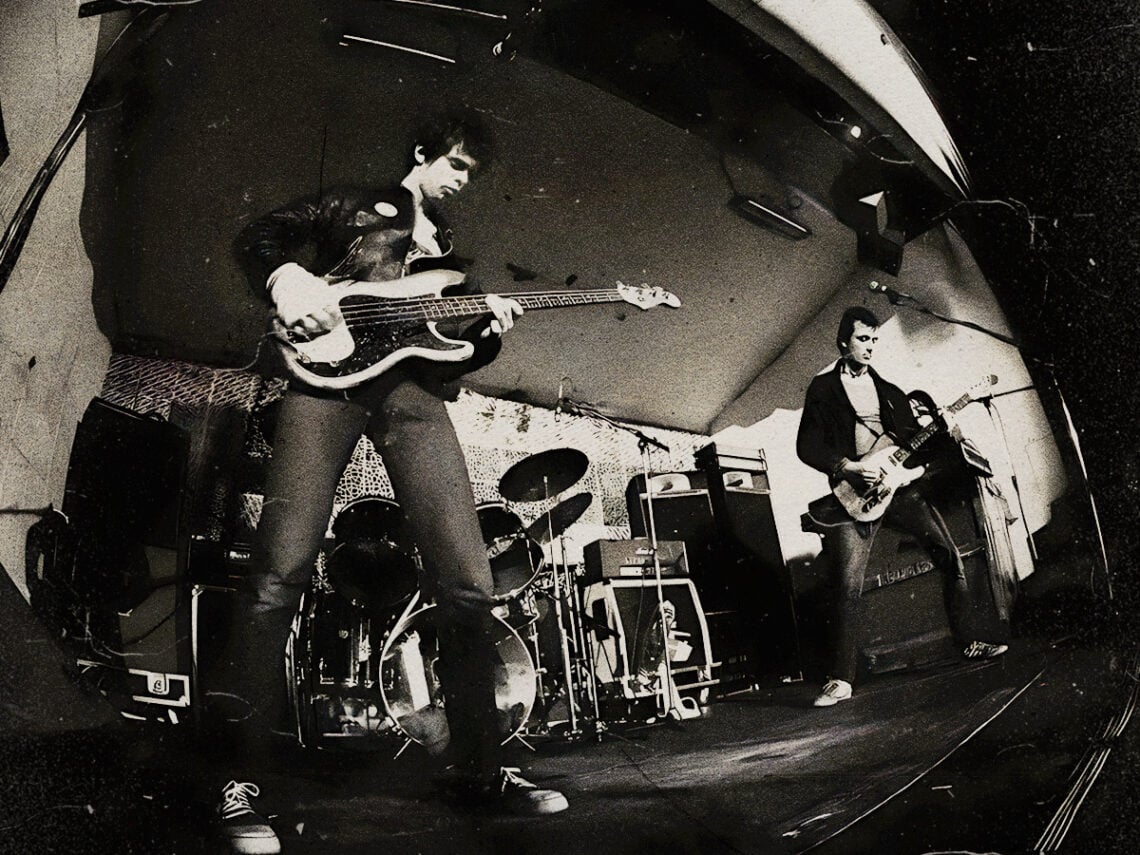
Though they broke out in 1977 at the break of the punk wave, The Stranglers were so much more than a punk band. Having formed in 1974, the group set out with a pub rock aesthetic foretelling of punk’s gritty arrogance thanks to the members’ pre-extant demeanours. With a punchy, provocative sound to match, the final ingredient was Dave Greenfield’s virtuosic prog-inspired keyboard contributions.
To all intents and purposes, The Stranglers can be regarded as one of few bands to have inspired the punk movement as much as they gleaned from it themselves. Indeed, over the late 1970s and ’80s, they took cues from contemporary bands and ultimately conformed to a synth-heavy sound customary to the times, but before their first album, they had a few famous fans.
As frontman Hugh Cornwell divulged in a recent interview with Classic Rock, The Clash and Sex Pistols, Britain’s most salient punk proponents, took a few leaves from The Stranglers’ book in the mid-70s. “Steve [Jones] and Paul [Cook] used to come to all the shows, asking questions about how we did things,” Cornwell said.
John Mellor, the aspiring singer then fronting pub rock band 101ers, was another early Stranglers fan. “He was in tears backstage after one gig,” Cornwell revealed. “He said, ‘I want a band like yours.’ The following week he changed his name to Joe Strummer and was in The Clash.”
Today, we’re celebrating this wildly influential band by ranking their ten classic lineup albums released before Cornwell’s departure in 1990. After a prolific beginning rooted in the punk years, The Stranglers evolved through several stylistic overhauls, ultimately losing touch with the identity that once set them apart from the madding crowd.
The Stranglers’ classic lineup albums ranked:
10. 10
At the bottom of the pile, at least from the Cornwell years, is 10. The album is by no means a lost cause, but it lacks the creative urgency of its nine preceding LPs. While it was rather sobering for longstanding fans to hear the once creatively versatile group resort to covering Question Mark and the Mysterians’ track ’96 Tears’, it ironically provided the most enjoyable moment musically.
In his 2004 autobiography, Multitude of Sins, Cornwell discussed the reasoning behind his departure from the band in August 1990. He felt the Stranglers had petered out creatively and offered several anecdotes to convey the increasingly fractious atmosphere between him and his bandmates, especially Burnel.
9. Dreamtime
Following 1984’s Aural Sculpture, The Stranglers entered a downward trajectory towards the 1990s. Before hitting a late nadir in the ’90s effort 10, the four-piece took a pitstop at Dreamtime in 1986. The collection of tracks by no means boast the inspired songwriting of yore, but a few kernels of enjoyment could still be salvaged.
In Cornwell’s soaring single ‘Always the Sun’, he gives an ’80s sheen to the superior darkness of ‘Golden Brown’. Understandably, the track remained a staple of setlists for years to come, but by no means saw the band at their best. Elsewhere, Burnel gives retains more of the band’s original DNA in the lead single ‘Nice in Nice’ while Cornwell’s ‘Big in America’ serves a jaunty party track fit for the bin when the hangover kicks in – these repetitive and uninventive lyrics are a sign of the band’s waning enthusiasm.
8. (The Gospel According to) the Meninblack
Arriving in 1981 as the band’s fifth studio record, (The Gospel According to) the Meninblack was The Stranglers’ most esoteric work; what it lacked in commercial appeal, it just about made up for in artistic authority. While it’s not an LP most fans clamour to respin, The Meninblack contains some enjoyably unconventional compositions that pose a sturdy pillar in the band’s oeuvre.
In a 2014 interview for the official Stranglers website, Burnel lamented the album as a misguided indulgence in the left field. “It was a bit of a low point when The Meninblack came out,” he said. “And it wasn’t regarded as the masterpiece that I thought it was.” However, in a 2022 interview with Denzil Watson, Cornwell defended the album, stating, “I think that we were all at the top of our game when we made ‘Men in Black’, and it comes through.”
7. Aural Sculpture
In November 1984, The Stranglers released their eighth studio album, Aural Sculpture. To some fans, this marked the peak of the group’s 1980s output because of its pleasing pop sensibilities and healthy range of instrumentation. Crucially, the album retained a degree of artistic merit beyond skin depth, so to speak.
The three singles, ‘Skin Deep’ ‘No Mercy’ and ‘Let Me Down Easy’, hold up well on the dance floor, at a dinner party or on the sofa on a Sunday afternoon. Much of the album was orchestrated by Cornwell and producer Laurie Latham. However, ‘Let Me Down Easy’ marked its most poignant moment, with Burnel’s dying father as its inspiration. “It wasn’t the best time for me with my Dad’s illness,” Burnel said of the song on Track by Track. “I wasn’t too complicit in the recording [of the album] and was a bit detached at the time.”
6. Feline
High on the success of ‘Golden Brown’ and ostensibly a little bit of heroin, The Stranglers regrouped to record their seventh studio album in 1982. Feline, released in January 1983, has been criticised for being rather unengaging as a whole. Indeed, the album isn’t stylistically eclectic nor enjoys bountiful beat drops or dynamic hooks; however, it can grow on the listener over time and holds competitive artistic vigour.
The album’s most memorable tracks are its first two singles, ‘European Female’ and ‘Midnight Summer Dream’. Their shimmering synth runs and classical guitar intrusions permeate much of the album, giving it a distinctive DNA that banishes all trace of the belligerent pub rock group they had once been.
5. The Raven
Released in 1979, The Raven marked a new chapter for The Stranglers. The first three albums introduced the group’s most raw sound in keeping with the contemporary punk movement and made way for a more refined work, both instrumentally and conceptually. Contrastingly, The Raven swells with overseas influences, reflecting the band’s recent mind-expanding travels. Much of the album itself was written in the Italian Province of Perugia.
The album artwork and its opening two tracks patently refer to Norse mythology, with ‘The Raven’ marking one of the highlights. Elsewhere, such cheery subjects as heroin addiction, the Iranian Revolution, and nuclear devices rear their heads before the timeless beauty of ‘Duchess’ steals the show.
4. No More Heroes
No More Heroes was released in April 1977, just five months after The Stranglers’ emphatic debut. With ‘Something Better Change’, ‘Bitching’, ‘Peasant in the Big Shitty’ and ‘School Mam’ taken from Rattus Norvegicus sessions, the album was less coherent but benefitted from a couple of alluring new songs.
The title track, released as the second single after ‘Something Better Change’, was the cherry on top in which Cornwell laments the loss of some of his heroes, including Leon Trotsky, Sancho Panza, Elmyr de Hory and William Shakespeare-o. Elsewhere, the band showcased their brazenness with ironic sexism and a sarcastic attack on racism, provocative jabs that left much to be explained.
3. Black and White
The Stranglers’ first two albums arrived in quick succession, with the second taking a fair deal of overspill from the first. Black and White, the third studio album, departed somewhat from both prior releases, observing the bridge between punk and post-punk in 1978. The captivating reel of tracks introduced a trickle of the overseas influences with which The Raven would be awash.
Black and White also saw The Stranglers welcome a more dignified and solemn nature. ‘Nice and Sleazy’ took much of the limelight thanks to a jagged guitar rhythm and Burnel’s punchy walk-down. Elsewhere on the record, the band welcomed ‘Tits’, one of their old pub pleasers, and Dionne Warwick’s ‘Walk On By’ to the studio for delectable makeovers.
2. La Folie
Following the more experimental pastures explored in The Gospel According To The Meninblack, The Stranglers returned to the studio to create La Folie. The 1981 release was a marked return to a chart-friendly sound yet still boasted a wealth of artistic flair. The 40-minute LP was co-produced by the band alongside engineer Steve Churchyard and was mixed by famed David Bowie collaborator Tony Visconti.
I would be a liar to say any song on the album comes close to usurping ‘Golden Brown’. The track was released as the album’s second single of three, between ‘Let Me Introduce You to the Family’ and the brooding French language title track. ‘Golden Brown’ is one of those rare songs in which every element neither oversteps nor toes the line. Elsewhere, the album boasts a curiously energetic spread.
1. Rattus Norvegicus (IV)
In 1977, The Stranglers introduced their unique pub rock sound to the wider market with their masterpiece debut album, Rattus Norvegicus. With Dave Greenfield’s melodic keys and JJ Burnel’s dynamic bass style, punk wasn’t quite the right title; however, the album arrived in the same year as debuts for The Damned, Sex Pistols and The Clash, and they were close enough sonically to surf the wave and benefit from the burgeoning craze.
“None of us were really punk. But it was an opportunity. Who cares what they call us? This is our chance to get in through the door,” Cornwell admitted in a recent interview with Classic Rock. Adding: “The necessity of adopting a pose appealed to our provocative nature.”
Rattus Norvegicus is perhaps best known today for ‘Peaches’, its second single fraught with innuendo, which soared to number eight on the UK Singles Chart thanks to Burnel’s distinctive bass hook. Elsewhere on the album, ‘Sometimes’, ‘Hanging Around’, ‘(Get A) Grip (On Yourself)’ and ‘Down in the Sewer’ framed the picture to buoy the album to number four on the UK Albums Chart.
