


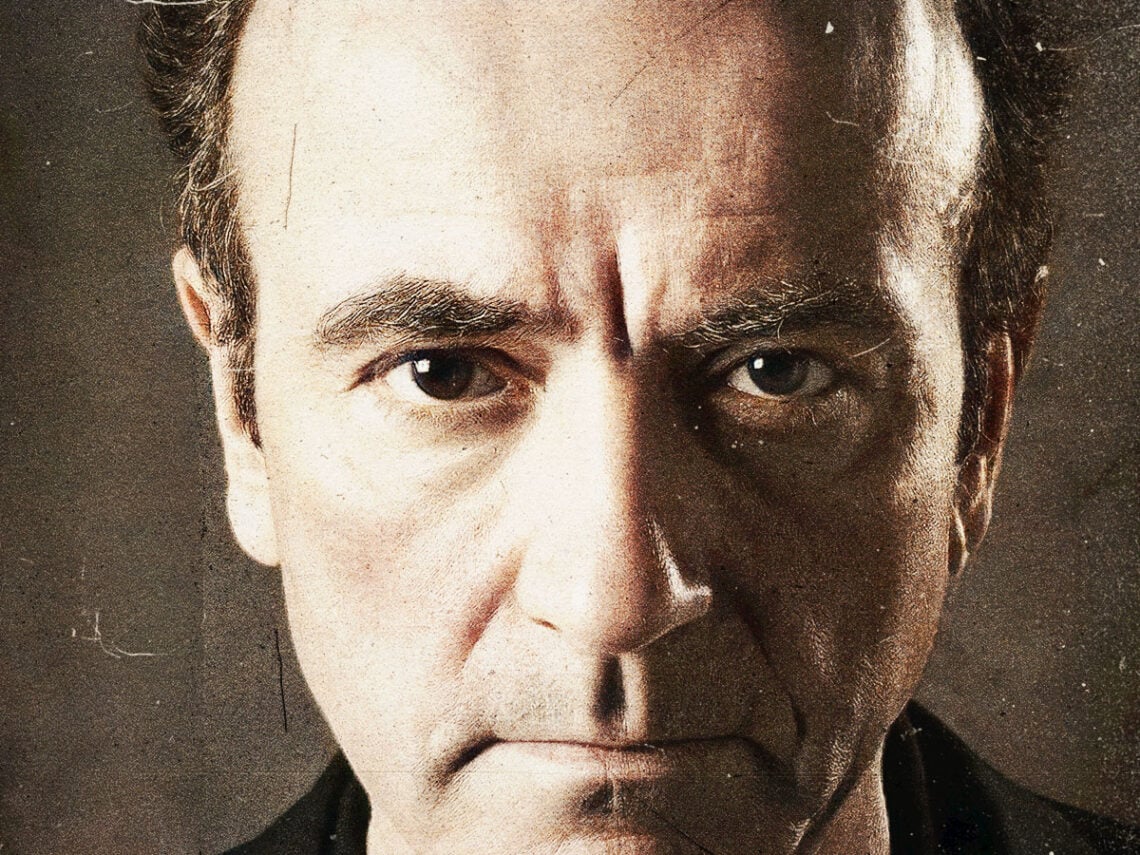
Hugh Cornwell on The Stranglers’ most controversial album: “We got away with murder”

Although they happened to thrive at the height of punk mania, The Stranglers were never entirely aligned with the movement. While Johnny Rotten and Sid Vicious slammed out punchy, simplistic anthems for doomed youth, The Stranglers spoke to a much wider audience.
When their masterpiece debut album, Rattus Norvegicus, arrived in April 1977, drummer Jet Black was closing in on his 40th birthday, while keyboardist Dave Greenfield had just turned 28, with frontman Hugh Cornwell hot on his heels. Naturally, singing exclusively to the youthful audience of Sex Pistols and The Clash would have seemed somewhat contrived, but that didn’t stop The Stranglers from surfing the punk wave.
“None of us were really punk. But it was an opportunity. Who cares what they call us? This is our chance to get in through the door,” Cornwell admitted in a recent interview with Classic Rock. Adding, “The necessity of adopting a pose appealed to our provocative nature.”
Indeed, The Stranglers dipped their oars in punky waters, but when they set out in 1974, their sound was more akin to prog-rock, falling short at the feet of pub rock, owing to their natural habitat. Jean-Jacques ‘JJ’ Burnel, a classically trained guitarist, was ushered into the group by Cornwell, a biochemistry graduate, who allegedly got him hammered one night and asked him to join the band as a bassist.
In the other half of the band, we had a moustachioed, Meerschaum pipesmoking piano tuner with a penchant for prog. Meanwhile, supporting Burnel in the rhythm section was a man who had once been a consummate jazz musician but fell victim to capitalism to run a fleet of ice cream vans. Fortunately, Black was able to quit his day job when The Stranglers started pumping out top-ten singles.
It could be argued that, with regard to punk, The Stranglers were the real deal and Sex Pistols the imposters. Rotten and Vicious were garbed in carefully devised rags by Vivienne Westwood and Malcolm McLaren, while The Stranglers just happened to wear “prison clothes,” as Cornwell described them.
“We definitely weren’t like the others,” Cornwell added. “We didn’t dress up.”
Sonically, The Stranglers held strands of punk DNA in Burnel’s bold, aggressive basslines and Cornwell’s equally jagged rhythm style. Still, something more immersive had arrived in the virtuosic solo breaks and Greenfield’s keys. Meanwhile, the provocative lyrics that had long been their bread and butter just happened to ripen in the punk era they embraced.
It would seem that bands like The Clash and Sex Pistols learned a thing or two from this bunch of pub-rocker misfits in their formative months. “Steve [Jones] and Paul [Cook] used to come to all the shows, asking questions about how we did things,” Cornwell told Classic Rock.
John Mellor, an aspiring singer of the pub rock band 101ers, was another early Stranglers fan. “He was in tears backstage after one gig. He said, ‘I want a band like yours.’ The following week he changed his name to Joe Strummer and was in The Clash,” Cornwell recalled.
The Rattus Norvegicus single ‘Peaches’ helped buoy The Stranglers to national acclaim and became their first top-ten hit. Cornwell delivered the highly suggestive lyrics with a considered sneer that secured its ongoing success with a ban from the BBC to boot. The broadcasting giant, who cited “coarse language and innuendo,” inadvertently fuelled the punk fire.
“People would go: ‘I’m not sure about the lyrics to ‘Peaches’. A bit sexist.’ The ones who said that had no sense of humour,” Cornwell commented.
Rattus Norvegicus was undoubtedly a trove of questionable content, but the truest slice of censor-baiting vinyl arrived by the name No More Heroes in September 1977. “It was like we discovered we had this ability, and we were using it. ‘Oh, we can wind people up. Great. Well, let’s wind them up a bit more,’” Cornwell recalled of the band’s attitude heading into their second LP.
Addressing the express delivery of No More Heroes, Cornwell revealed that some of the tracks were leftovers from the debut. “‘Something Better Change’ was left over from the first album, as were some of the others,” he said. “It helped having songs that were hanging over from Rattus, they felt just as good. Add a few more and then suddenly, hey presto, you’ve got the second album.”
The most famous song on the album was its title track, ‘No More Heroes’. Cornwell recalled writing it as one of the final additions to the record. “It was a very poignant summer,” Cornwell remembered. “I wrote it the same week Elvis and then a few days later, Groucho Marx died. They were there my whole life, pillars of my cultural upbringing. Both struck down. It was like President Kennedy had been shot. Groucho’s gone, fuck. Elvis is gone, fuck. In the same week, it was stunning.”
Throughout the song, Cornwell sings of a reel of heroes, including Leon Trotsky, Sancho Panza, Elmyr de Hory and William Shakespeare-o. “I was a big fan,” Cornwell said of Trotsky. “The amazing thing about Trotsky is that the Revolutionary Council needed someone to run the Red Army, but no one wanted to do it. Trotsky said: ‘Well, if no one else wants to, I could do it.’ They asked what military training he’d had, and he said Boy Scout. But he came in, and he did a remarkable job of training that army.”
One of the album’s most controversial and provocative moments arrived with the very first track, ‘I Feel Like a Wog’. Of course, any song with such a word in the lyrics, let alone the title, would call for a timely cancelling in the modern day, but Cornwell defends the “misunderstood” lyrics: “I feel like a wog people giving me the eyes, but I was born here just like y-y-you…”
“The word was everywhere in those days – Westernised Oriental Gentleman,” Cornwell outlined. “It was like a swear word. I was using it for shock effect, but it was to put across a feeling. A lot of people obviously misunderstood it. But a couple of black guys came back after one show and said: ‘We get it.’ That made me feel good.”
Elsewhere in the album, however, ‘Bring on the Nubiles’ housed the lyrics, “There’s plenty to explore, I’ve got to lick your little puss, and nail you to the floor/Bring on the nubiles… lemme lemme fuck ya fuck ya.” Cornwell was less equipped to defend such content from a modern perspective. “We definitely couldn’t get away with that now,” he admitted.
“What a laugh,” he added. “If anything’s going to wind people up, this is going to. And it was entertaining for us, fun and really harmless. People might say: ‘How can you say that’s harmless?’ But we weren’t trying to upset people. We were in the sweet shop and we were helping ourselves. We’d realised that we could upset people, so let’s go to town, let’s really upset them.” After all, punk wasn’t an era synonymous with sunshine or flowers.
“It was great. It was fabulous,” Cornwell concluded on the album. “We got away with murder.”
Listen to The Stranglers’ provocative No More Heroes track ‘Bring on the Nubiles’ below.
