


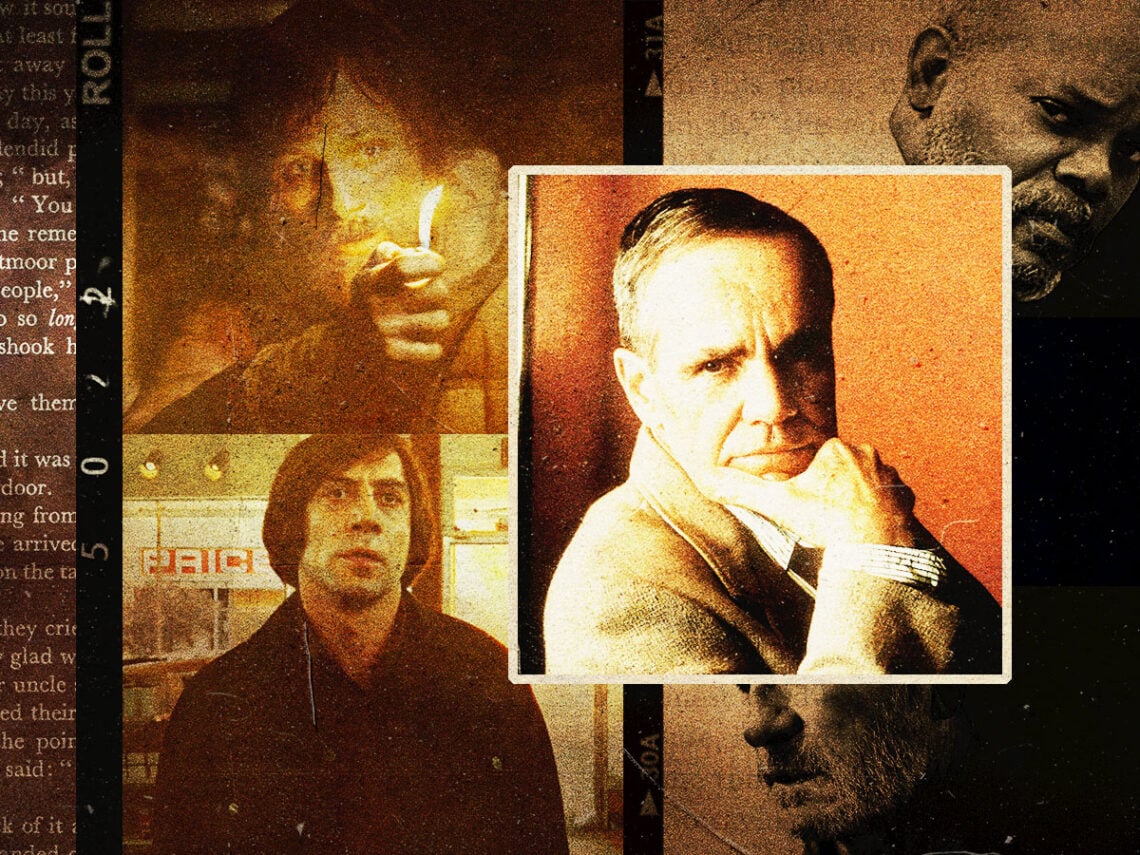
Ranking every Cormac McCarthy movie adaptation

Following his recent death, it is impossible not to reflect on the profound and seismic impact of author Cormac McCarthy on American literature. His contributions as a writer have spanned 58 years and given us 12 novels, two plays, two produced screenplays and an essay titled The Kekulé Problem, which probed the very origin of language itself.
Deeply fascinated by his own country, McCarthy’s works revised American history, explored American geography and interrogated the various American myths, dreams and nightmares that lay entrenched in the land and in the collective consciousness of its people.
Raised in Tennessee, the writer drew from the rich well of Southern writers like Mark Twain and William Faulkner whilst forging a writing style that is arguably more distinct and unique than any other writer of the last two centuries. From his disregard for standard punctuation and speech marks to his preference for “simple, declarative statements”, McCarthy’s novels demonstrate an aptitude for language unlike any other.
McCarthy dealt with the pessimistic and the holy, armed with exquisitely stark prose in one hand and an instinct for compelling storytelling in the other. He traversed a dangerous and cerebral landscape of blood, sin, and nature and surveyed the fraught relationship between Man and God. The scope of his imagination led us from river shacks in 1950s Knoxville back to the charred and blook-soaked plains of the Old West. Mexico, Texas and the Appalachian Mountains were rendered in crisply vivid prose that would transport the reader while leaving plenty for the imagination.
With such an unrivalled capacity for evocative storytelling, it’s no surprise that many of McCarthy’s works have been adapted for the big screen. While Blood Meridian remains untouched by Hollywood producers, despite being often described as an epic “wide-screen” parable, a handful of filmmakers have tried their hand with varying success. In celebration of the late author’s work, here is a ranking of the film adaptations of McCarthy’s books from worst to best.
Every Cormac McCarthy movie adaptation ranked:
5. Child of God (James Franco, 2013)
Actor James Franco has made no secret of his love for McCarthy. In 2011, the actor/director shot roughly half an hour of test footage for an adaptation of Blood Meridian. McCarthy fans, and general fans of good cinema, will be thankful that this never saw the light of day based on the eventual adaptation Franco would turn in two years later.
His adaptation of McCarthy’s third novel more or less follows the plot of the book as best as it can; the execution and delivery, however, are uninspired, unoriginal and wholly devoid of any artistic merit. Depicting the life of a violent, antisocial and criminal outcast in 1950s Tennessee, Child of God follows the descent of Lester Ballard into depravity and insanity. While having at least the good grace to cast another actor in the lead role, Franco still fails to mine the rich source material for an engaging way to tell the story, and the result lacks any cinematic value whatsoever.
4. All The Pretty Horses (Billy Bob Thornton, 2000)
Probably one of the biggest mistakes with this adaptation, and a mistake that will no doubt be made with the eventual Blood Meridian film, is to cast adults in the roles of children. This happens throughout cinema, but with McCarthy, it is particularly pertinent; he makes his main characters children as a deliberate challenge to the reader and as a comment on the loss of innocence.
Billy Bob Thornton’s film of All The Pretty Horses casts Matt Damon, then aged 30, as the 15-year-old John Grady Cole, a horse wrangler who sets off with his friend in search of adventure in Mexico. Their journey pits them against corrupt police and a brutal prison system whilst also providing an opportunity for Cole to experience first love and cement his passion for and knowledge of horses. The film is framed as a romantic period piece. While Thornton extracts some genuinely good performances, the sickly sweet taint of Hollywood interference ultimately mars what could have been a great adaptation.
3. The Sunset Limited (Tommy Lee Jones, 2011)
Based on McCarthy’s 2006 play, Tommy Lee Jones directs and co-stars in this powerful, if not slightly clumsy, two-hander about the dynamics between a white man and a Black man, literally named White and Black. Not one to fear the exploration of race relations, McCarthy has delved into these themes in his past books but never before made it the driving force of the narrative.
Perhaps the weakest of his works, The Sunset Limited is nevertheless an ambitious and admirable parable about two men from different cultures representing completely different sides of the philosophical coin, pondering the nature of life, death and God. Under Jones’ direction, he and co-star Samuel L. Jackson deliver a compelling dialogue that manages to wade into existential territory whilst never coming completely untethered from the real-life, high stakes of a potential suicide.
2. The Road (John Hillcoat, 2009)
When McCarthy released his post-apocalyptic odyssey in 2006, it perfectly married his style with the genre. Even bleaker, more sparse and harrowing than the darkest of his western books, The Road followed a father and son, called simply Man and Boy, as they travelled through a decimated America in a bid for survival.
John Hillcoat’s adaptation three years later proved that the director had the perfect cinematic sensibilities to lift the story from the page to the screen. Whilst closely following the narrative, Hillcoat interpreted key moments and scenes in the book, giving them a new visual atmosphere that elevated Man and Boy’s journey to new and terrifying heights. Relentless in its desolation, some moments in the film will still haunt viewers today, and Hillcoat’s deft handling of the material gives some hope for future adaptations.
1. No Country for Old Men (Joel & Ethan Coen, 2007)
When the Coen brothers applied their directorial skills to McCarthy’s 2005 novel, they not only gave us the best adaptation of his work ever but also what is arguably one of the greatest films of the 21st century. Wonderfully paced, astoundingly acted and gorgeously shot, No Country for Old Men is, for all intents and purposes, a perfect movie.
Like Hillcoat, it’s the brothers’ specific interpretation of the work that makes the film such a widely regarded masterpiece. From the casting of Xavier Bardem as the preternatural villain and the iconic choice of haircut given to him to their lack of score or music, which perfectly mirrors the nakedness of McCarthy’s writing, every single decision made by the directors about what to take from the novel and how to implement it is categorically genius. By making No Country for Old Men, the Coens respected McCarthy’s work like no other filmmaker has yet managed to do.
