


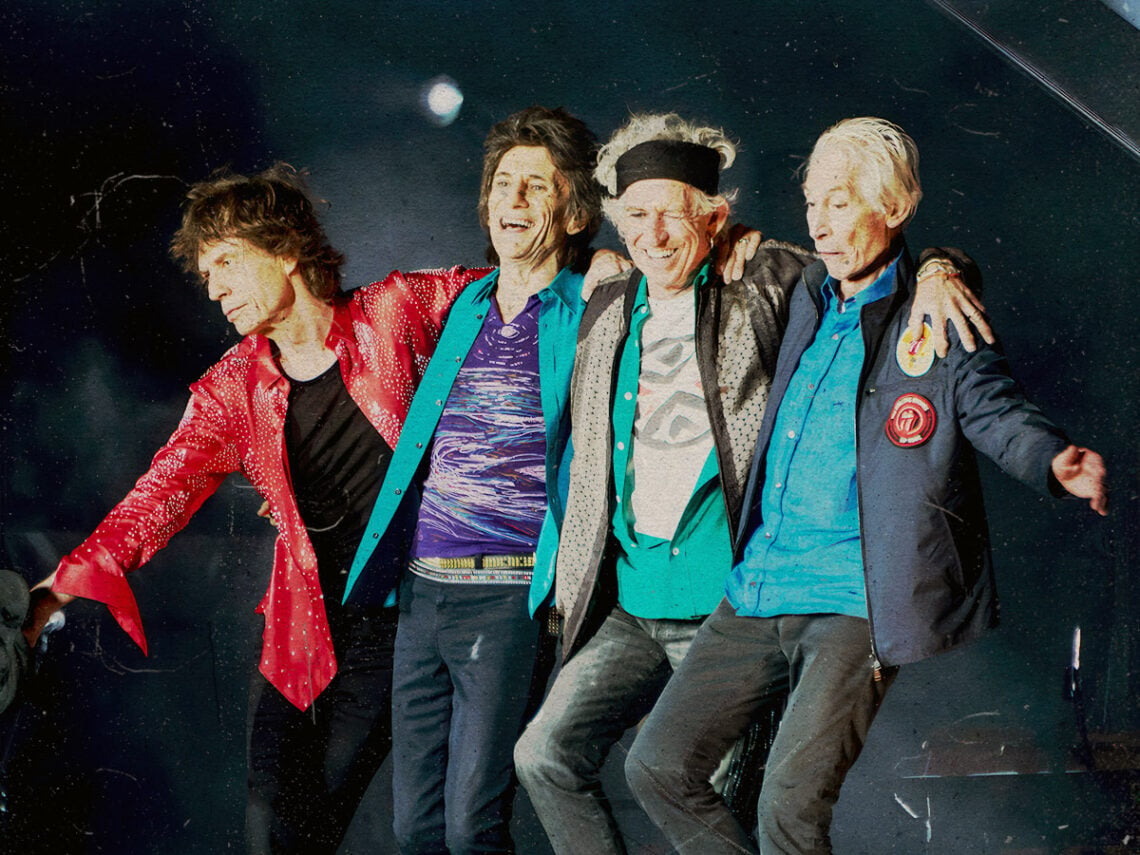
Ranking every Rolling Stones guitarist from worst to best

Being asked to join The Rolling Stones as a guitar player feels like being welcomed into rock and roll Valhalla. Many musicians come and go in the world of rock music, but playing so well to get Mick Jagger’s attention is something that no self-respecting rock star will forget for the rest of their lives. The Stones have already had a slew of guitar players enter their ranks, but there is a definite pecking order regarding where everyone fits.
Then again, every member of The Stones were usually good for what they did. There’s a reason why someone like Brian Jones wasn’t meant for the group the same way that Ronnie Wood was, but each of them seemed to bring a different kind of magic whenever they went into the studio, even if it wasn’t meant to last for very long.
This is more about what each guitar player added to The Stones. Outside of just being able to play, it’s about how well they could throw down live, what songwriting credits they have to their name, and how they were able to not only grow as a guitar player but also make the band sound so much better.
They might not have all been there throughout The Stones’ tenure, but each of them was responsible for keeping The Stones rolling for a few more years, no matter what it took. The core of every good Stones record was based on a good groove, but the key to any good guitar player is their ability to tear it up whenever they strap on a six-string.
Ranking the best Rolling Stones’ guitarists
5. Mick Jagger
What? Don’t look at me like that, it’s true. Throughout their time together, Jagger was known to pick up a guitar more than a few times and jam with the rest of the band, often just playing acoustic during their live sets. Although he was far better suited to strut his stuff like he does most of the time he’s onstage, that hasn’t stopped him from having his own voice on the guitar.
Compared to his rhythmic brother to his left at every Stones show, Jagger has a unique way of playing rhythm guitar, usually playing stuff slightly off the beaten track whenever he picks it up. There are even a handful of songs that Jagger helped write on guitar, whether that’s the odd riff here and there or finetuning songs like ‘Moonlight Mile’ from Sticky Fingers to become the iconic ballad we know today. Jagger might not be as proud of his guitar skills as he is of his pedigree as the most dynamic frontman in the world, but he’s still more likely to outplay the singers who use the guitar as a prop.
4. Ronnie Wood
Ahhh…the new boy. Well, that’s not being fair. As much as Ronnie Wood may be considered one of the last members to join The Stones, his time in the group has far outstretched any of his predecessors, being in the band for decades at a time at this point. Wood may be considered the least of the best in The Stones, but his ability to play off his mates is something that people tend to neglect whenever they see them play.
Sure, any guitarist playing with The Stones has their chops down pretty well, but Wood has had the ability to take the guitar into different realms whenever they play live, including adding a little bit of lighthearted humour to everything when they play. Most musicians with a gig in The Stones would know not to fuck around too much, but Wood understands the importance of offsetting Keith Richards and also when to have some fun.
3. Brian Jones
It feels like a crime to put someone of Brian Jones’s stature in the middle of the list. After all, he was the one who thought of the idea for the group in the first place, and there’s a good chance they wouldn’t exist were it not for his technical innovations. Once the band started to branch out into new territories, Jones fell apart far quicker than anyone could have predicted.
This is a shame because Jones may have been the closest to a musical genius The Stones ever had. Being equipped to play as many instruments as most of us have teeth, Jones could squeeze a tune out of almost anything, including playing sitar, dulcimer and pretty much whatever strange sound he found in the studio. Once Jagger and Richards started firing off each other exclusively, Jones’s depression caved in, ending up succumbing to drugs and dying under mysterious circumstances in his home. Jones wasn’t going to go the distance, but his leg work is felt every time The Stones comes out with a new record.
2. Mick Taylor
How do you replace someone like Brian Jones? He was one of the unofficial poster boys of The Stones, and any chance of finding someone else with that much musical talent felt like a pipe dream more than anything. Mick Taylor was up to the challenge, though, and once the band entered their classic period, he was one of the few people who could match them note-for-note whenever they jammed.
While he had a few co-writes to his name during his tenure, Taylor was at his best when he was laying down his own licks. Compared to the steady rhythm going up the middle on their elongated songs like ‘Monkey Man’ and ‘Midnight Rambler’, it was usually Taylor who kept everything interesting, including the massive solo on ‘Can’t You Hear Me Knockin’. Other artists may have been able to make The Stones sound huge, but no one sounded smoother gliding across the song.
1. Keith Richards
In the grand scheme of The Stones’ repertoire, Keith Richards has always felt confined to rhythm guitar. He may have played the odd lead part here and there, but when he goes down in history, he will be known as both the man who played the guitar right up the middle and his immortality status among his fellow rockers. Richards may have chosen rhythm as his primary focus, but bringing a groove to every one of The Stones’ songs is something that no one else has been able to capture.
Since the group’s inception started playing, Richards has been there through it all, becoming the undisputed king of making guitar riffs on tracks like ‘Satisfaction’ and ‘Street Fighting Man’. While it might not look like the flashiest thing in the world, the role Richards plays in every iteration of The Stones is both impossible to replicate and one of the most essential pieces of why they work. There are many capable guitarists who can play decent rhythm in The Stones, but if you took Richards out of the equation, you would be left with less than nothing.
