


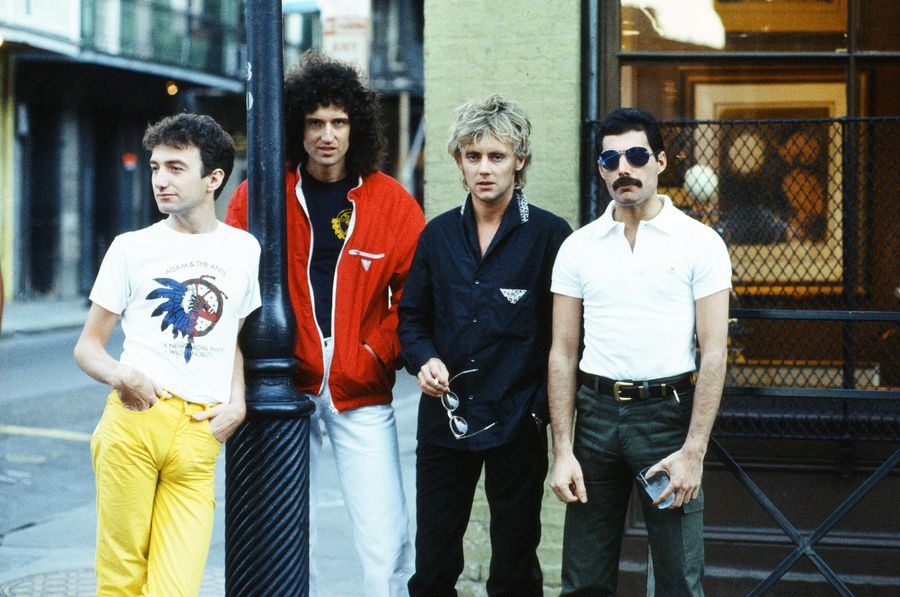
Ranking every Queen album from worst to best

Queen were one of the best bands of their generation. They were as anthemic as U2, as wacky as 10cc and as diverse as The Beatles. They released 15 albums of high quality, showing their development as artists, songwriters and musicians. They spent the 1970s, 1980s and 1990s (to a degree) finetuning their craft, which is why they were so impressive.
For the purposes of this list, we have neglected to include The Cosmos Rocks, the album Brian May and Roger Taylor wrote with Free’s Paul Rodgers. It shouldn’t have been released under the Queen moniker, and it’s hard to compare Rodgers’ voice to Freddie Mercury’s (the same could be said for Adam Lambert, who has fronted Queen since 2011).
The albums that were included featured songs from Freddie Mercury and John Deacon, who are no longer active with Queen. Mercury died in 1991, and Deacon retired from the band at the turn of the millennium. Anything done since has been admirable, but won’t make this list.
But what a list it is, showing 15 complete works that hold their head up in the Queen canon. Indeed, they only released one out and out dud of a record during their 20-year tenure- all in good time.
Ranking every Queen album from worst to best:
15. Jazz (1978)
If there was ever a justification for punk, Jazz was it. It’s the most overblown, over-produced and over-sexed album in the entire Queen canon, showing little of the band’s talents. If anyone shows humility, it’s John Deacon, who boasts the charmingly whimsical ‘In Only Seven Days’, a piano piece that shows the bassist bowled over by the gifts the world has offered him. He’s the only one showing gratitude, as the others take it upon themselves to critique the girth of their American fans (‘Fat Bottomed Girls’) or to lampoon the trappings an organised religion was founded on (‘Mustapha’).
The album is nauseatingly arrogant, so it’s no surprise that the majority of the band wound up distancing themselves from the finished results. It’s the closest thing the band had to a White Album, although few of the songs are worthy of a place on The Beatles’ opus. Mercifully, the sessions did produce ‘Don’t Stop Me Now’, the urgent, turbo-charged stomper that still holds a place on British radio.

14. Queen (1973)
Queen’s first album isn’t necessarily a bad one, but it’s deeply unfocused, and done with trepidation, as the band tip their toes into the waters of esoteric rock, but lack the courage to plunge themselves in completely. In that regard, Queen II is more of a makeover than a sequel, and whatever failings heard on the first album (and there are many) are wiped away because of the second work. ‘Keep Yourself Alive’ and ‘Liar’ are the highlights, but the album also closes on an instrumental version of ‘Seven Seas of Rhye’, which makes for an interesting curio next to the fleshed-out rocker.
Deacon doesn’t contribute to the record, Mercury’s songs are largely flimsy, and Taylor tries to emulate Led Zeppelin on ‘Modern Times Rock ‘n’Roll’, and fails. This leaves guitarist Brian May to anchor the album, and he does so fairly nicely, pivoting from the introspective wonders of ‘The Night Comes Down’, to the anthemic qualities that centre ‘Doin’ Alright’.

13. A Kind of Magic (1986)
By the 1980s, Queen had gotten into the lazy habit of basing whole albums around the jangly singles that would make their way into the setlist. Out of the trilogy of albums Queen churned out in an effort to absolve themselves from their actions on Hot Space, A Kind of Magic is the laziest and definitely the least interesting, embellishing the hits with a series of meandering vignettes that offer nothing of resonance or aphorism to the world.
It doesn’t help that the metal numbers – ‘Princes of The Universe’ and ‘Gimme The Prize’ – are awful, and May is strangely underutilised on the sickly ‘One Year of Love’ (which is likely due to a growing rift between him and songwriter John Deacon). More happily, the title track exudes invention, ‘Don’t Lose Your Head’ shows the vibrancy and the anthemic ‘Friends Will Be Friends’ is ram-shackled good fun. ‘Who Wants To Live Forever’ is the most successful duet in the Queen canon, as May and Mercury trade verses in their effort to reach self-forgiveness.

12. The Works (1984)
This was the first of the “singles, singles, singles, OK filler now” albums Queen released in the 1980s, and they can barely conceal their boredom either on the cover or on the tracklisting. When it’s good, it’s very, very good, and when it’s bad, it’s pretty dire. If you’re on the fence about it, I’d suggest buying a compilation album instead, because standouts ‘Radio Gaga’, ‘Hammer to Fall’ and ‘I Want To Break Free’ are almost certainly on there.
Ultimately, it ranks higher than A Kind of Magic on this list because the filler is so interesting, especially the jaunty ‘Man On The Prowl’, which features Fred Mandel playing the sparkling piano hooks. The album closes on the sincere, albeit derivative, ‘Is This The World We Created?’, which makes up for such dross as ‘Tear It Up’ and ‘Machines’. And thank God ‘Thank God It’s Christmas’ didn’t make the final listing- it’s bad enough to listen to that tune at Christmas!

11. The Miracle (1989)
Vocalist Freddie Mercury was making it known that he wasn’t going to tour in 1989. He probably knew about his AIDS diagnosis, but it’s unlikely that his bandmates did, who all seemed upset by the fact that the band weren’t hitting the road that year. This is more the pity because rockers ‘I Want It All’ and ‘Was It All Worth It?’ are written for the stage, heavy in chorus, the drums crashing like the force of a woodcutter tackling an obstinate tree.
If the album can boast a classic, it’s the title track, which shows the singer searching for the beauty that will make his departure from this mortal coil a more pleasant one. ‘Khashoggi’s Ship’ and ‘Breakthru’ show the band in the more bouncy territory, making it one of the last times they played in the name of fun, not art, and May’s guitar ricochets through the funky ‘Rain Must Fall’. That ‘Invisible Man’ track is still awful.

10. Flash Gordon (1980)
This one’s hard to rank, as it’s more of a studio experiment than an album, so we think it’s safe to put it in the top ten, precisely because it’s so vibrant and inventive, but won’t put it any higher, because that would raise eyebrows from some corners in the Queen fandom. May is credited as co-producer, and deservedly so because his guitar cuts through the synthesisers like a lightning bolt looking to strike down on an unlikely passerby. The band had succumbed to the wonders of the synthesiser and imbued the proceedings with a collection of sharply produced vignettes.
The album was recorded in conjunction with the film of the same name, and it might be the only feature that could match the band for bombast, colour and clout. The film made a star out of Timothy Dalton, who went on to become the fourth actor to play James Bond, but it also increased Brian Blessed’s profile, who is now something of a British national treasure.

9. Made In Heaven (1995)
If Queen could remove any album from their catalogue, it would likely be this one, on the proviso that they could have Freddie Mercury back. The singer only managed to record a small selection of vocals for a Queen project, before his AIDS grew too severe. His surviving bandmates pieced the album together, although it was arduous for the band, who were one comrade short. In his interview with Far Out, May recalled the arguments he and Taylor endured, as they sacrificed their autonomy for what turned out to be the final Queen album.
And what a final curtain it was too, showcasing Mercury’s innate sensitivity (‘It’s A Beautiful Day’) to the vibrato that soaked through the gospel-oriented ‘Let Me Live’. Best of all, the album boasted the thunderous title track, a tune that stands beside the twin efforts of ‘We Will Rock You’ and ‘We Are The Champions’, and ‘Mother Love’ gives fans a look at the singer in rock mode, recorded only months before his death.

8. A Day At The Races (1976)
Prog was getting hackneyed by 1976, and although Queen were never a progressive rock band as such, they realised it was time to tone back on the flourishes by the time they recorded their sixth album. Fittingly, the band closed out the more expressive chapter of their career with an impressive album that showed their maturity as songwriters, whether it was celebrating the instruments that captured their attention as teens (‘Drowse’), or applauding the Japanese fans that had brought them to this point of extraordinary success (‘Teo Torriate’).
Mercury was showing the greatest development as a writer, yearning for something in his life that money, fame and fortune could not bring him. Out of this pain came ‘Somebody to Love’, perhaps his most fondly remembered ballad, but the rich textures of ‘You Take My Breath Away’ are also noteworthy.

7. Innuendo (1991)
Touring was no longer an option by 1991, so the band decided to pool their resources into what was the final album released in Mercury’s lifetime. It includes some of the most complex vocals of his career, particularly on the pounding title track and hair-raising crescendo of ‘The Show Must Go On’. Elsewhere, Mercury discusses the pleasures of little nothings on the enjoyable ‘Delilah’, and then there’s the guitar-heavy ‘Headlong’, which features one of Taylor’s most commanding drum performances.
The sadness enters the work: ‘The Hitman’ emerges pitifully from the album wearing sadness for a disguise, while the lyrics to ‘I’m Going Slightly Mad’ showcase the torment every man was enduring at this unfortunate juncture in their lives. And then there’s ‘These Are The Days Of Our Lives’, which Taylor has sung in Mercury’s absence in the years since. Hankies are needed for this one.

6. The Game (1980)
This one shows hits with a capital ‘H’. This is the band’s Abacab album, as the prog giants abandon the trappings of 1970s symphonic rock for something more accessible and melody-driven. It was also the album where the two junior writers – Deacon and Taylor – were showing their importance, delivering some of the album’s more important tunes, such as ‘Rock It (Prime Jive)’ (which seems to pre-empt 1980s synth-rock) and ‘Another One Bites The Dust’ (still the band’s biggest hit in America).
May was singing from his heart on ‘Sail Away Sweet Sister’, which was almost as yearning as ‘Save Me’, the piano-laced anthem that showed the cerebral writer had a beating heart. For Mercury, however, it was all about the fun, as was clear from the spicy ‘Play The Game’ and ‘Crazy Little Thing Called Suicide’, although the lyrics to ‘Don’t Try Suicide’ might be seen as a little churlish in this day and age.

5. A Night At The Opera (1975)
Let’s get the elephant out of the way: ‘Bohemian Rhapsody’ is terrible. It is, quite simply, one of the worst recordings in the Queen canon. It’s a bum note of the highest order, but one that continues to seep into rock playlists with the welcome of a Wintery season. Remove ‘Bohemian Rhapsody’ from the album, and we have one of the greatest albums from the 1970s, but the song is an indelible part of the album, so we’re deducting marks from the finished result because of it.
The rest is stellar, from Taylor’s riveting ‘I’m In Love With My Car’ to the gorgeous ‘Love of My Life’, by way of adult ballads ‘You’re My Best Friend’ and ’39’. The resulting album is rich in texture, timbre and tone, and barring the aforementioned turkey, A Night At The Opera is every bit as good as you remembered it to be.

4. Hot Space (1982)
Now, this one is better than the reputation the fans, critics and band have appointed it over the years. Indeed, Hot Space shows the band at the peak of their creativity, pandering to no one’s interests but their own. In many ways, the slick production is prescient and can be heard in the pulsating rhythms of Hot Chip and Modest Mouse, showing that White Disco had merit unto itself. The album closes with the single greatest recording in the band’s canon: ‘Under Pressure’. For those who find the album too uncompromising, you can still find joy from the closer, but miss out on this record, and you miss out on the slick ‘Body Language’ and the heart-warming grooves of ‘Las Parablas d’Amor’.
Deacon was embracing the funk, especially on the drum-heavy ‘Back Chat’, but May and Taylor were also making overtures with ‘Dancer’ and ‘Action This Day’ respectively. It also showed that the band could bend any genre to their will, and ‘Staying Power’ was bolstered in concert by two disparate guitars punching through the speakers.

3. News of The World (1977)
Talking about genres, this is Queen as a punk outfit. The harmonies are tight, the guitars are crisp, and the songs are presented with attention to radio display. The first two tracks (‘We Will Rock You’ and ‘We Are The Champions’) rank among the band’s best, but Deacon showed he could write a stadium anthem with the blinding ‘Spread Your Wings’, arguably the best thing he wrote for the band. Then there’s ‘Sheer Heart Attack’, demonstrating Taylor’s penchant for hard rock and metal, as the guitars bulldoze their way through the mix, to the sound of his soaring voice.
The album moves along like a greatest hits, and if it wasn’t for some weak moments (‘Sleeping On The Sidewalk’), the album would be a contender for the top position. It doesn’t quite hit it, but the opulent ‘It’s Late’ – replete with desire and unrealised ambition – ensures that it’s deserving of the third spot on this list.

2. Queen II (1974)
It really is a coin toss of a difference between Queen II and Sheer Heart Attack, and if you were to put II in the first place, it would be hard to argue against that. Ultimately, it’s just that bit too dense for novices to latch their teeth into, and Sheer Heart Attack tips the balance between esoteric and commercial. Queen II is a little bit more discriminatory, but for the converted, the album features some of the most impressive guitar performances of May’s career. Unsurprisingly, May considers it his favourite Queen album.
From the bone-crunching ‘Father to Son’, to the out and out frenzy of ‘March of The Black Queen’ (the song ‘Bohemian Rhapsody’ desperately wants to be), the album takes no prisoners from the get-go, dividing tracks onto the more sensible side (‘White’), and the more outrageous (‘Black’). The closest thing in their canon to a concept album, the album exudes the band’s studio trickery, although ballads ‘White Queen’ and ‘Some Day, One Day’ demonstrate a sense of heart and place on an album based on the rise of kings and the fall of ogres.

1. Sheer Heart Attack (1974)
To quote Ian Brown, this is the one, this is the one we’ve waited for. Sheer Heart Attack is the band’s most important album, capturing the band’s presence in the realm of 1970s rock. It’s neither prog nor glam, but makes overtures to fans of both genres, especially on ‘Killer Queen’ which defies genre classification. Then there’s ‘Brighton Rock’, which was granted a new lease of life when it featured on Edgar Wright’s vehicular opus Baby Driver. The band were capable of being bawdy (‘Misfire’, ‘Now I’m Here’) as well as sincere (‘Lily of The Valley’, ‘She Makes Me’), but it’s the wacky numbers that make the biggest impression.
There’s ‘Stone Cold Crazy’, capturing the nonsense of American mythology through a collection of clever entendre; there’s ‘In The Lap of The Gods’, demonstrating a keenness for audience interaction; and then there’s ‘Flick of The Wrist’, which is simply a monster in every sense of the word. They were developing in ways even they couldn’t compete with, but they did unveil Sheer Heart Attack to the world, which stands beside the best of Bowie, Genesis and 10cc from the same era.

