


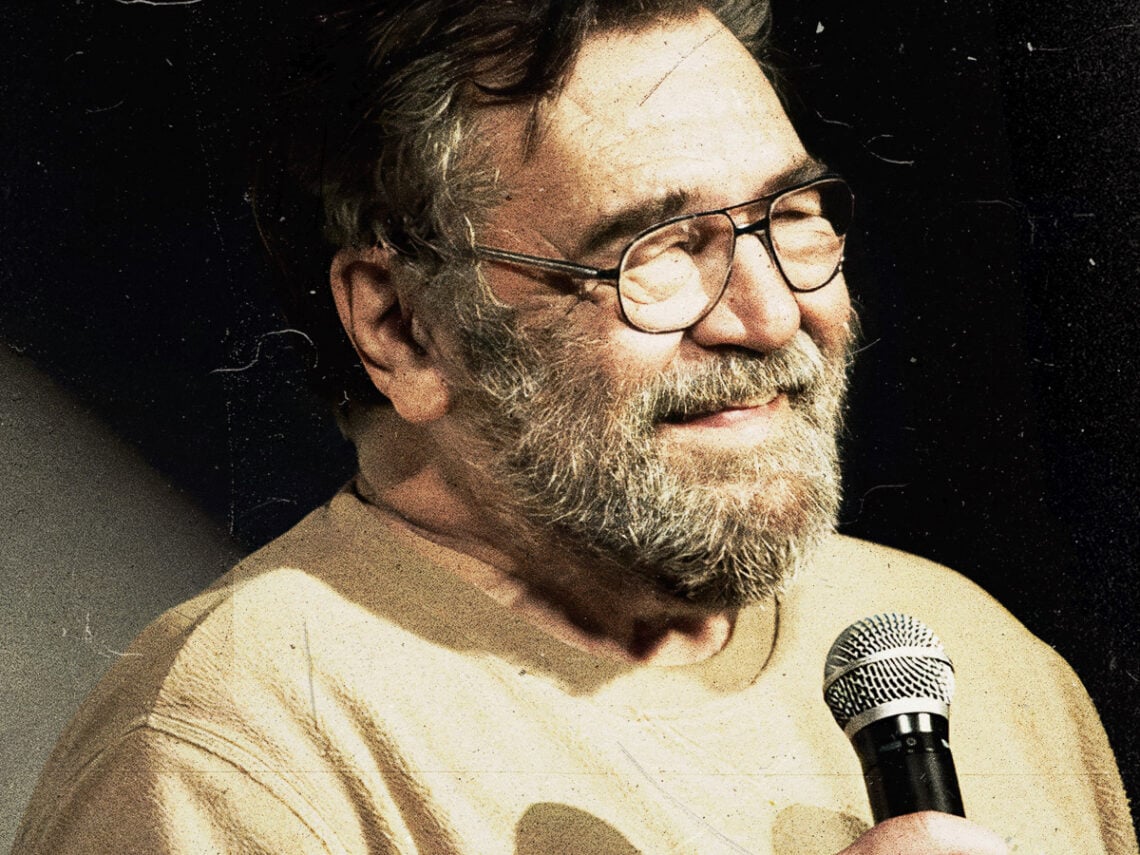
Ralph Bakshi once named the animators that inspired him most

For someone that hasn’t been involved in the feature film business since 1992, Ralph Bakshi hasn’t even had to do anything to retain his status as one of the most influential figures in animation.
Of course, his legacy had been cemented long before his self-imposed exile after his seminal work Fritz the Cat, Heavy Traffic, Coonskin, Wizards, and The Lord of the Rings, which changed the perception of what animation could be by telling exquisitely-realised and thematically-resonant stories geared towards adults in an age where the medium was largely sneered at as being almost exclusively for children.
Career-spanning book Unfiltered came with a foreword written by Quentin Tarantino, who suggested that a retrospective covering the length and breadth of his contributions to cinema was “long overdue”, and the time was right to dedicate a hefty tome to a “serious treatment of a very fearless satirical artist.”
Gore Verbinski is another high-profile director to celebrate Bakshi, asking The Hollywood Reporter, “What happened to the Ralph Bakshis of the world?,” when discussing his own subversive detour into animated fare with Rango. Explaining that he wanted to replicate that feeling of telling different stories in a familiar medium, the Pirates of the Caribbean orchestrator claimed that “audiences want something new, they just can’t articulate what.”
Bakshi was certainly one for pushing the artform forward, but that wouldn’t have happened had he not taken his own inspirations from several formative influences. Getting his start under the mentorship of Jim Tyer, Bakshi lauded him as a “brilliant, brilliant, wonderful cartoonist” in an interview with Cartoon Brew.
Recalling the best advice he was ever given, Bakshi remembered Tyer telling him, “Hey Ralph, everything moves. Don’t worry about it”, and he “carried that my whole life”. His influence even extended to his own feature-length debut, regarded as a boundary-pushing statement for animation: “If it wasn’t for Jim, I wouldn’t have been able to make Fritz the Cat.”
Terrytoons co-founder Paul Terry and animation pioneer Max Fleischer were also singled out – Bakshi “studied all of the old Terrys, I loved Max Fleischer, the black and white Popeyes” – which were just two of what he called “all kinds of artistic sensibilities in my studies that went into my work”.
Above all else, it was “making choices off of a lot of knowledge” that saw Bakshi develop his own style, seeing as he wasn’t one for “making choices as some naïve idiot”. His back catalogue is unique and the result of his unbridled imagination and creativity, but nobody – no matter how famed they go on to become – arrives on the scene fully formed and able to rip up the established rulebook of a popular genre and rewrite it in their own style.
As much as that’s exactly what Bakshi did, he wouldn’t have been able to reach those heights if it wasn’t for the people who inspired him to pursue his chosen line of work in the first place.
