


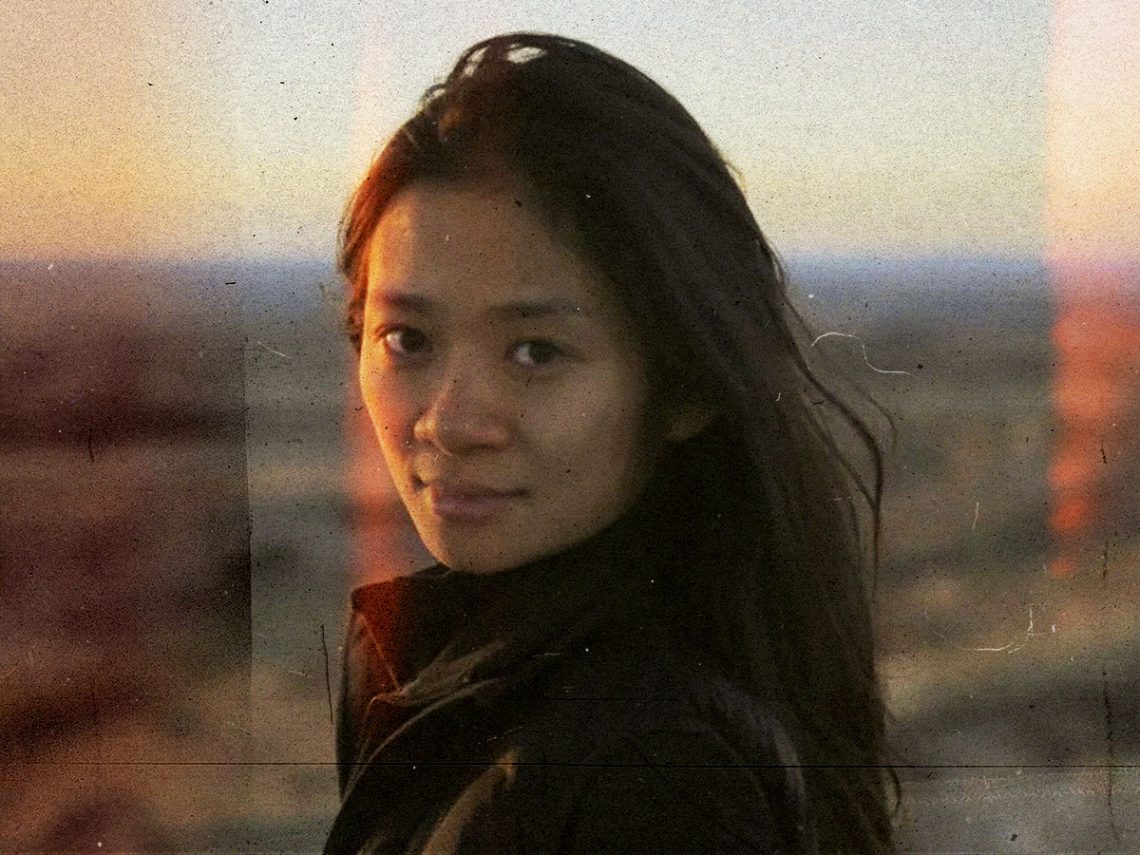
‘Vagabond’: The potent and truthful movie that shaped Chloé Zhao

When Chloé Zhao began studying at college, she chose politics as her major, but it was film studies, her minor, that she couldn’t shake. While she ended up pursuing cinema as a career, her interest in politics and the way that the government significantly affects its citizens came to inform her cinematic approach.
With her first feature, Songs My Brothers Taught Me, Zhao carefully examined themes like poverty and family relationships alongside Native culture and identity. She painted a tender portrait of lives that exist outside of the American mainstream, highlighting the struggles faced by many individuals who reckon with their place in their communities. Her next feature, The Rider, took a unique spin on the western genre, similarly exploring the experiences of Native people while focusing her lens on the meaning of masculinity.
It was Nomadland, however, that won Zhao ‘Best Feature’ and ‘Best Director’ at the Academy Awards, while Frances McDormand won ‘Best Actress’ for her incredible performance. The movie follows a woman who, following the death of her husband, embarks on an American journey in her van, meeting with other nomads and escaping the trappings of a monotonous and soul-destroying capitalistic life. Her resistance to adhering to the expectations placed on people, particularly women, to live a certain way is refreshing, and the movie does a great job of capturing the ups and downs of nomad life.
It’s unsurprising to learn, then, that a certain Agnes Varda film remains one of Zhao’s biggest inspirations – it’s one that bears clear influence over Nomadland and Songs My Brother Taught Me – although Varda’s film is much more bleak in its approach. In the book Agnes Varda: Director’s Inspiration, Zhao shares her love for Vagabond, the 1985 film that Varda made about a homeless woman who drifts between different locations looking for food, work, and shelter, meeting various characters on her journey. She seeks freedom and to be unshackled from the demands of a laborious job and way of living, but she soon realises the true cost of living freely.
Zhao explained, “I always had the desire to make a road movie,” adding, “I watched Vagabond for the first time while in film school, and I found myself rewatching it often during long drives from NYC to South Dakota in the three years I was making my first film.”
She admitted that Varda “captured the road in a potent and truthful way that I rarely see on film. It echoed and lingered in me” before continuing, “I thought about it often at truck stops, motels, and nameless roadside diners as I watched and mingled with people I will never see again.”
Admiring the character of Mona, who doesn’t fear anything, Zhao said, “Her fearlessness scared me the first time I watched Vagabond.” Yet, on repeat watches, she realised that “She’s not a martyr. She chose to live this way in a world that doesn’t support her way of life,” comparing her to a “mythical creature.” For the filmmaker, Varda’s filmmaking was deeply inspirational because, in a male-dominated landscape, Varda “dared to find the balance before we even started to realize the danger of our collective imbalance.”
