


The poem that inspired the Fleetwood Mac song ‘Albatross’

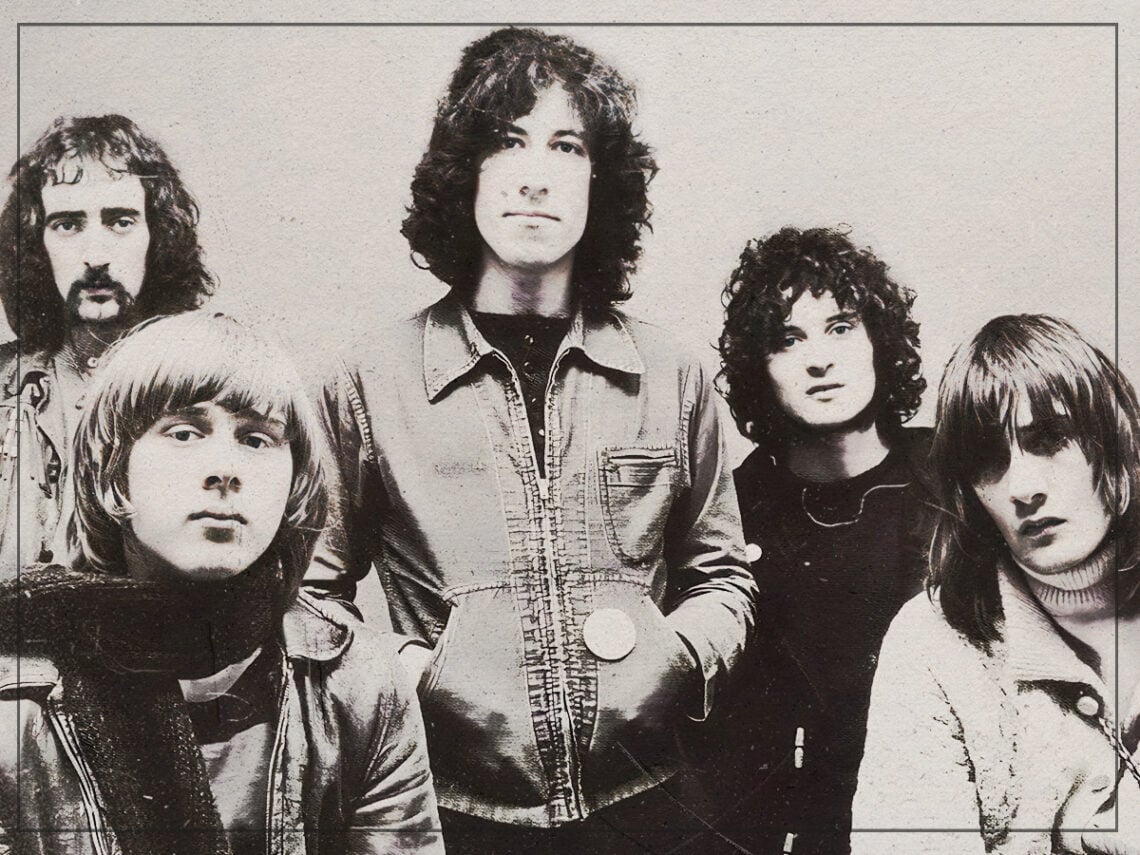
In 1968, some six years before the recruitment of Lindsey Buckingham and Stevie Nicks, Fleetwood Mac found themselves at the height of their first incarnation. In its earlier form, the band comprised frontman Peter Green, drummer Mick Fleetwood, bassist John McVie and guitarist Danny Kirwan following the disbandment of John Mayall’s Bluesbreakers.
During Peter Jackson’s 2021 fly-on-the-wall documentary The Beatles: Get Back, John Lennon asked his bandmates if they had seen Fleetwood Mac on Late Night Live the night before. “They’re so sweet, man,” he said. “And their lead singer’s [Peter Green] great. You know, looks great, and he sort of sings quiet as well. He’s not a shouter.”
Paul McCartney agreed, saying they sounded like Canned Heat. “Yeah, but better than Canned Heat,” Lennon asserted.
Green’s guitar style was firmly rooted in the blues but opted for a smooth, gentle touch, unlike that of many contemporaries, such as Eric Clapton or Jimmy Page. This approach was most apparent in Fleetwood Mac’s popular 1968 single, ‘Albatross’, a song many will know as a staple and sensual presence of M&S Food adverts.
Incidentally, in Martin Clemins’ 1998 biography on Green, he explained that the early idea that later morphed into ‘Albatross’ was derived from “a group of notes from an Eric Clapton solo, played slower.”
Green named the cathartic instrumental after the traditional English expression “an albatross around your neck,” a maritime idiom from the days when superstitious sailors regarded the large sea bird as a sign of bad luck.
The age-old superstition appears in The Rime of the Ancient Mariner, a famous 1798 poem by Samuel Taylor Coleridge. Green had read the poem as a child, and when he stumbled upon the mellow lead sequence, a familiar seaborne setting was conjured.
In the poem, Coleridge follows the story of an old “Mariner”. The sailor visits a wedding and recounts the tale of a voyage he took many years before. Although the guest is initially uninterested, the mariner and his lyrical whim begin to captivate with the tension of icy Antarctic adventures and scenes of moral discord.
Early in the poem, the mariner shoots an albatross but later regrets the act upon the arrival of a bad omen. “Ah! well a-day! what evil looks/ Had I from old and young!/ Instead of the cross, the Albatross/ About my neck was hung,” lines 139-142 read.
The Rime of the Ancient Mariner is Coleridge’s longest at 150 verses. If you want to read the whole story, it is available for purchase as a book in its own right. For now, we present the five verses from Part I that first mention Green’s titular albatross.
Extract from Part I of The Rime of the Ancient Mariner by Samuel Taylor Coleridge:
At length did cross an Albatross,
Thorough the fog it came;
As if it had been a Christian soul,
We hailed it in God’s name.
It ate the food it ne’er had eat,
And round and round it flew.
The ice did split with a thunder-fit;
The helmsman steered us through!
And a good south wind sprung up behind;
The Albatross did follow,
And every day, for food or play,
Came to the mariner’s hollow!
In mist or cloud, on mast or shroud,
It perched for vespers nine;
Whiles all the night, through fog-smoke white,
Glimmered the white Moon-shine.’
‘God save thee, ancient Mariner!
From the fiends, that plague thee thus!-
Why look’st thou so?’-With my cross-bow
I shot the ALBATROSS.
