


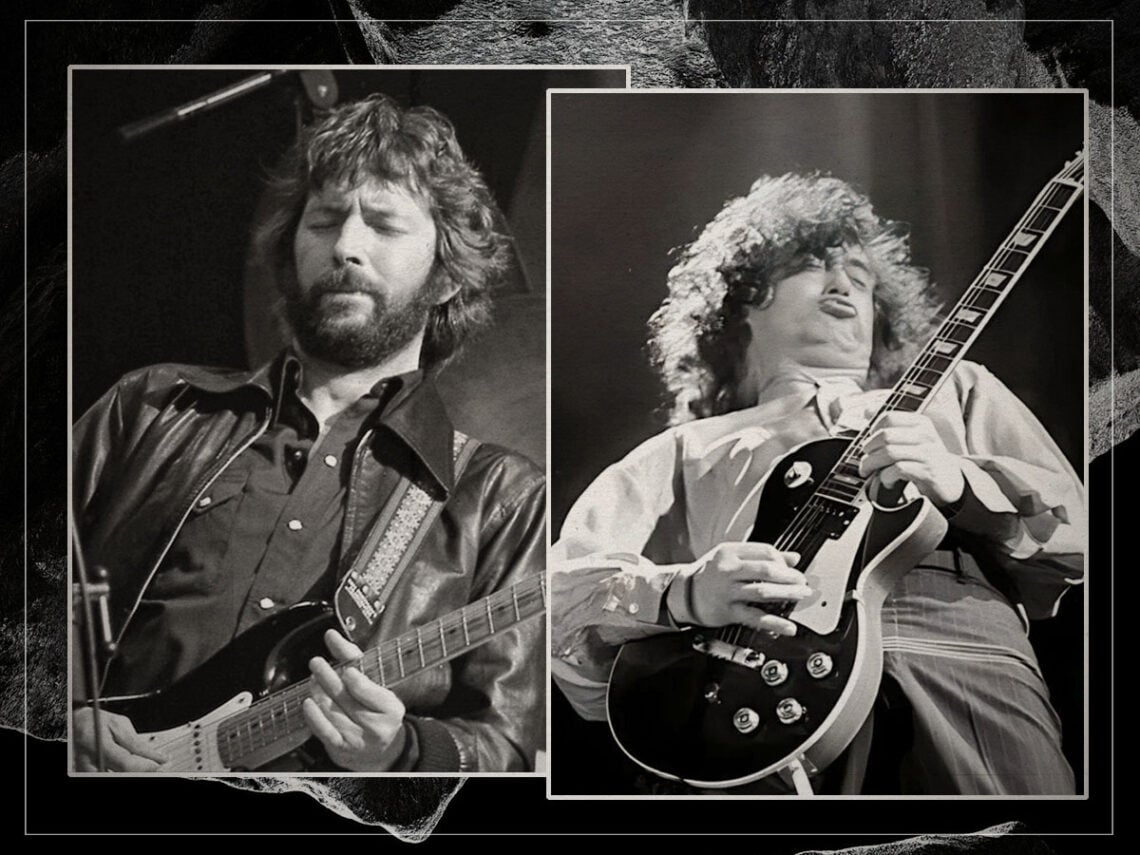
The session that caused a rift between Jimmy Page and Eric Clapton

As a new era dawned on London’s music scene, excitement surged through every club in the city. Some of the era’s biggest names navigated the city in cabs together, drinking, smoking, and watching both icons and emerging stars light up the circuit’s most beloved venues. In a time defined by close encounters and endless collaboration, if you were a musician lingering on London’s hottest stages, success seemed almost inevitable — just ask Eric Clapton or Jimmy Page.
Clapton, who cut his teeth in the iconic rock troupe The Yardbirds, left the group in 1965 to join John Mayall & The Bluesbreakers. He didn’t stop there, either. In 1966, he formed the psychedelic power trio Cream alongside Jack Bruce and Ginger Baker before becoming an icon of the six-string in his own right. Today, Clapton’s legacy is undoubtedly marred, but during the 1960s, there were few guitarists who could stand up to his presence on stage.
On the other side of the major alternative music movement, Jimmy Page started life as one of London’s go-to session guitarists. He also joined the era’s famous guitarist magnet, The Yardbirds, in 1966 before forming The New Yardbirds, otherwise known as Led Zeppelin, just two years later. Page had equally enjoyed a turn on most of the smokey stages of London’s swinging streets and came up trumps. He was the guitarist du jour and made haste to become a beloved icon.
Alongside their Yardbirds friend, the late great Jeff Beck, both Page and Clapton were London’s best and most exciting guitarists. Understandably, given that they had both been in the same band – albeit at separate times – they knew each other well and were friends, despite what pre-conceived notions of egomaniacal guitarists they may have been.
Ironically, when Clapton left The Yardbirds, he recommended Jimmy Page, who was making waves playing on the era’s biggest hits, to fill his place. However, at this point, Page saw no real reason to leave behind his lucrative career as a session guitarist and, in turn, recommended Jeff Beck instead.

Showing just how tight-knit of a circle it was, that same year, Page found himself producing a recording session by none other than John Mayall & The Bluesbreakers. During that same period, Clapton stayed at Page’s house, and they would often jam together during downtime. Page would later describe his relationship with Clapton and Beck as “arch-buddies”, later claiming that “everybody respects” the latter.
However, Page has also shared his appreciation for Clapton over the years, including him in a list of his favourite guitarists of all time. In fact, it is said that another reason Page turned down the Yardbirds gig was out of respect for Clapton due to all the internal politics surrounding his departure.
During Clapton’s stint in The Bluesbreakers, which, might we add, featured John McVie, the future bassist of Fleetwood Mac, Clapton and Page would carry on their jam sessions on the side. They made recordings that utilised the newest distortion effects playing old blues standards. Page has discussed these recordings intermittently over the years, once claiming that he liked them so much that he discussed them enthusiastically with Andrew Loog Oldham, The Rolling Stones’ manager. Oldham also happened to own Immediate Records, the label for whom Page had recorded The Bluesbreakers alongside.
However, this did not have the effect he’d hoped for, and, in fact, it became the point of a rather contentious contractual problem. The flamboyant Oldham allegedly forced Page to hand the tapes over, citing both of their contracts with Immediate. In Jimmy Page: Magus, Musician, Man, Page said: “I argued they couldn’t put them out because they were just variations of blues structures”.
Oldham didn’t listen. Leading up to their now-scheduled release, Oldham pushed Page to record overdubs featuring three Rolling Stones members, including Mick Jagger on harmonica. Swiftly after this, the tapes hit the shelves. Understandably, this ruffled Clapton’s feathers. According to biographer George Case, it caused Clapton to mistrust Page, and the two fell out.
Page has always maintained that he never made any money off the release and that he had his hands tied. Contracts have often left rock stars with egg on their face, but sadly, this time, it was a friendship that appears to have been killed off.
Even though they have appeared together at various concerts over the years, including the 1983 Ronnie Lane benefit show, it has never definitively been revealed whether the pair made up or not, and the situation undoubtedly leaves a sour taste in the mouths of both icons.

Never Miss A Beat
The Far Out Led Zeppelin Newsletter
All the latest stories about Led Zeppelin from the independent voice of culture.
Straight to your inbox.