


A playlist of the sounds that shaped Stereolab

There are three types of people in this world: Those who enjoy Yoko Ono’s screeching vocals on 1971’s Fly, those who pretend to like the vocals and, finally, those who genuinely enjoy it. I, for one, find parts of the album truly unlistenable, but I thank the eccentric artist, if only for her influence on Stereolab, a band who certainly seems to enjoy the avant-garde din.
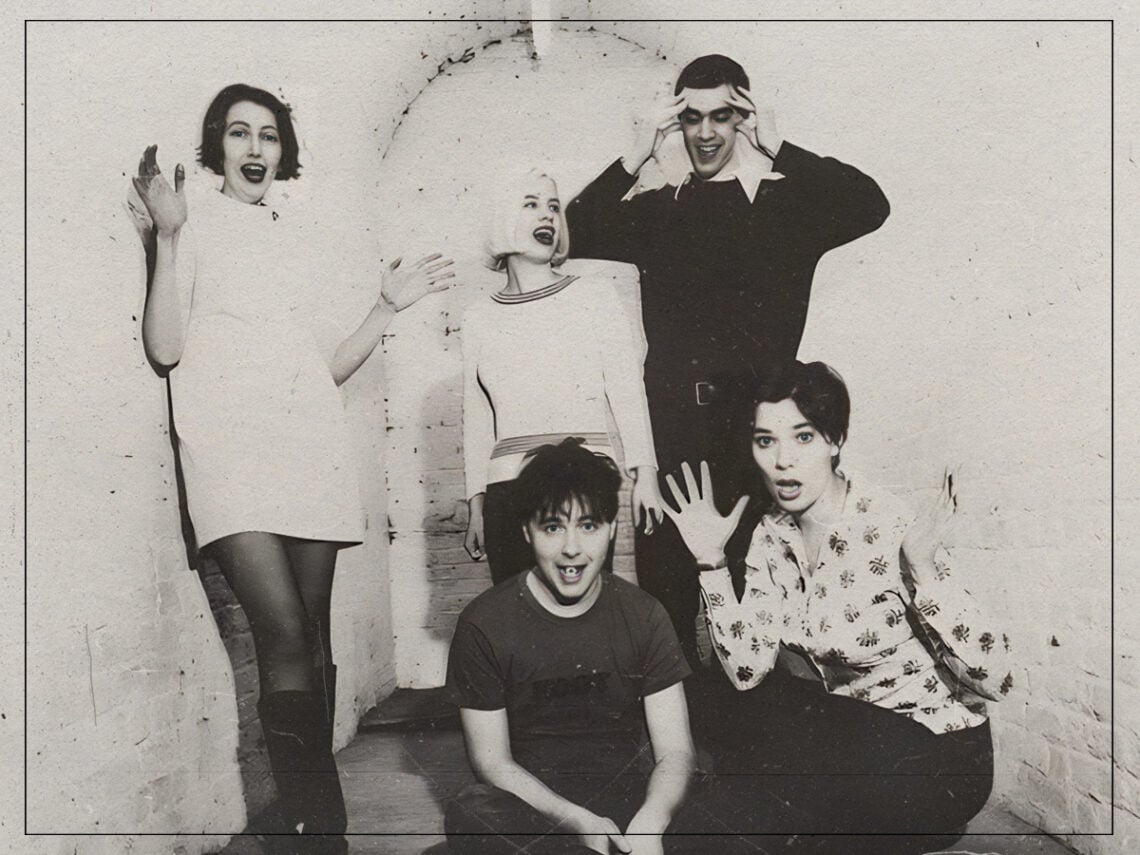
Stereolab is an Anglo-French band formed in London in 1990 by power couple Tim Gane and Lætitia Sadier. Deftly waltzing along the fine line between esoteric experimentalism and popular appeal, Stereolab has led a career of consistency and dignity. They are never afraid to combine their remotest passions, whether that’s Surrealist art concepts or avant-garde jazz.
Stereolab is a rock band in the same way Krautrock groups of the 1970s were rock bands. Where rock tradition would have drummers sticking mostly to 4/4 beats and guitarists bounding along to blues rhythms, avant-garde rock allows free movement with regard to genre specification. Thus, you can call it rock if it helps you sleep at night, but really, it’s a bit of this and a bit of that in the stereo laboratory.
When Stereolab debuted with Peng! in 1992, songs like ‘Peng! 33’ and the mesmeric ‘Super Falling Star’ made it pretty clear that Gane and Sadier are fond of the early avant-rock work of The Velvet Underground. Gane’s guitars shimmer with the droning qualities of White Light/White Heat, while Sadier’s delicate vocals reminisce the then-recently deceased Nico, who sang on the band’s debut album.
Elsewhere in Peng!, songs like ‘The Seeming and the Meaning’ channelled more recent developments in rock music in the post-punk wave, especially Gane’s favourite noise-rock group, Sonic Youth. However, even at this early juncture, the band’s weakness for experimental electronic music was apparent in ‘Surrealchemist’, which recalls Martin Rev’s seminal work with Suicide. Suspicions of fandom would be confirmed in 1993 when Stereolab included a sample of ‘Cheree’ in the single ‘Tempter’.
Over time, Stereolab migrated from their roots in experimental rock music towards a more diverse sound reflective of their intense passion for Krautrock. A taste for CAN’s funky rhythms can be divined in the 1997 masterpiece Dots And Loops and the experimental synth musings of Kraftwerk and Neu! in the previous year’s Emperor Tomato Ketchup.
Gane discussed his passion for Krautrock bands, including the oscillating early work of Faust and Tangerine Dream, in a 2014 conversation with Electronic Sound. He remembered discovering Faust in an issue of Sounds in 1980 and becoming indoctrinated by a sense of musical identity, or lack thereof. “Krautrock has always been a bit of a niche genre, which I think is because the dominant mindset is that the best rock music was only ever made in America or Britain,” he said. “But some music is made to just be discovered, and you have to find it out for yourself.”
Continuing, Gane suggested that Krautrock failed to break through to mainstream popularity due to its lack of sonic definition. “It’s so difficult for people to categorise,” he said. “In many ways, it’s a music that falls in between genres, but it’s also true that it has grown in currency over time, as opposed to, say, blues rock, the currency of which has fallen pretty dramatically.”
After discovering the wonders of Krautrock, Gane began to explore more avant-garde masters, including the contemporary work of electro-punk pioneers like Suicide and Cabaret Voltaire. “I was struck by how different these records sounded to the relentlessness of some of the industrial-type music that was about at the time,” he said.
Below, we have created a playlist with songs by some of Stereolab’s most pivotal luminaries. Most had an influence thanks to instrumental and compositional genius, while others were more conceptually and lyrically seminal. Besides specific influences, such as ‘Kandy Korn’, which inspired the song ‘Tone Burst’ to the extent it had the working title ‘Captain Beefheart’, these selections give a flavour from each artist, inviting you to venture deeper into the musical worlds behind one of the greatest avant-pop groups of all time.
The music that shaped Stereolab:
- Burt Bacharach – ‘What The World Needs Now Is Love’
- The Velvet Underground – ‘Sister Ray’
- The Velvet Underground & Nico – ‘Femme Fatale’
- Sun Ra – ‘Angels and Demons at Play’
- Kraftwerk – ‘Radioactivity’
- Neu! – ‘Hallogallo’
- CAN – ‘Future Days’
- Tangerine Dream – ‘Movements of a Visionary’
- Broadcast – ‘The Book Lovers’
- Faust – ‘Krautrock’
- Yoko Ono – ‘Midsummer New York’
- Don Cherry – ‘Brown Rice’
- Suicide – ‘Cheree’
- Cabaret Voltaire – ‘Landslide’
- Silver Apples – ‘Oscillations’
- Sonic Youth – ‘’Cross the Breeze’
- Captain Beefheart – ‘Kandy Korn’
- Steve Reich – ‘Electric Counterpoint: III. Fast’
