


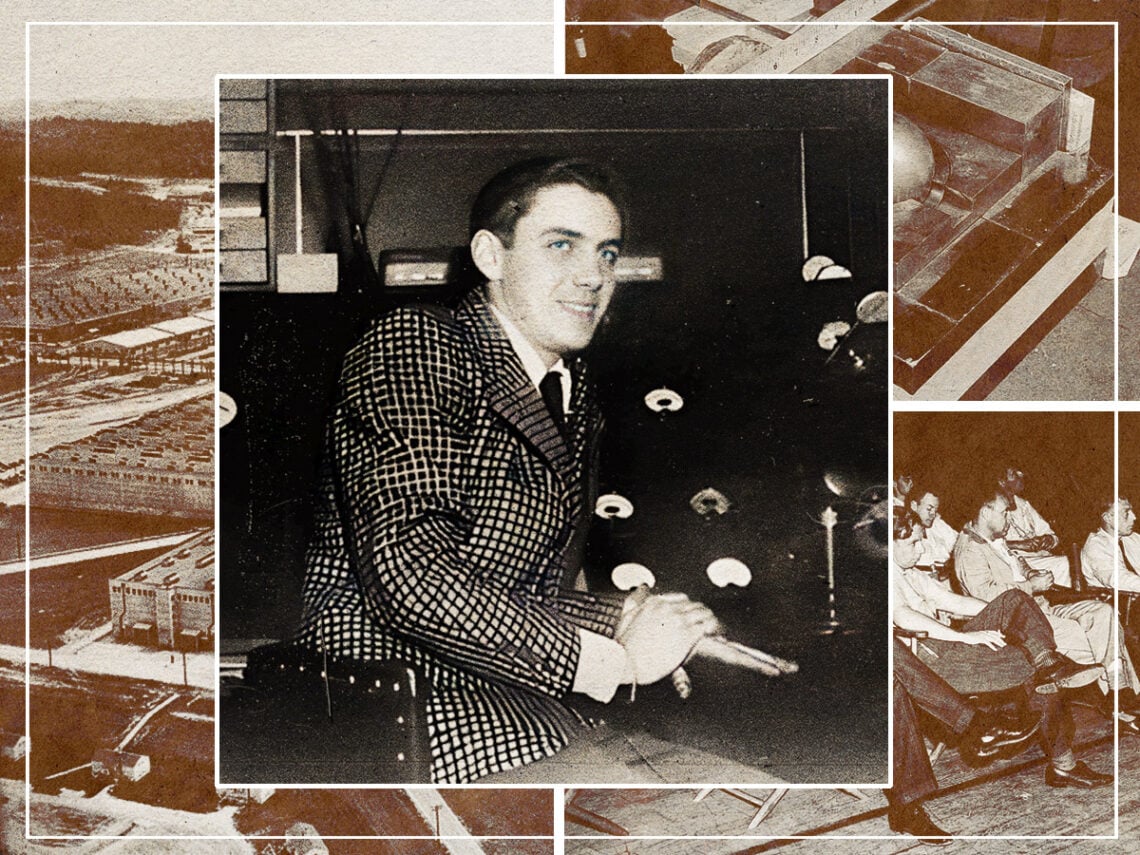
Tom Dowd: the pioneering musician who worked on the Manhattan Project

The cultural buzz around Christopher Nolan’s latest feature, which adapts the story of the theoretical physicist J. Robert Oppenheimer to screen, is inescapable.
From black-and-white first looks at star Cillian Murphy to the film’s ongoing competition with Greta Gerwig’s Barbie, Nolan’s latest offering is set to be one of the biggest movies of the year. The project chronicles the story of Oppenheimer’s work on the Manhattan Project, which developed the first nuclear weapons.
Oppenheimer stars Murphy as the title character, alongside a star-studded cast of Emily Blunt as his wife Katherine Oppenheimer, Matt Damon as project director Leslie Groves, and Florence Pugh as physician and love interest Jean Tatlock. Though the list of characters includes a number of historical figures, from Albert Einstein to Harry S. Truman, one notable member of the Manhattan Project is absent from the film’s narrative.
Tom Dowd was part of the Manhattan Project during World War II, but he was also a pioneering recording engineer and producer for his use of multitrack recording. Dowd worked with an impressive roster of artists, including the likes of Ray Charles, John Coltrane, the Bee Gees, Aretha Franklin and Primal Scream.
Dowd grew up in Manhattan, New York City, among a family steeped in music. Born to an opera singer and a concertmaster, Dowd’s childhood saw him learning a myriad of instruments, from the tuba to the string bass. However, his interests were not limited to music; he was also a man of science.
Following his job as a physicist at Columbia University, a young Dowd found himself drafted into the army during World War II. Utilising his background in physics, Dowd became part of the Manhattan Project. Alongside the “father of the atomic bomb” and Nolan’s protagonist, Oppenheimer, Dowd researched and developed the first nuclear weapons.
After completing his role in the project, national security meant Dowd’s work would not contribute towards his degree in nuclear physics. Instead of returning to his studies, he resigned himself to the music business, a decision that would serve him well.
In an interview with Michael Buffalo Smith in 2002, he recalls making “the coolest records you could ever think of”, from Leslie Young to Charlie Parker: “These are people, by being a music buff, I used to love to go to 52nd street and see. Well, I wasn’t going to 52nd Street and seeing what the hell was going on anymore, I was recording these guys! It was like I could not believe what I was doing here.”
Dowd also stated that being trained both in classical music and physics “absolutely” helped his career. He shared, “The musical background helped me to develop my ears, helped me recognise chords. The physics background just put me in touch with reality and numbers, and it does not matter what the hay we are talking about because it all gets down to numbers.”
Though Dowd’s story didn’t quite fit into Nolan’s “morally complex” summer blockbuster, as star Matt Damon dubbed it, his influence on music was chronicled by director Mark Moormann in the 2003 documentary Tom Dowd & the Language of Music. Pivoting from nuclear physicist to pioneering producer, Dowd’s career change garnered him a legacy across two industries.
