


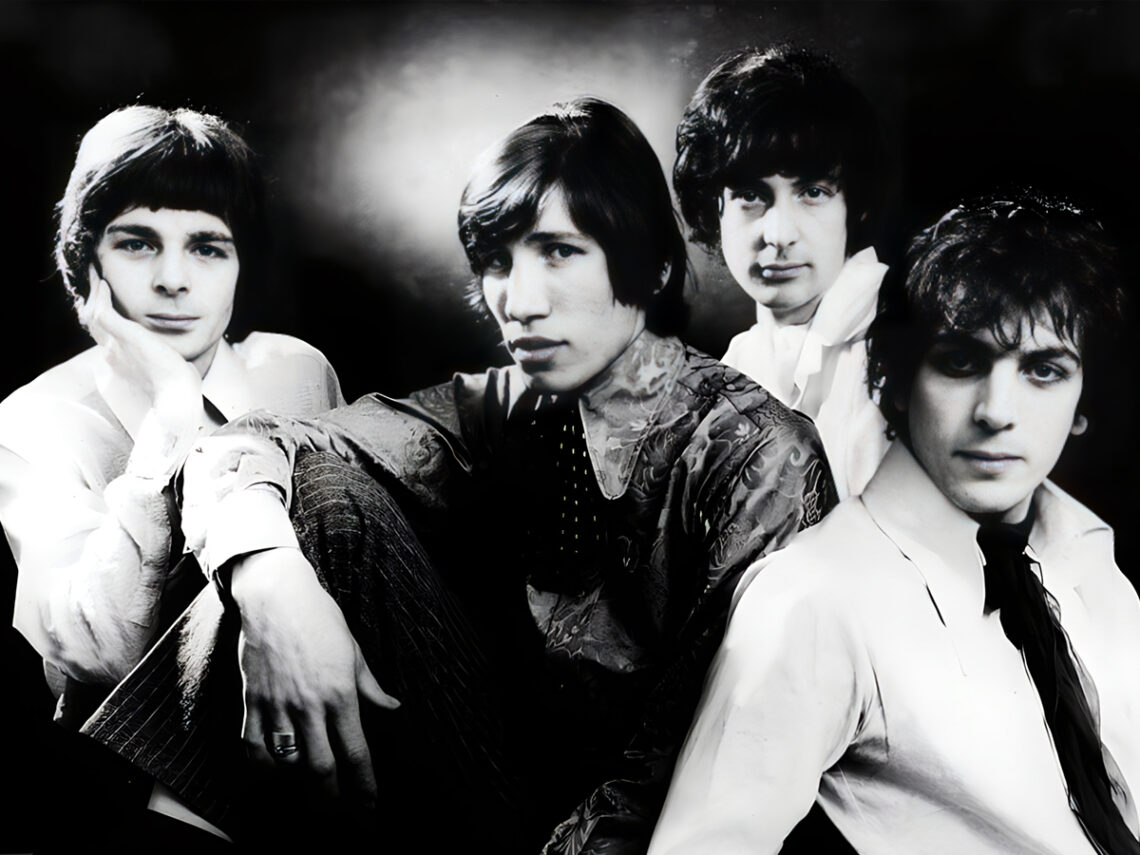
Pink Floyd: Syd Barrett’s two favourite blues musicians

As a markedly eclectic rock group, Pink Floyd flitted gracefully through a spectrum of styles over its three main decades as a recording act. Most apparent were the chapters as marked by the band’s appointed leader. Following a tragically stunted period with Syd Barrett at the helm, bassist Roger Waters stepped up to the plate to coordinate Pink Floyd’s most seminal material. In the 1980s, following Waters’ departure, David Gilmour led the band through three final albums.
Although Pink Floyd was one of the most prominent psychedelic acts alongside the likes of Cream and The Jimi Hendrix Experience during its first chapter with Barrett, blues initially ran the game. The band’s history can be traced back to 1963 when Roger Waters met fellow student Nick Mason while studying architecture at the London Polytechnic at Regent Street.
After realising a shared passion for rhythm and blues, Waters and Mason formed a band with fellow students Keith Noble and Clive Metcalfe and Noble’s sister Sheilagh. Richard Wright, a fellow architecture student and keyboard whizz, joined later in 1963 to complete the six-piece known as Sigma 6.
This early group performed at private functions and practised in a tearoom in the basement of the Regent Street Polytechnic, often covering songs by The Searchers and material written by their manager, fellow student Ken Chapman. After renaming themselves the Tea Set amid line-up re-shuffles, Waters welcomed his childhood friend Syd Barrett.
“In a period when everyone was being cool in a very adolescent, self-conscious way, Syd was unfashionably outgoing,” drummer Nick Mason remembered in Inside Out: A Personal History of Pink Floyd. “My enduring memory of our first encounter is the fact that he bothered to come up and introduce himself to me.”
By late 1965, Barrett had taken a position as the band’s creative lead and suggested a new name, Pink Floyd Sound. As the line, “Oh, by the way, which one’s pink?” from ‘Have a Cigar’ jovially notes, Pink Floyd isn’t someone’s name but rather a merging of two. After discovering that another local band went by the name Tea Set, Barrett stumbled upon Pink Floyd Sound by fusing the names of two of his favourite blues musicians: Pink Anderson and Floyd Council. The pair, both American, featured prominently in Barrett’s record collection at the time.
At this juncture, clean-cut R&B was still at the heart of the band’s repertoire, but already, Barrett’s psychedelic sensibilities had started to bud. In his book, Mason continued to note that, under Barrett’s early guidance, songs would “be extended with lengthy solos”.
In a 2008 conversation, Jack Bruce, the lead vocalist and bassist of Cream, discussed his band’s influence on Pink Floyd’s development. “I first met Hendrix when we [Cream] did a gig at the Regents Polytechnic,” he told Classic Rock. “Coincidentally, the guys that became Pink Floyd were in the audience, and apparently, seeing that event made them become Pink Floyd. When I saw them recently, they told me that. I knew they were there, but I didn’t know that we were responsible for them getting together.”
Of course, Pink Floyd was already assembled when Cream formed in 1966, but this concert undoubtedly inspired the band’s imminent embrace of psychedelia. That same year, The Beatles released Revolver as an early foray into the genre, laying the groundwork for 1967, which bore such releases as Pink Floyd’s debut, The Piper at the Gates of Dawn, The Beatles’ Sgt. Pepper’s Lonely Hearts Club Band, Jimi Hendrix’s Are You Experienced and Cream’s Disraeli Gears.
Listen to songs by Pink Anderson and Floyd Council below.
