


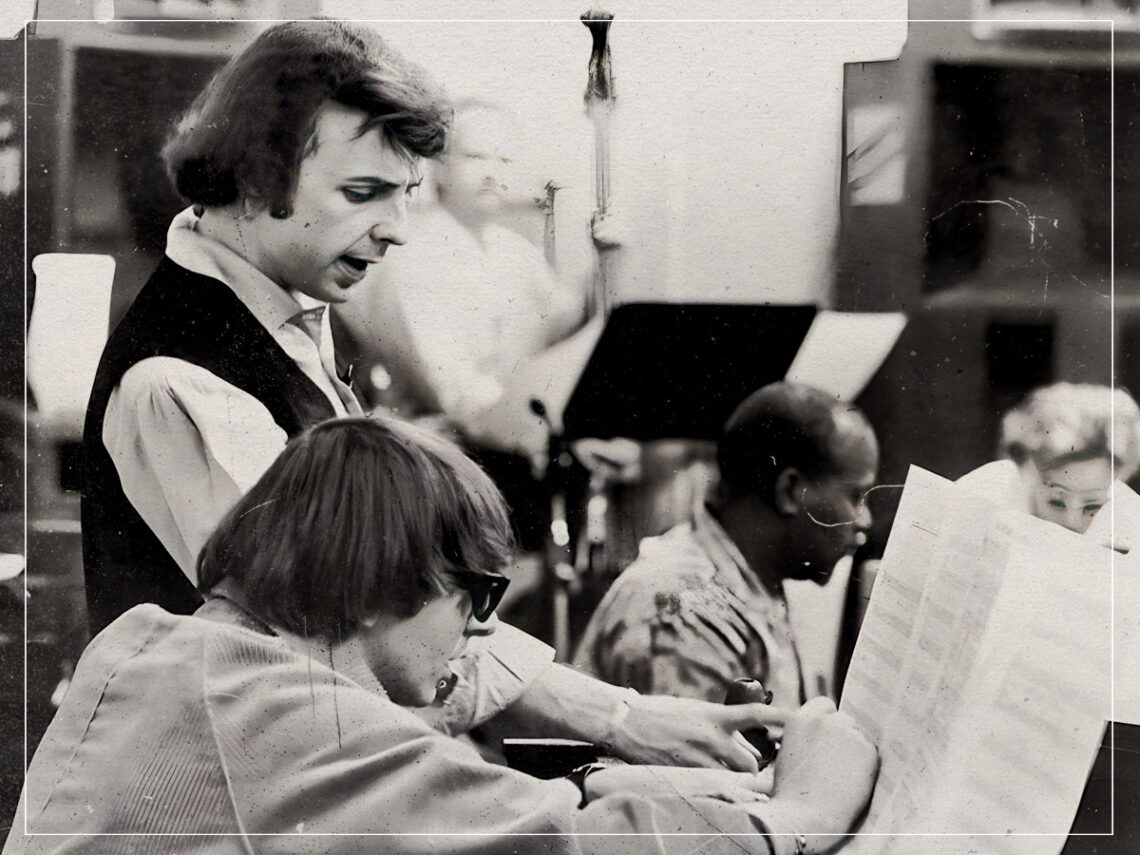
Phil Spector’s bizarre notes on George Harrison’s album

In 1970, Phil Spector dealt what some consider to be the final blow to The Beatles. When the producer was left to work on the final mixes of the group’s final album, the result was something that Paul McCartney hated so much that he finally agreed to sign the band’s divorce papers despite being the one holding on. However, it’s clear that George Harrison remained a fan as he called upon Spector to produce his debut solo album.
“Don’t ever do it again”. That was the concluding point to a furious letter Paul McCartney wrote to Phil Spector when he heard the chances he’d made to his songs, especially ‘The Long and Winding Road’. Having given the tracks his signature ‘wall of sound’ flair, it divided the Beatles even further as their relationships were already crumbled. “I was a bit flipped out and tripped out at that time,” McCartney later admitted but maintained that he hated what Spector did to the track.
In short, he wasn’t a fan, but Harrison clearly was. Maybe it was a way to get back at McCartney, who he felt ignored him during the final years of the band, or perhaps Harrison simply did just trust Spector because when it came to his all-important solo debut All Things Must Pass, he called upon the producer to help.
It’s clear that Spector cared, perhaps just as much as Harrison himself. In fact, he was an essential force in encouraging Harrison to make the album in the first place. “I went to George’s Friar Park … and he said, ‘I have a few ditties for you to hear’. It was endless! He had literally hundreds of songs, and each one was better than the rest,” the producer recalled of hearing these songs for the first time, imploring the ‘Quiet Beatle’ to get in the studio. So when the album was coming together, and he was invited onboard to co-producer, Spector poured energy into the album to ensure that every last detail was exemplary. He wasn’t a producer who was fine with brushing over or ignoring little details. No, nothing was slipping under his radar as proven by the quite neurotic notes he sent Harrison.
However, across his notes, there is a sense that Spector doesn’t know how to or doesn’t want to take his hands off the wheel. “In general, I feel the remixing of the album requires a great deal of work or at least a few hours on each number,” he writes at the start of his letter before adding, “I feel it would be best if we saved all remixing until I return as a great deal of the mixes should be done with a fresh approach.” It’s clear that Spector didn’t want anyone else touching the project and believed that his own wall of sound approach was the only way to go here.
That continues throughout his individual notes for each song, with each seeming to point the album towards his classic sound. For ‘Awaiting On You All’, ‘If Not For You’ and ‘I’d Have You Anytime’, he writes, “the voice too buried”, wanting to bring it forward in the mix. For ‘Isn’t It A Pity’, he’s keen to level it all up, writing that the song “Still needs full or some type of orchestration”. On ‘Let It Down’, he suggests, “Perhaps at the end, near the fade, a wailing sax”, stating “some kind of a screaming saxophone mixed in with all that madness at the end might be an idea.”
Across the majority of the tracks, the comments point towards the same suggestion: make it bigger, supporting Paul McCartney’s gripe that Spector never really knew how to leave a good thing alone.
However, his attention to detail makes it clear that Spector truly cares about Harrison’s putting out the best possible product. There is also a constant focus on his vocal performance, pushing the guitarist out of his comfort zone and encouraging him to really go for it behind the mic. “Naturally, wherever possible, of main importance is to get a good vocal performance by yourself,” he said in his concluding notes.
In some places, his feedback on this becomes quite cutthroat, writing about ‘All Things Must Pass’, “I’m not sure if the performance is good or not.” However, maybe the world has Spector to thank for pushing Harrison to get the very best, resulting in his masterpiece debut.
