


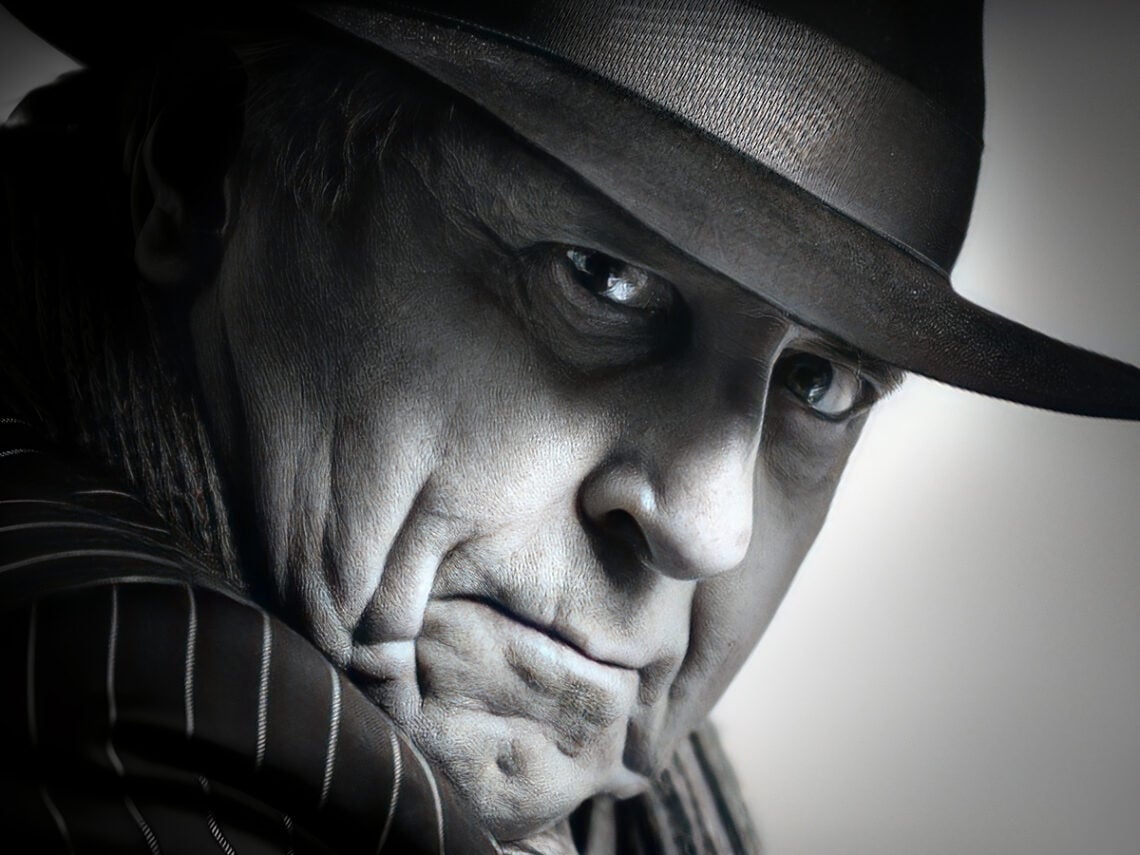
Peter Greenaway on the moment cinema died: “I’ll give you a date’

Peter Greenaway is one of the most fascinating arthouse directors to emerge from Britain, creating a style that could only be described as grotesque naturalism – merging elaborate and beautiful set pieces with the sight of things that prompt feelings of disgust, whether it be rotting meat, insects or the juxtaposition of harsh colours.
Whether it be the intoxicating power of The Cook, The Thief, His Wife and Her Lover, the allegorical undertones of Drowning by Numbers or even more experimental works like The Baby of Macon, the director achieved something that hasn’t been captured by anyone else, depicting complex ideas in a controversial and often abstract way that allowed some of his films to enter the mainstream forum.
As a result, he is one of the most influential and daring auteurs from the ‘80’s arthouse movement in Britain, somehow creating films that are both ugly, unsettling, beautiful and life-affirming. But as someone so crucial within this era, with a defiant style that evades clear interpretation or understanding, the director had many thoughts about the future of cinema and the forces that threaten artists, with strong thoughts on the biggest threat to the medium and the day that cinema died.
Many filmmakers have chimed in with their own two cents about the future of cinema, with some citing AI as the biggest threat to the medium, streaming services or the rise of consumerism and declining respect for art in general. Some have cited directors like Ryan Coogler and Julia Ducournau as being the saviours of independent cinema, while others have condemned directors like the Russo Brothers for being the very force that will bring cinema down into the gutter.
But after living through such a tumultuous era in cinema, seeing the beginning of television, the rise of streaming and social media, Greenaway has a unique perspective on the medium after witnessing so many of its changes himself.
When asked about his thoughts on whether cinema was dying, Greenaway said, “Cinema is dead. I’ll give you a date — August 31st, 1983, when the remote control was introduced into the living rooms of the world. Cinema is a passive phenomenon. All the really interesting visual artists are now web masters, video artists or they’re manoeuvring into areas that make cinema look like an 18th-century lanternslide lecture”.
He isn’t wrong. The very idea of watching and engaging with cinema has slowly been drip-fed to us as a passive act, with television introducing the idea that films can play in the background and shouldn’t demand our full attention. While this kind of passive watching is sometimes fine when you’re folding laundry and shove The Princess Diaries on for the hundredth time, this way of thinking has slowly poisoned the level of respect that many mainstream audience members have for the medium, not thinking of cinema as something that should challenge or change our perspective in any way, and instead as a mind-numbing distraction.
For this reason, perhaps Greenaway is right. Maybe cinema is dead. Netflix have introduced a category of films that can be watched passively, titled ‘background films’, in which films are just background noise and a way of filling silence. There is no doubt that if viewers continue viewing films in this way that any semblance of hope in cinema will soon be snuffed out for good.
