


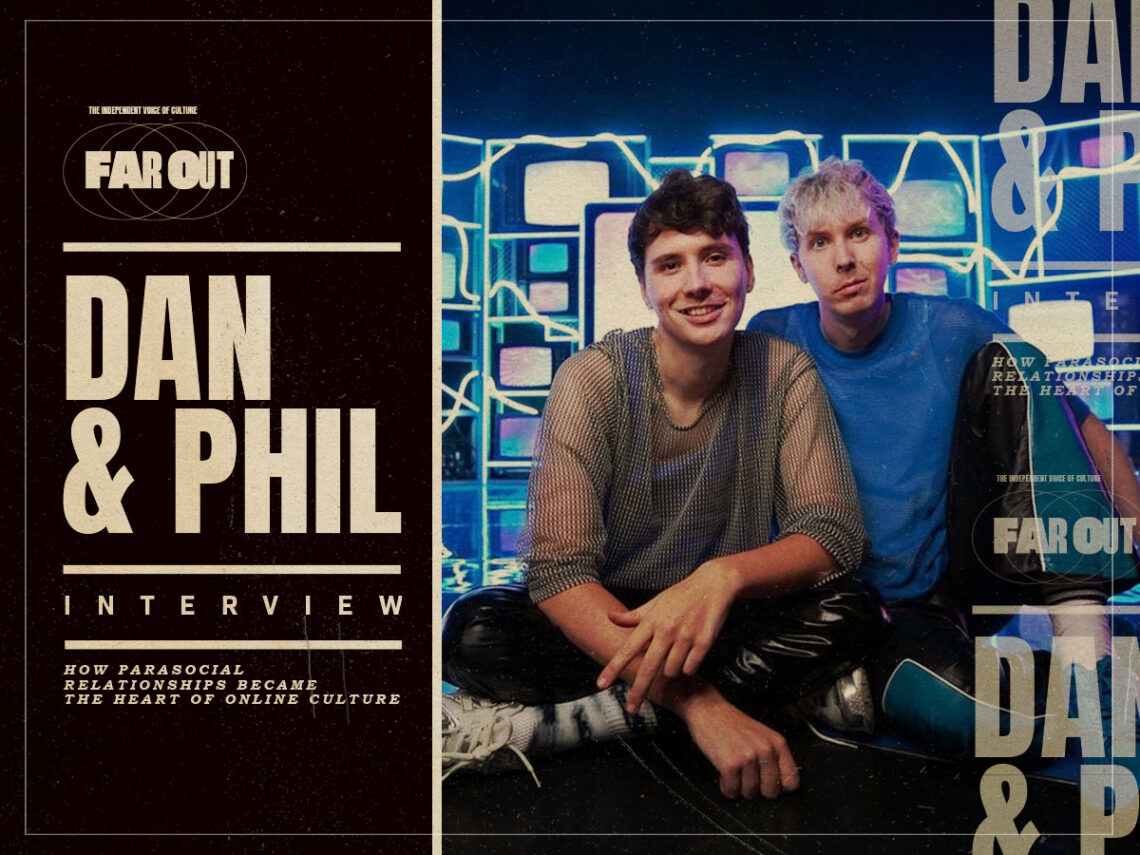
“It feels nice to have love in your life”: how parasocial relationships became the heart of online culture

“I feel like my fans always have kind of had a secret handshake with me of, like, ‘We’ve got you. We know who you are’.” – Lady Gaga
Whenever we venture outside—as strange as that may be for most homebodies—there’s a peculiar sense of detachment when we leave our interests at the door. Compartmentalising in this way has always been human nature, even as consumer culture continues to permeate every aspect of daily life. However, parasocial relationships introduce an entirely different dynamic, one that is fostered and nurtured by the one place where escape is merely a click away: the internet.
There’s a lot that falls under the guise of parasocial relationships. In the music industry, this stretches far and wide and usually encompasses everything negative about fandom culture. One of the first-ever iterations of fans establishing new grounds of endearment was, of course, Beatlemania, but even then, the positivity of something so culturally explosive never gave fans the same level of appreciation.
Existing in a hyper-connected world where online audiences are more engaged than ever does have its downsides—of course it does—and many of these are reflected in the ongoing discussions where certain figures serve as litmus tests for public reaction. Chappell Roan, for instance, isn’t just scrutinised for speaking out on important issues; her boundaries are also tested when she rejects certain fan behaviours, even when they come with good intentions.
The point is that while parasocial relationships are nothing new, modern internet culture seems to have further enhanced the discussion about what’s right and wrong, opening the doors to other potential consequences, such as fan exploitation. With social media especially, the lines become more blurred with these “relationships”, and while on one side, many public figures acknowledge these intimate bonds, others knowingly push the limits, encouraging investment for personal gain.
But what about when it’s done right? What about those who embrace this shift and recognise the beauty that can emerge when fans express their adoration in the only ways they know how? For countless online creators and YouTubers, careers thrive on connecting with their audiences, even when these exchanges become increasingly complex and sometimes chaotic. While some, like Watcher, maintain fan engagement by elevating their production quality to television-calibre content, others shape their content around fan service—in the best way possible.
While both approaches centre around authenticity—something that’s impossible to fake in today’s always-on landscape—some draw this into the fabrics of their core messaging, knowing that audience engagement would surely falter if they put out anything less. This is the case for YouTubers Dan and Phil, who have thoroughly mastered the art of nurturing parasocial relationships, as proven by their latest tour run, aptly titled the Terrible Influence Tour.
In the weeks leading up to the tour, it was clear this was curated meticulously to signal a new era for the YouTubers and address everything that had happened until this point. After all, their trajectory from lesser-known YouTubers to more established content creators hasn’t been the smoothest (for them), especially considering their complicated relationships with online communities. But all of it culminated in one perfect celebration of everything the duo and their audience had built together over the years.
As the title suggests, the Terrible Influence Tour was always going to be a tongue-in-cheek exploration of whether Dan and Phil were, in fact, terrible influences—despite having fostered communities built on the safe spaces they always prioritised in their online content. Ater all, fame in primarily digital spaces is always a double-edged sword, with accessibility and entitlement shaping expectations of what creators should or shouldn’t do.
However, rather than addressing these dynamics through a socially critical, Bo Burnham-esque lens, Dan and Phil approached them with a more intimate and positive embrace of what it all truly means for them as people. Even sitting in Manchester’s O2 Opollo before the show begins, it’s clear that, as a fan, you’re immediately in on the joke. Even better is that nothing is ever completely unexpected, hinting at a more endearing subtext that the pair has somehow managed to build over the years.
“It’s safe to say we’ve grown a lot,” the pair tell Far Out, noting how they and their audience have encountered significant change since 2015. The maturity is ever-present, which has allowed them to be more open and honest in their content and live performances. However, this also comes with its share of challenges, like making sure it all ties together without losing the core message of nurturing their audience.
“It was a challenge somehow to bring all of these strands together into a show which feels all-encompassing of our history and critical of the ‘industry’ while also being intimate and personal”.
Dan and Phil
Describing the transition as a “reflection” and a “reckoning”, this celebration of “social media stage performers” sought to poke fun at the paradoxical nature of such a statement, highlighting how a career borne out of the internet—once dismissed as a novelty—has now evolved into something deeply personal and, at times, paradoxical. The show explores this through jests about the duo’s cultural impact and personal lives and how, rather than distancing themselves from the concept as they once attempted to, they have now chosen to lean into it.
While this also comes with a broader acknowledgement of their own lack of mainstream appeal, this expectation to appease the more parasocial factions alongside so-called “outsiders” feels like a crucial commentary on the context itself. For instance, most of the show and its content still employs an overarching nod to “if you know, you know”, making any endearment from less familiar audiences feel almost accidental, which is incidentally the entire crux of the comedic resonance.
Or, as they so fondly quip, “We got to give it to the mums and the straight boyfriends.” In their world, “You always have to make [it] digestible to anyone if we want to try to make a broad point about content-creating culture,” which becomes an almost impossible task given the fiercely loyal community they’ve nurtured over 15 years. It’s even harder when “comparing ourselves to the biggest ‘influencers’ at any given time,” yet this serves as the ultimate reminder that meaningful relationships always come from the one thing most people long for.
“Finding your people always feels better than forcing yourself to fit in.”
Dan and Phil
That said, trying to tick so many boxes at once can often make curators of online communities feel cornered by their own success. However, while they acknowledge these difficulties, there’s also something freeing about realising “you can be truly vulnerable as an artist and still maintain healthy boundaries”. While most figures, not just on the internet but across film and music, often feel intimidated by the crowds their art attracts, feeling safe on both sides is the secret ingredient to making sure things don’t get a little weird somewhere along the way.
After all, when Far Out previously spoke to psychologists about parasocial relationships and why fans grieve the death of celebrities, most said that these figures feel so deeply engrained into our being that we feel connected the same way we are with real-life relationships. As Melissa Gentry, a Doctor of Clinical Psychology, said, “We are attachment creatures wired to connect!” Thus, familiar faces can yield an inexplicable amount of comfort, even if we’ve never set foot in the same room as them.
For famous figures, these expectations can be intensely detrimental to mental health, especially if there seem to be no boundaries in place to feel safe and protected from the potential negatives of such communities. For Dan and Phil, it’s about knowing how to navigate these dynamics in a healthy way and making it a mutually beneficial exchange despite the learning curve that comes with adopting such an attitude.
“It’s a fact of life, and it’s a two-way street,” they argue. “Everyone on Earth has parasocial relationships with public figures they don’t know personally, so it should probably be part of the school curriculum to learn how to process them. Audiences need to respect privacy and autonomy and to find the balance between being supportive and being demanding.”
Concluding, “Likewise, celebrities shouldn’t emotionally exploit anyone who is generous enough to resonate with them. We like to think we have healthy relationships with the screen people in our lives. Apart from Phil with Sarah Michelle Gellar, for Buffy, there would be uncontrollable sobbing. When it comes to our audience, it feels like this show is the therapy session, and now we’re ready to recommit. It feels nice to have love in your life.”
