


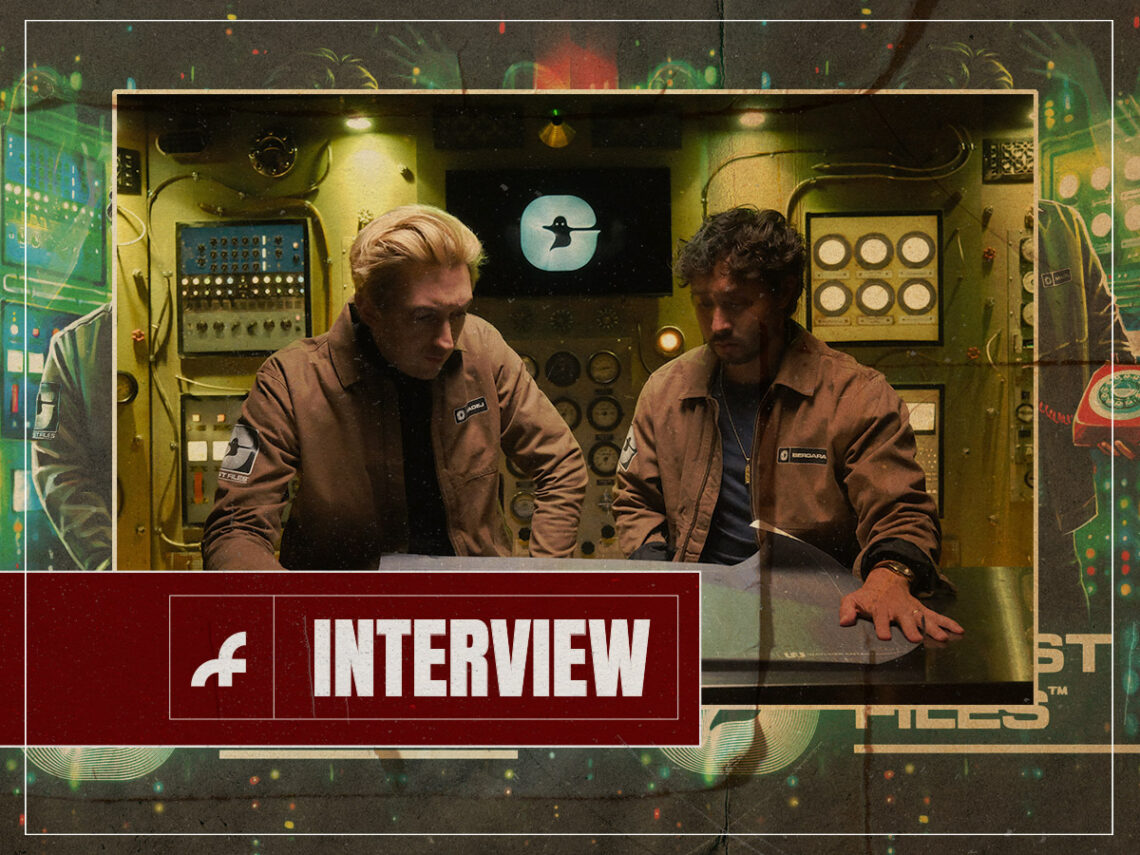
Watcher Entertainment: the challenges and rewards of homespun YouTube curios entering the mainstream

There’s a theory that if you look for something hard enough, long enough, and intently enough, you’ll begin to see it. In an age of modernised creature comforts that separate us from morbid perils, our innate fascination with fear has become a thrill that we actively chase. We enjoy luxuriating on the facets of fear’s manifestation in environments that we feel we can control and even dominate. YouTube? Well, it was meant to be a place for all those videos we couldn’t find anywhere else. But funny enough, it turned into the ultimate haunt for our deepest, darkest fears.
“I’m scared of everything,” says Ryan Bergara, one-third of Watcher Entertainment’s talent. This was a particularly interesting interview to approach, partly because Bergara and his partner-in-crime, Shane Madej, have known YouTube through its biggest challenges, and now they’re embroiled in the midst of one. But mostly because of the interest that put them in this position: we all share a common fascination with fear and the human relationship with the afterlife. Some might imagine this shared ground would make the whole thing seem easier, but in some strange way, it’s difficult to know where to start.
Breaking it down to its most fundamental layer, Madej and Bergara have forged, fostered, and nurtured the perfect amalgamation of thrills and comedy through endearingly charismatic video content, showcasing a gamut from ghost hunts to unsolved mysteries and everything in between. Their journey into spotlighted internet culture started when they worked together at Buzzfeed on a show called Buzzfeed Unsolved, which took on a very straightforward format.
Back in the day, you’d often find these two hosts cosying up at a table, spinning tales full of mystery and intrigue. They’d dive into history, giving it a modern twist as they tried to untangle its complexities, exploring the murky depths. Then, after their Buzzfeed days were over, they decided to gather their crew of talented creators and launch Watcher. It was their way of cranking up the charm of their already-popular content to new heights.
Much of this, of course, involved intertwining the two secret ingredients their audience had come to know and love: comedy and fear. When it comes to ghost hunting, this is gold dust. Of course, the dynamic between the two naturally supported this recipe, with Madej being the sceptic and Bergara being the believer, but everything seemed to be pointing toward one thing in particular: bigger, better, and more accomplished storytelling. But it’s all guided by a natural instinct.
“At our hearts, we’re curious dudes,” says Madej. “I think that comes off in the show. We’ve let that guide us in terms of the types of shows that we make.” While there are many shows under the Watcher roster, it’s clear that Ghost Files – being Bergara’s baby – is one that really delves deep into the crux of who they are as entertainers. “That’s been our true north and guiding principle,” Madej continues. Whenever anybody asks him about coming up with creative ideas, the direction he offers is pretty simple.
“You have to pay attention to the things that you think are fascinating,” he explains, mentioning his newfound obsession with pencils, “I’m not making a show of that,” he insists, before using his show Puppet History as an example of both creative license and natural challenges. “With every project I work on, I always try to do something that I haven’t done before and learn something new.”

Across all of their content, therefore, there must be a consistent thread of intrigue. “There are so many things that you might be obsessed with in a way that you think is not accessible to other people,” he explains. “And then, when you talk about it passionately or start investigating it, you’ll see other people all over the world who will be like, ‘I’m also obsessed with this’. So we’re very much people who are just constantly becoming obsessed with new things and hyper-fixations.”
The concept of hyper-fixations is interesting when you apply it to the macabre. YouTube was foremost a video-sharing platform, but it has naturally enabled the influx of creepypastas and frightful stories to thrive, with audiences who were once only obsessed with horror movies now being able to explore their interests through a new realm that, in the modern age, looks and feels exactly like consuming content on television.
Rather than relying on a technicality, which the two are incredibly adept at, their curiosity is what has driven their content and enabled platforms like YouTube – and other video content platforms – to continue to grow and adapt. As Bergara explains, this panders to our nature as humans as we consistently strive to uncover new truths that satisfy our inquisitiveness. In this case, formatting changes and becoming more television-calibre is a natural course of action.
“Even though people might see us as YouTubers or content creators, we’re also people,” Bergara explains. “So, it’s never this moment of, ‘I want to hit this kind of arbitrary level of quality in the content’. It just came from saying, ‘How can I do the best work I can possibly do today?’. Thinking about the zoomed-out perspective, it seems like there was some sort of greater plan, but really, it just came from all of us putting in the work each day.”
This is even more interesting when you consider the earlier days of YouTube when most creators ran solo and operated with nothing more than an amateur camera set-up. Now, YouTube can rival television purely due to the opportunities it yields, accompanying the expanse of creative teams that are genuinely passionate about what they do and ambitious enough to see it through.
Some may view growth as a burden, but Bergara explains that creative challenges make the team feel alive. Although they generally feel a team-wide excitement when it comes to implementing new ideas, both Madej and Bergara admit that this can also sometimes land them in hot water. Although they may still be fanning the flames of recent backlash after announcing a new subscription service and leaving YouTube, they’re never afraid to admit they “fucked up”.
Becoming a high-quality, independent television-level content creator or streamer is undeniably the perfect route for Watcher Entertainment and possibly a whole influx of other YouTubers who find themselves at the same level. But ideas, no matter how intriguing they may be, could always be executed with more consideration of established audiences. This is a fact Madej and Bergara are keen not to shy away from.
“We put a lot of feelings into the video that we released,” Madej says, referring to a follow-up video which saw the team announcing new adjustments being made to the service with immediate effect. “We realised we made a mistake, and we really messed up. But we came to a solution that would make our content free for everybody while still pursuing our goals and interests with the streaming platform.”
He continues, “In terms of the response, now, in the current moment that we’re in, it does feel nice that there are people that are willing to support us and willing to stick with us as we make mistakes and learn from them, and then make immediate changes to hopefully correct them and do what we think is right.”
Bergara shares the same sentiment, reiterating the reason his heart maintains a firm position in the company, unwavering since day one. “The only reason we ever do anything is to keep making stuff for people,” he says. It’s clear from his facial expression that he truly means this, and that fan interaction and positive audience experiences is what makes him tick.
As he recalls the various experiences from being live on tour, like meeting like-minded people and sharing niche interests with strangers, his mission statement is and will always be to make people happy. “Times are tough and people are going through a lot right now, so to be able to be able to continue to make stuff that makes people feel better and bond with their friends and family is all we’ve ever wanted to do,” he says.
Being successful on YouTube is a tough game, as you’re expected to put out content that is high enough in quality to match other outlets while remaining relatable and accessible enough to your audience. It’s a delicate balancing act, but talents like Madej and Bergara know the value of authenticity in generating success. Sometimes, Madej admits, making such “boneheaded” moves parallels some of the ways content is created on the platform, mirroring the fact that relying on instinct is mandatory when creating genuinely good, interesting content that will resonate.
Ghost Files, the popular series they have just toured around the UK, is a good example of this particular type of intricate formatting, as the pair take the one thing we, as audiences, refuse to give up on – whether or not ghosts exist – and inject it with their signature dose of amusement. When it comes to paranormal investigators, most of us naturally think of widely ridiculed figures whose main charisma on-screen is the transparency with which they attempt to re-enact seemingly fake evidence.

Ghost Files, on the other hand, plays into the complete opposite. Discussing the difference between traditional, television-style paranormal investigators and their own content, Bergara explains the difficulty they can experience when trying to find real, tangible evidence of spiritual presence. “Most paranormal investigations work in a way where you actually find the evidence afterwards when you’re searching through the static cams, the audio recorders, or you look around the building or checking some of the tools you might have, or even just combing through every frame of video,” Bergara says.
Describing the DIY aspect of the show, he continues, “I’ve spent so many nights, with headphones, squeezed to my temples for years just listening for voices in the silence because so much of ghost hunting is being silent and talking. And we cut that out of the episode, obviously, unless I find something. So to have some stuff in season three where things are happening is truly chilling. I’ve had nightmares.”
There’s a pause for a moment before Madej, rather appropriately as the non-believer, adds: “I’ve slept fine.” However, he’s also quick to defend Bergara, admitting that while he enjoys the moment his partner “starts fidgeting”, he’s happy to do that because “it gives something for both sides.” Often, these shows involve a team of people who – naturally – believe in the paranormal. But adding Madej into the equation offers the much-needed opposing view.
The episode they present during their live show, which has yet to be uploaded, demonstrates just that. The term “YouTuber” may have begun to accrue negative connotations, with most people associating the word with amateur video creators or unnatural wannabe presenters who believe in their persona enough to try their hand at monetising it. Companies like Watcher, however, are proving the opposite to be true. The team at Watcher wouldn’t exactly be described by today’s standards as YouTubers, but the platform provided a necessary gateway for them to see their vision come to life.
We may naturally find ourselves becoming more and more intrigued by mysteries and the macabre, but, much like a rollercoaster, these are the content creators that allow us to experience such emotions and then be able to laugh about it afterwards. YouTube may have its limitations, but it has become a conduit for mainstream makers and content-hungry audiences who want more than anything to feel a part of something bigger. It’s all about the thrill.
“I’d like to live on Alcatraz”, says Madej, “because I thought it’d be funny if tour groups went by and were like, ‘Why is this man here?'”. At the end of our interview, it’s never been clearer that there is no wider conspiracy that YouTube creators play into or even some well-thought-out plan. It’s all just about being honest. And funny – that might just be the most important factor.
