


The overlooked figures who shaped the French New Wave

For many movie lovers, French New Wave films are a gateway into the world of foreign and arthouse cinema, with titles like Breathless, The 400 Blows, and Cleo From 5 to 7 appearing on many film studies syllabuses. There’s no wonder so many people are drawn to the nouvelle vague; these films typically feature playful editing, either bright colour palettes or stunningly shot black-and-white, naturalistic handheld cinematography, and fourth wall breaks.
These filmmakers stood a mile apart from the Hollywood mainstream, creating a new cinematic language that was truly radical, engaging, and experimental. Jean-Luc Godard and François Truffaut were the main two figures of the movement, closely followed by some of their associates at Cahiers du cinema (a film magazine), like Jacques Rivette, Eric Rohmer, and Claude Chabrol.
Then there were the Left Bank filmmakers who weren’t part of Cahiers but still experimented with similar cinematic techniques, such as feminist filmmaking icon Agnes Varda, her then-husband Jacques Demy, who was responsible for musicals like The Umbrellas of Cherbourg, formalist master Alain Resnais, and the endlessly experimental Chris Marker.
French cinema flourished and transformed in a way that was simply unprecedented, thanks to these filmmakers who truly pushed the boundaries of cinema. Yet, other French directors, screenwriters, and editors who worked during this same period and experimented with similar techniques—even inspiring or collaborating with the nouvelle vague’s biggest names—have faded into obscurity.
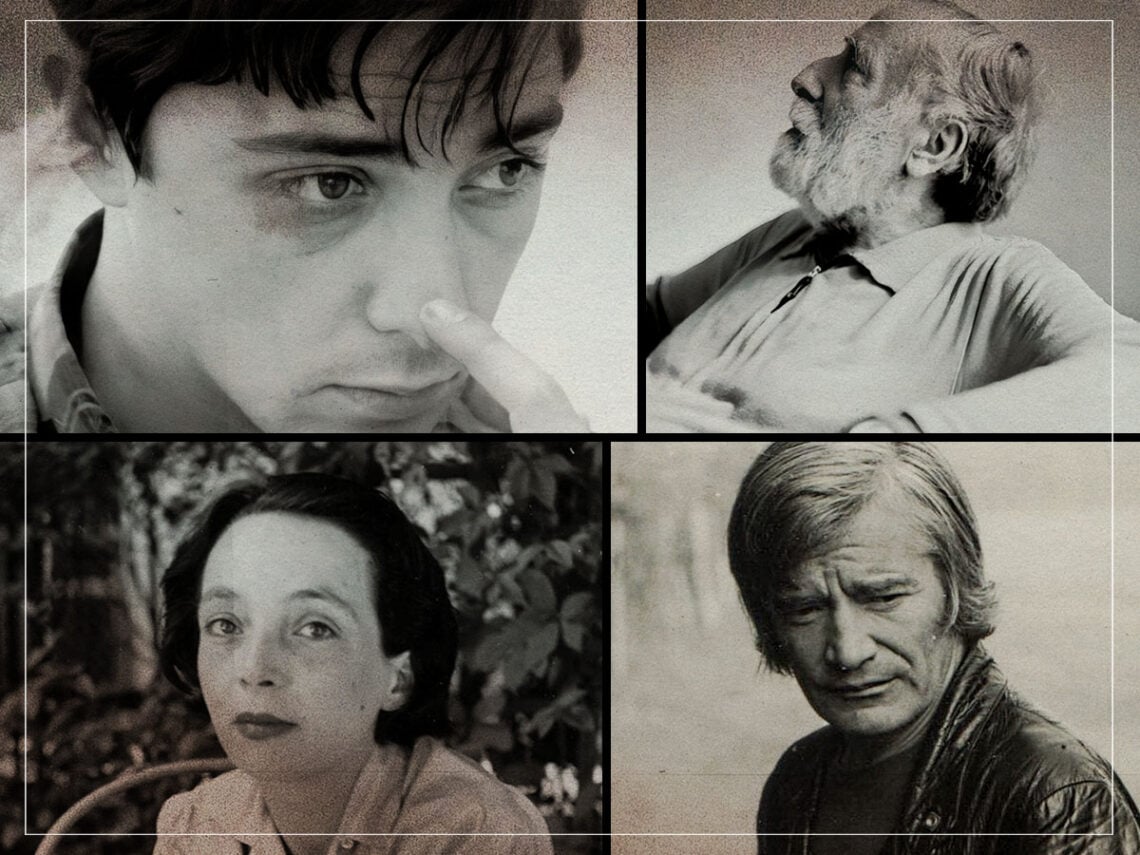
The overlooked figures who shaped the French New Wave:
Guy Gilles

Guy Gilles is a name that only die-hard French New Wave lovers will recognise, but his contributions to the era deserve more widespread appreciation. After working as an assistant for filmmaker François Reichenbach, Gilles made his first feature, Love at Sea, in 1962, which follows a couple whose relationship hangs in the balance as the Algerian War looms over them.
His career took him beyond the New Wave, with his documentary on Jean Genet, Saint, poet and martyr, and his film Le Crime d’amour establishing him as an important voice in the development of French queer cinema. Sadly, his work is not widely known, but Love at Sea remains an underrated gem from the peak of the nouvelle vague.
Marcel Hanoun

A filmmaker who sadly faded far into the depths of the French New Wave’s margins was Marcel Hanoun, who began his career as a journalist as well as a photographer, which greatly informed his approach to cinema. He made many films throughout his career, but he got his start in the ‘50s when the New Wave was taking shape.
Films like Une simple histoire, Le Huitième jour, and his Les Saisons series established him as a promising and talented filmmaker, but he was never one to stick to convention, and in the very spirit of the nouvelle vague, his career eventually tailed off into highly experimental works.
Jean-Daniel Pollet

In 1965, some of the nouvelle vague’s biggest names, like Godard, Rohmer, and Chabrol, collaborated on the short film anthology Paris vu par. Jean-Daniel Pollet contributed Rue Saint-Denis, which took inspiration from silent comedy. Yet, Pollet never experienced the same levels of acclaim as his contemporaries, even if one of his films, Méditerranée, inspired Godard’s Contempt.
Like various other forgotten figures of the New Wave, Pollet’s career in cinema took a more experimental approach as he got older. However, during the ‘50s and ‘60s, he made films that should have earned him a more prominent spot in film lovers’ memories, like the Golden Lion-winning short Pourvu qu’on ait l’ivresse, and L’amour C’est Gai, L’amour C’est Triste, starring Masculin Feminin’s Chantal Goya.
Jacques Rozier

Despite the influence of his film Adieu Philippine, Jacques Rozier remained a cult name among the nouvelle vague rather than a mainstream success. He found fans in the likes of Truffaut and Godard, but Rozier’s films never fared well commercially. Perhaps that was a sign of his integrity and experimental nature.
Rozier’s best-known work is perhaps his 1964 documentary Paparazzi, which charts the filming of Godard’s Contempt as Brigitte Bardot is constantly hounded by photographers and the press. Creating a cinematic dialogue between the two, Rozier shows great skill that has now been largely, and sadly, ignored.
Luc Moullet

Luc Moullet wrote for Cahiers du cinema when he was barely an adult, never afraid to give strong opinions on the films he was reviewing. Naturally, this led him to make movies of his own, beginning with Brigitte et Brigitte. While he continued to write about film for the rest of his life, he channelled the nouvelle vague’s playful energy, strong taste for the political, and disregard for rules with films like Les Contrebandières and Anatomie d’un rapport.
While he worked with people like Godard and even directed iconic French New Wave stars like Jean-Pierre Leaud, Moullet’s films never garnered any commercial success. They were simply too out-there and unconventional, leading him to predominantly dedicate himself to film criticism as a career.
Marguerite Duras

Unfortunately, but sadly and unsurprisingly, there were hardly any female figures in the French New Wave who weren’t in front of the camera apart from Varda. The movement often focused on female-centric stories, but there was almost always a man at the helm. However, Marguerite Duras, writer of acclaimed novels like The Lover, was also a filmmaker and screenwriter associated with the nouvelle vague. She penned the screenplay to Resnais’ Hiroshima, Mon Amour, released in 1959, earning herself an Oscar nomination.
Unbeknownst to many, she also directed quite a few films, including 1967’s La Musica and 1969’s Détruire, dit-elle, making her one of the only female filmmakers working in France at the time. While she is well-known for her writing, she also proved to be a rare female director working adjacent to the nouvelle vague, which was quite revolutionary.
Paul Gégauff

It was typically the directors who earned most of the praise during the French New Wave, who often wrote their screenplays themselves. Yet, many filmmakers were fond of using the ideas of Paul Gégauff, who penned the dialogue for Rohmer’s first film, Le Signe du lion, and who wrote the scripts for various movies by Chabrol, like Les Cousins, Les Bonnes Femmes, Les Godelureaux, and Les Biches.
He also earned significant praise for his screenplay Plein Soleil, directed by Rene Clement, which starred Alain Delon. It remains one of the ‘60s most iconic French movies, but Gégauff’s name is now hardly remembered.
Agnès Guillemot

Godard might have been known for his unique editing, but that wouldn’t have been possible without the help of Agnés Guillemot, the filmmaker’s faithful editor. She edited many iconic French New Wave movies by Godard, from Vivre sa vie and Alphaville to Contempt and Masculin Feminin. She also worked with Truffaut on movies like Stolen Kisses and Bed and Board, seamlessly adjusting her editing skills to suit his less formally experimental works.
She once compared her job to music conducting: “When I watched a film, I would treat it as I would a music manuscript – I would divide it into movements. I can tell you that timing the pieces made it obvious, allowed a dialogue with the director, showed them why it did not work – a question of rhythm.”
