


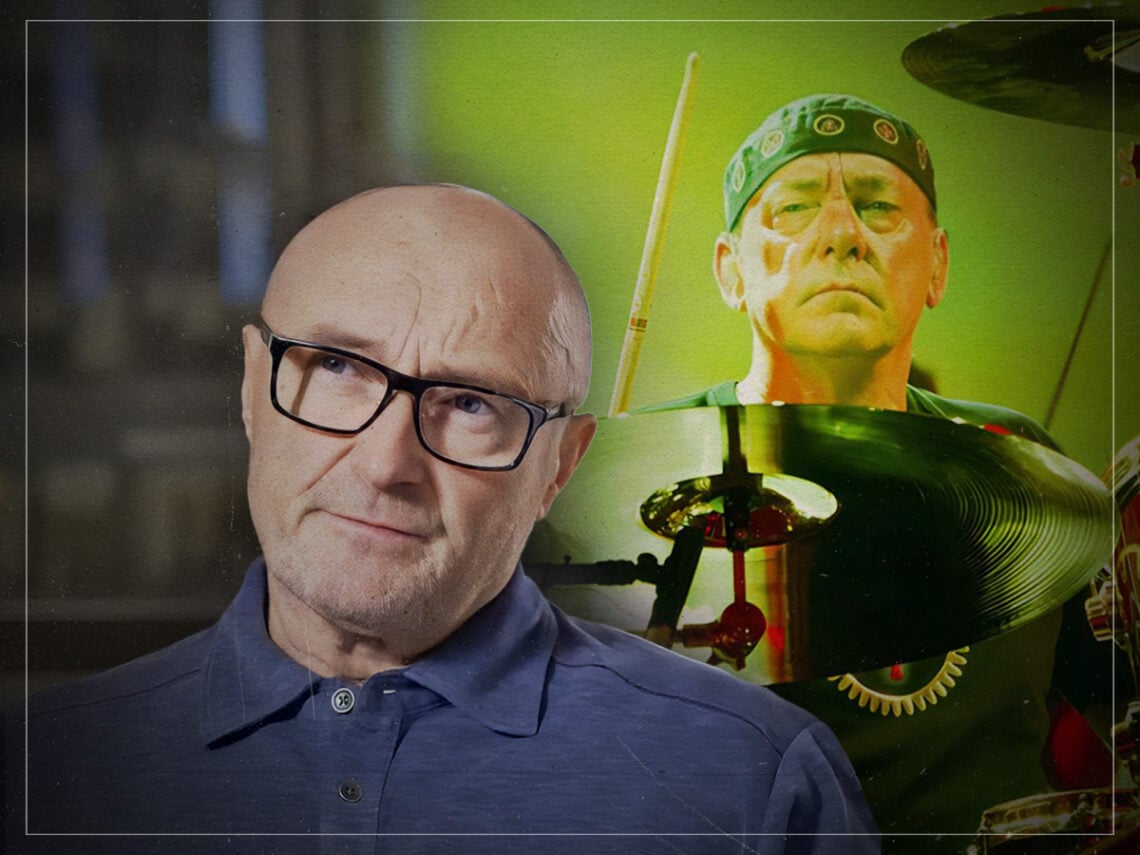
The one drummer Neil Peart and Phil Collins agreed was the best of all time

All prog rock drummers needed to be aware of what they were getting themselves into when they joined their respective bands.
No one comes into this genre without having impressive chops, and whether it was listening to the early days of King Crimson or the bands that came later, like Dream Theatre, every prog band has at least one song in their arsenal that can leave people in a daze. So when giants like Phil Collins and Neil Peart name-drop drummers they think outshine even them, that’s not a sentence to take lightly.
After all, Peart has already been regarded as one of the greatest drummers to ever pick up two sticks. The usual definition for a drumming god before then had been people like John Bonham and Keith Moon, and while Peart definitely had the same power as them, hearing all of the complicated runs that he made with Rush while also contributing lyrics was among the most gruelling endurance tests anyone has put themselves through for their band.
While Collins does have a bit of a nastier reputation for being the man who “ruined” Genesis for far too many people, it’s not like his drumming was ever called into question. His music was a bit more poppy than usual, but if you listen to Selling England by the Pound or The Lamb Lies Down on Broadway, he certainly knew his way around nearly any odd groove that the band threw his way.
But for many prog artists from around the 1970s, their style of music was only a breeding ground for something bigger. The best artists of the time may have been making songs that lasted for 20 minutes at a time, but the dream of any prog drummer was to find themselves working in a fusion band later down the line.
And why not? After all, jazz was one of the most sophisticated genres at the time, and even if not every fusion act was making a ton of money, they at least took comfort in having fun playing the best music that they could. There might have been more technical drummers in the session scene, but there was no reason for anyone to think that they were going to replace what Buddy Rich had done.

Simply put, the man was a monster behind every jazz song he played, and Collins had no problem calling him one of the finest he had ever seen, saying, “I think he is (the greatest drummer of all time). I think it would be impossible for anybody to not get something out of watching Buddy.
“I mean, the other day when I was rehearsing for my other career, as it were, all the musicians and crew were kind of just packing up. They put the video on [and it’s] ‘Birdland’ and it drew everybody to the TV screen. Everybody could hear this. They [were all saying] ‘How does he do that?’”
Peart was always a bit more clinical about his playing and that of his contemporaries, but even he knew there were no qualifiers needed for Rich, saying, “Just consider that fact that history combined with the quote from perhaps the only other candidate for all-time drum hero, Gene Krupa. He said Buddy Rich was ‘the greatest drummer ever to have drawn breath’. Those are fightin’ words, no question, and that was maybe 50 years ago, but I believe Gene was correct.”
Judging by Rich’s sense of technique, though, you can pick out what both legends saw in him. There was an animalistic approach to the way he played with a calculated sense of flow to the whole thing. He understood both aspects of what constituted good drumming, and while some of his parts could absolutely destroy any other drummer, it was always about serving the song.
But looking at how Rich used his gifts, he never forgot about the one cardinal rule of drumming: It might not be the easiest thing in the world for people to play drums correctly, but playing every part exactly right is something that has to be felt in the bones before it actually makes its way into your head.
