


The band that ripped off Lou Reed and “bored” him with his own style

At the mid-point of the 20th century, it was becoming increasingly clear that the art and the artist were inseparable. In the past, you could retain some private mystique away from the stage, but at the dawn of pop culture, that disappeared under a brighter spotlight.
Lou Reed chose to weaponise this new level of exposure and turn every public element of his life into artistry.
Thus, you’re often better off analysing what he stood to gain from a statement artistically rather than taking it as gospel.
As an avant-garde force, when David Bowie just about broke into the mainstream, he recognised that there was a certain kinship there, so he aligned himself with the Starman. Together, the pair helped to launch Reed as close to the mainstream as he would ever get with the masterful Transformer. However, Reed wasn’t prepared to let the public think he was now going to like every piece of art-pop on the outskirts of the charts.
Because with Reed, nothing was ever just off-the-cuff. Every opinion, every put-down, and every piece of praise felt like it had been filtered through the same artistic lens he applied to his music, turning even the most casual remark into part of a wider performance.

That approach made him a difficult figure to pin down. One moment he could be elevating a collaborator to near-mythical status, and the next he’d be dismissing an entire movement that seemed to share his DNA, leaving people wondering where the real Lou Reed ended and the persona began.
In that sense, his commentary on other artists often says more about him than it does about them. Whether he was staking a claim or simply stirring the pot, Reed understood that in a world where the art and the artist were inseparable, even his contradictions could become part of the mythology.


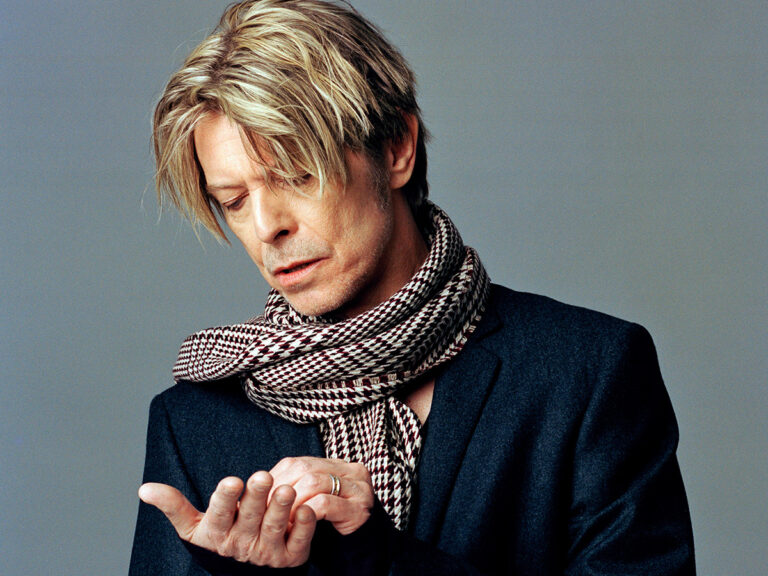
So, when Bowie enlisted hot-shit band Roxy Music to feature on his tour in the mid-1970s, Reed was ready for shooting practice. “I don’t like ’em,” Reed said. “I saw them at the Bowie concert, and we were all there waiting to be impressed. They bored me, and I went out halfway to get a drink. I’ve heard some of the other stuff that’s supposed to be up my alley. But they don’t know what they’re talking about. I’ve been doing this stuff a long time, and all of a sudden people are starting to talk about it. They’re saying: ‘Hey, look, we’re civilised, man, and we want [you] to know about it.’”
Reed might’ve been an egotistical man, but he wasn’t blinded enough by that to realise that it was ludicrous to think that he held some sort of trademark on the idea of literary art-rock and he’d been ripped off. In fact, the similarities between Reed and the mighty Roxy barely even stretched beyond the fact that they both made it clear that they went to university in their music, but it did serve Reed well to try and establish himself as the elder statesman of indie when the new generation emerged with a more synthesised take on the Velvet Underground’s bohemian values.
Therefore, it comes as little surprise that in the same feature, Reed had this to say about his former bandmate John Cale: “I only hope that one day John [Cale] will be recognised as… the Beethoven or something of his day.” He continued, “He knows so much about music, he’s such a great musician. He’s completely mad – but that’s because he’s Welsh.”
He may well have simply not liked Roxy Music, but it takes a great leap of mental acrobatics to think that he could be so fond of Bowie and then bashed a track like ‘Virginia Plain’ than it does to assume that his gripe was not so much with Bryan Ferry and his forward-thinking cronies and rather with planting his flag atop the prominence of avant-garde music made in his image.
Ironically, that was already the case in some ways. As Roxy Music’s Brian Eno famously once explained to Reed himself: “My reputation is far bigger than my sales. I was talking to Lou Reed the other day, and he said that the first Velvet Underground record sold only 30,000 copies in its first five years. Yet, that was an enormously important record for so many people. I think everyone who bought one of those 30,000 copies started a band! So I console myself in thinking that some things generate their rewards in second-hand way.“
