


‘The Invite’ movie review: Olivia Wilde’s biting couples’ comedy is a triumph

Hollywood was built on the romanticisation of marriage, but it is also responsible for some of the most harrowing portrayals of the institution. From Who’s Afraid of Virginia Woolf? to Blue Valentine, it’s hard to believe that there are any new ways to abuse an audience with excruciating relatability.
Now, however, Olivia Wilde has thrown her hat into the ring with The Invite, a caustic chamber piece in which a bitterly unhappy couple hosts their upstairs neighbours for an evening of disgust, insecurity, brutal honesty, and lust. The result is a triumph, a comedy that is not just Wilde’s best movie as a director, but one of the best showcases for every member of its A-list cast.
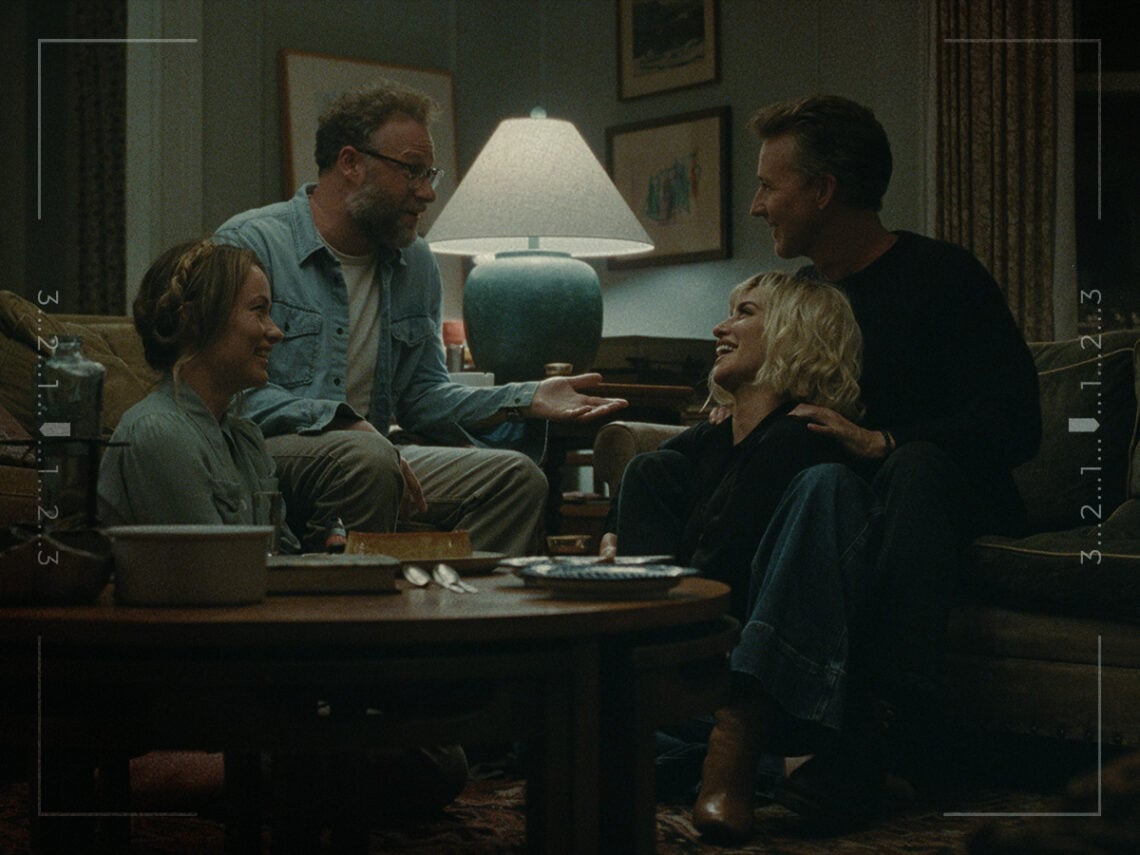
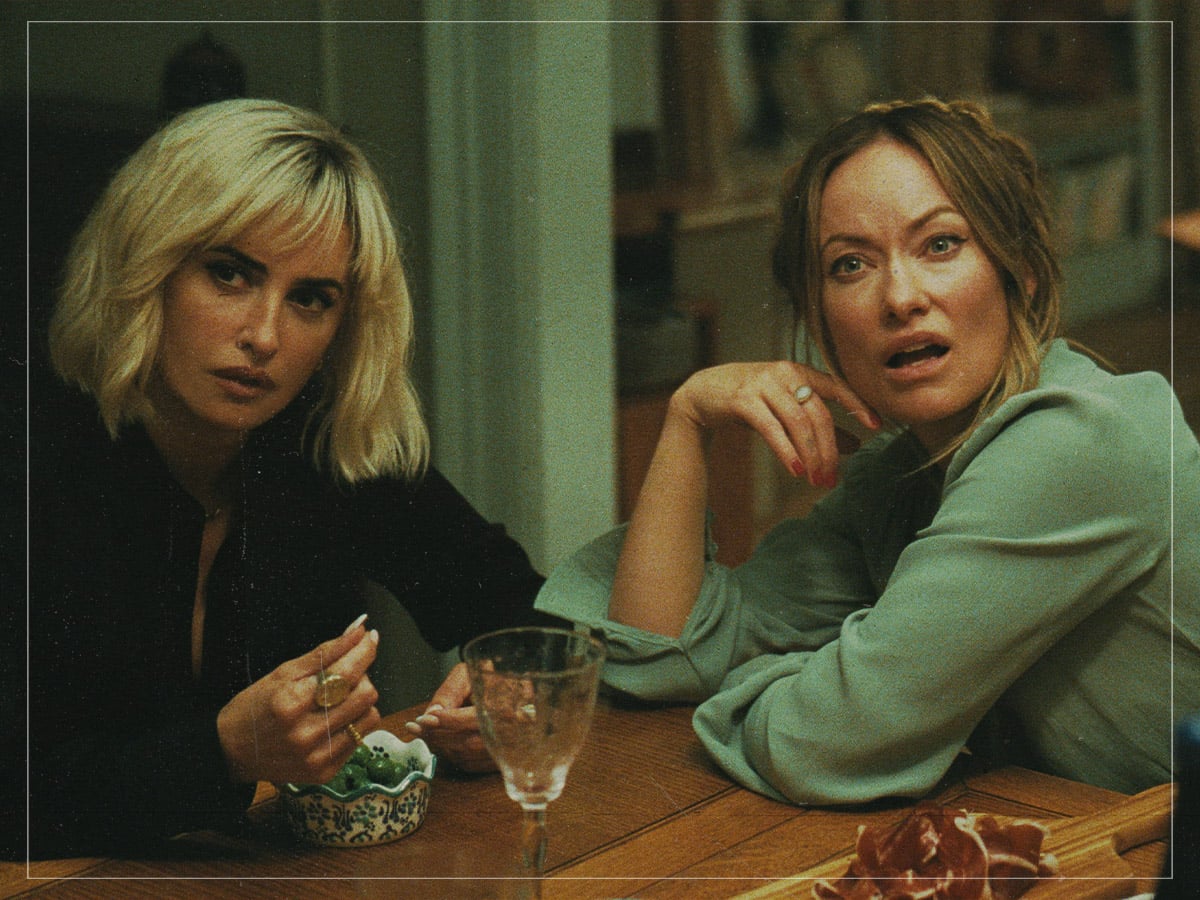
Wilde stars as Angela, an ex-artist obsessively redecorating the flat she shares with her husband Joe (Seth Rogan), a failed musician-turned music teacher. Much to Joe’s irritation, she invites the couple who has just moved into the apartment above them to dinner. Piña (Penelope Cruz) and Hawk (Edward Norton) are clearly in love and comfortable with each other. They don’t even seem to mind that Angela and Joe barely attempt to hide their mutual hostility. As the evening progresses, Piña and Hawk ask searching questions, overshare, and cross lines, much to the discomfort and fascination of their hosts.
The Invite is based on the Spanish film Sentimental, directed by Cesc Gay, which he adapted from his stage play, The Neighbours Upstairs. It is exceedingly difficult to adapt a dialogue-heavy, single-setting play into a film without making it look stagey, and it’s a testament to Wilde’s direction that this movie is emphatically cinematic. Believe it or not, this is a film that must be seen on the big screen, and its pacing feels more like a thriller than conversational comedy.
Tight camera angles and quick editing create a claustrophobic, pulse-pounding atmosphere, and although the insistent plucking of a cello early in the film is distracting in all the wrong ways, the score quickly eases into a more subliminal source of discomfort. Adam Newport-Berra, the cinematographer behind the stunning one-take episode of Rogen’s The Studio, shot the film in 35mm, and the texture, muted colour palette, and varied lighting lend a sumptuous quality to the limited space.
Written by Rashida Jones and Will McCormack, the script is witty, dry, and occasionally heartbreaking. Rogen said in a recent interview that most of the screenplay was rewritten once the actors arrived on set and began revealing the secrets and philosophies of their own romantic experiences.
It should be no surprise, then, that specificity is baked into the characters, but it should not be underestimated, either. Most movies about relationships are ultimately about the dynamic, not the people. The Invite provides four distinct characters who play off of each other but function in isolation, too. All of them have their own story arc, and you could imagine entire movies centred on each of them.
Rogen gives a career-best performance as a man who hides his insecurity and disappointment behind humour and back pain. Wilde channels Diane Keaton, to whom the movie is dedicated, but dares to make Angela unlikable, too. Cruz and Norton, who are given fewer theatrics, have an arguably harder task of offsetting the tension without being mere foils. Cruz is at times commanding and irritable, while Norton is both soulful and over-eager. The combustion between all these characters spins off into unpredictable territory. Even if you know the premise going in, you will almost certainly be caught off guard by one twist or another.
What’s remarkable about the performances is how little scenery chewing is going on. One can imagine how other actors might handle the same material. Amy Adams was originally set to star, which would no doubt have reset the tone to a more melodramatic register. Whether through Wilde’s direction or the stars’ ease with each other, the acting is refreshingly non-competitive for such a dialogue-heavy movie. They are so at ease, in fact, that they may be passed over during awards season in favour of the script that they bring to life.
There may be some viewers who dismiss The Invite as just another film that introduces straight audiences to the concept of swinging, and sure – it’s a topic that seems to be en vogue right now. Last year’s Splitsville focused on the comedic potential of open marriages and remains a relatively hidden gem. This film, despite its confined space, is more expansive. It doesn’t just illuminate the darkness and potential of romantic attachment; it also explores the malaise of millennials whose youthful optimism has been steadily beaten into submission by reality.
All four characters have navigated this inevitability in different ways, and by the end of the movie, you might be inspired to change your approach, too.
