


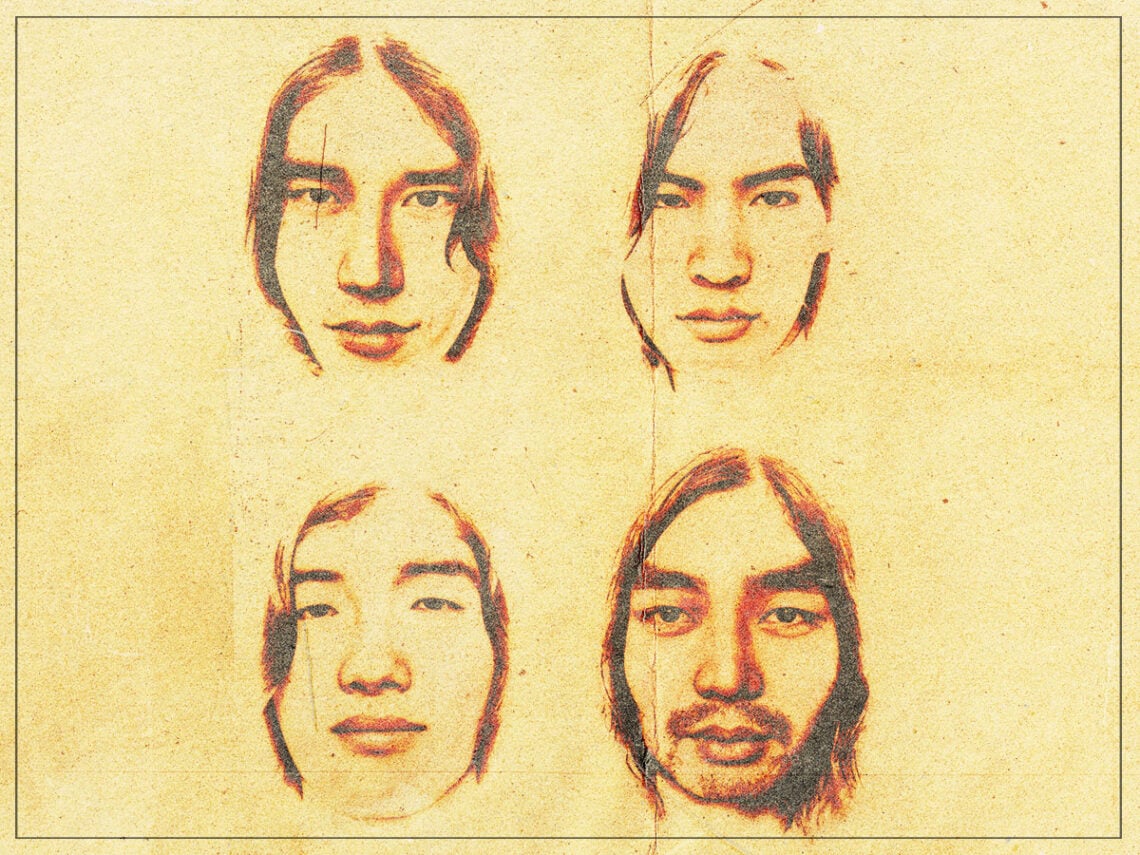
はっぴいえんど: The crucial impact of Japanese folk-rock pioneers, Happy End

Although they only remained active in the studio for the four years between 1969 and 1971, the Tokyo band Happy End had a crucial and enduring impact on a global scale. Throughout the 1960s, Western artists like Bob Dylan, Joni Mitchell, Donovan and Simon & Garfunkel brought folk tradition into the modern age. Inspired by what they heard from overseas, Happy End brought folk stylings to Japan.
Happy End, or はっぴいえんど, was formed in 1969 by Haruomi Hosono, Eiichi Ohtaki, Takashi Matsumoto and Shigeru Suzuki. When Burns, Takashi Matsumoto’s formative group, found themselves in need of a bass player, he got in touch with Haruomi Hosono, a student at Rikkyo University known as a prodigy of sorts in local singer-songwriting circles.
After becoming well acquainted, Matsumoto eventually invited Hosono to join his new band, Apryl Fool. After several months, Apryl Fool also disbanded, but the pair maintained their connection and founded a band of their own, Blue Valentine, a name later changed to Happy End. The four-piece rapidly built their status as the backing band for “the Japanese Bob Dylan,” Nobuyasu Okabayashi, performing on his album Miru Mae ni Tobe.
In 1970, Happy End began recording their self-titled debut album, writing songs in the Japanese language heavily inspired by West Coast folk-rock bands like Buffalo Springfield. When they released the album in August ’70, Happy End became known as the first-ever rock act to sing in Japanese.
“There were two strings of music back in the day,” Matsumoto reflected in a 2022 conversation with The Japan Times. “You had kayōkyoku, old-style Japanese pop music that had already existed, and then group sounds. There were bands tied to that latter movement, like The Golden Cups and The Spiders, who were active in the Yokohama scene, which was a really interesting music community because it had a huge American influence owing to the navy base in nearby Yokosuka”.
Adding: “Their singles would have an A-side that was more like kayōkyoku, but the B-side would have something more psychedelic, more genuine rock. That gap between the two sides felt strange to me and the other members of Happy End, so we decided to not worry about whether what we created would sell. We just wanted to do something original. If you make something original, it’s probably better to sing it in Japanese.”
Addressing the fact that Honso had initially wanted to sing in English, Matsumoto continued: “I think Hosono-san had the intention of wanting to do something that would go beyond just Japan. For me, I wanted to share something that was good about everyday Japanese life. That was the basis of my lyrics. It’s something that’s interesting to people even beyond Japan, but I actually think it would have needed a really good translator to connect.”
Between 1970 and ’73, Happy End released three studio albums, following the debut with Kazemachi Roman and a second self-titled effort. Having permeated the Western consciousness, the band’s third album was recorded in Sunset Sound Studios, Los Angeles.
Although Happy End disbanded in 1973 to take on various solo endeavours, they remained close and have reunited on several occasions since.
In a 2023 interview with Far Out, James McNew, the bassist from the American alt-rock band Yo La Tengo, described Happy End as a huge influence on the band, picking out Kazemachi Roman as a favourite.
“California folk-rock filtered through Tokyo, streamlined and, well, perfected,” McNew said. “Sweetly melancholy, nostalgic songs with aching, vulnerable harmonies by Harry Hosono and Eiichi Ohtake. What a rhythm section, too. My Japanese isn’t so great, either, but this record means the world to me.”
Listen to Happy End’s second album, Kazemachi Roman, below.

Never Miss A Tale
The Far Out Bob Dylan Newsletter
All the latest stories about Bob Dylan from the independent voice of culture.
Straight to your inbox.