


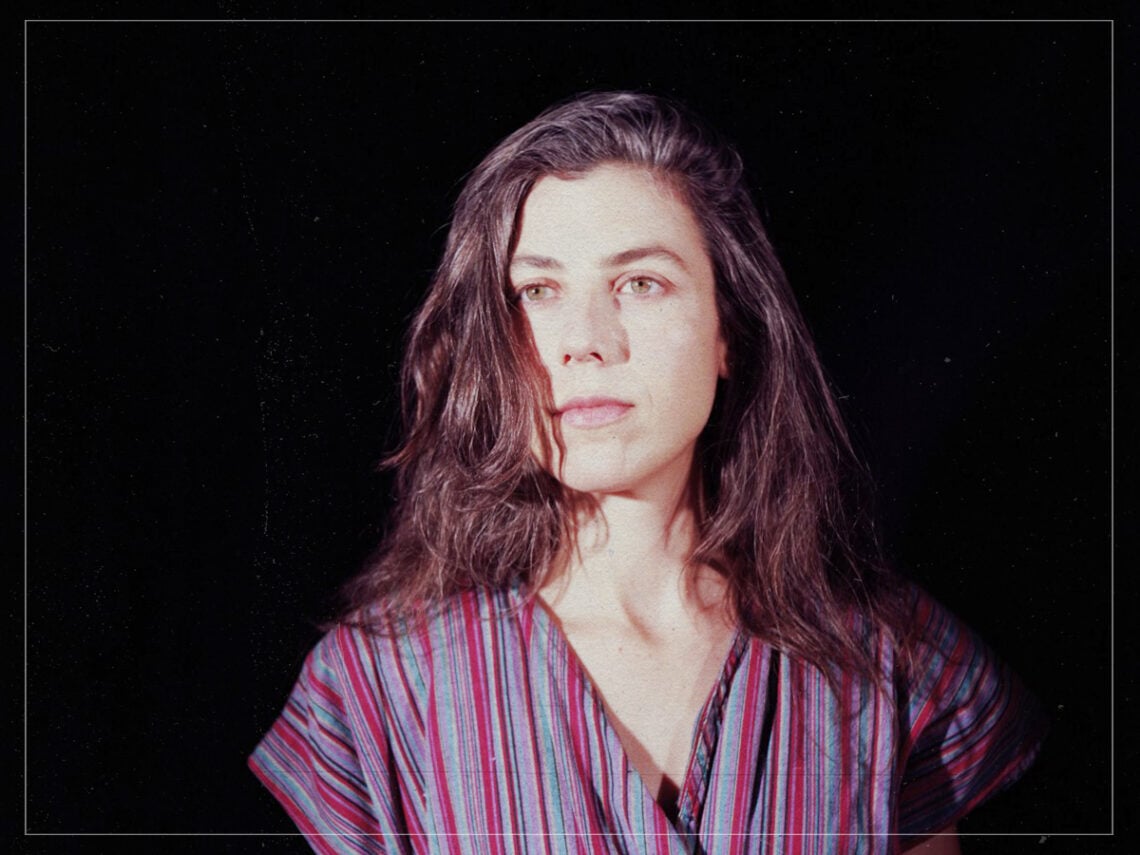
‘Ocean’: how motherhood helped Julia Holter discover her new sound

While her music can ostensibly be placed within the art pop sphere, there’s always been an experimental edge to the work of Julia Holter. Forever tweaking her sound between albums in ways that made her stand out from her peers, the frequent drifts into dreamlike worlds and occasional haunting turns have rendered her one of the most consistently fascinating artists of the modern era.
Her first official studio albums, Tragedy and Ekstasis, offered a unique take on ambient music, with songs that floated their way through blissful soundscapes with feather-light pop melodies laced over the top. While these records undoubtedly had charm to them, there was something a little too fragile about them for a wider audience to be able to latch onto her music, and it wasn’t until she signed to Domino for her third record, Loud City Song, that things began to gain traction and a fuller picture of her artistry was formed.
2015’s Have You in My Wilderness is Holter at her most accessible, although it’s anything but a simplification of her sound, with its shimmering arrangements always gunning for the attention of the listener. Conversely, its follow-up, Aviary, is Holter at her most obtuse, with its sprawling runtime and cinematic spaciousness often eschewing traditional structure and plumping for a more avant-garde approach to composition. Given that this was her trajectory up until recently, it was anyone’s guess as to what her 2024 album, Something in the Room She Moves, would sound like.
Some dramatic life-altering events had a profound effect on her approach when putting together Something, and the six-year wait between records was due to her need to acclimatise to these changes. Having given birth to her first child during the pandemic, motherhood was a hugely informative experience towards her artistry when approaching her latest record, and the experience of conceiving and giving birth to new life played a crucial role in perhaps the most defining song on the record.
The experiences of pregnancy and sharing a familial bond with her daughter were particularly inspiring for the song ‘Ocean’, which Holter attests was partially influenced by her watching the Japanese animated film Ponyo with her infant daughter. The film, which is about a goldfish princess who wishes to experience human life, loosely observes themes of transformation and fluidity, and the aquatic setting had Holter thinking about the vastness of the ocean and all of the various forms of life within it.
After describing the album as existing in “a realm that’s waterlike, fluid, evoking the body’s internal sound world,” Holter said of her experience watching Ponyo with her daughter that it had many surreal effects on her. Speaking to the Independent, she claimed: “I was suddenly having these crazy horror feelings I’d never experienced. It was crazy how intense it was. I’ve never felt hormonal changes like that.”
Having begun as an ambient demo, the track eventually found its final form in the studio, going through an evolutionary process of its own. While her compositions have arguably always had this amorphous fluidity to them, it was with ‘Ocean’ that she truly established the direction and thematic concepts of her latest album, continuing her trend of continually pushing her sound forward in a quest for artistic development.
