


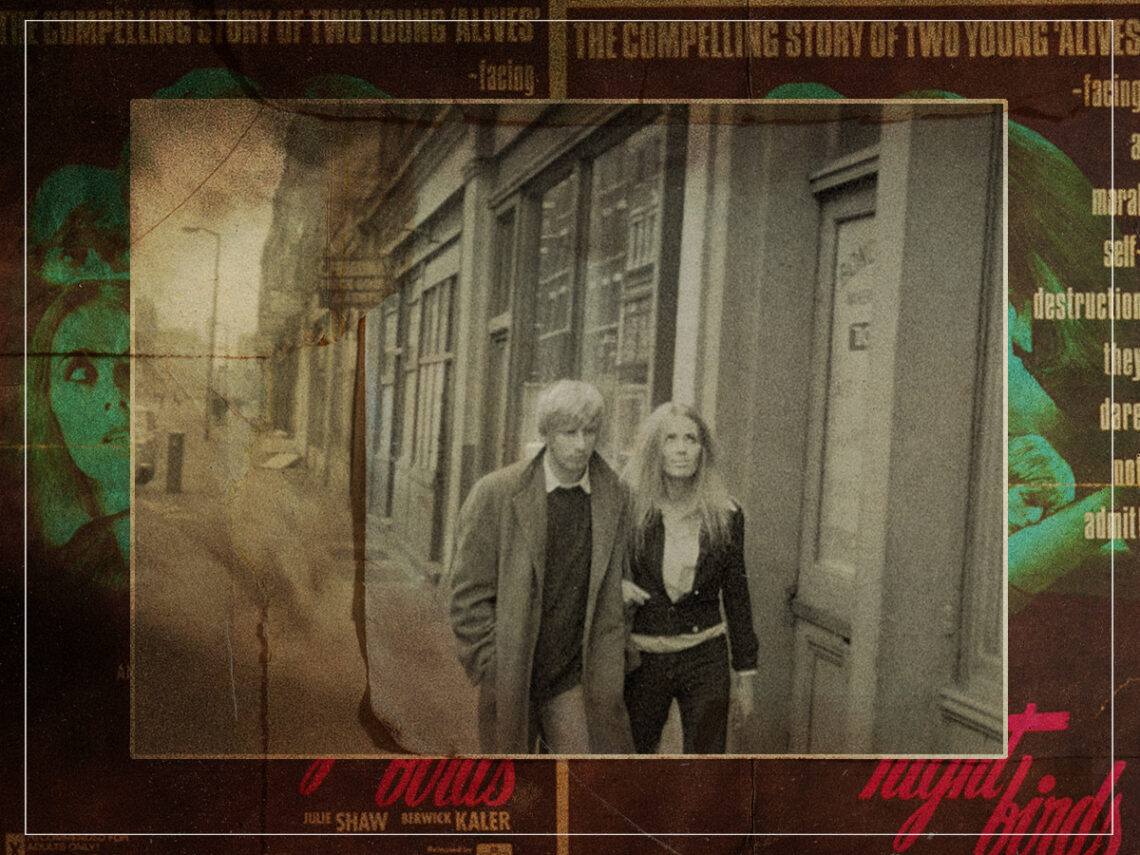
‘Nightbirds’: A bleak vision of the swinging sixties

When those of us who weren’t around in 1960s-era London imagine what the city was like, we might hear the sounds of The Rolling Stones or The Beatles emanating through our minds above images of mini-skirts, striking eye-makeup, bright colours, and Biba shops. Of course, this wasn’t the reality for everyone, even if certain films, songs, and advertisements from the period suggest otherwise.
While there were young people lapping up London’s quirky vintage shops and attending gigs showcasing groundbreaking new rock and roll bands – strutting about in the sort of outfits men and women wouldn’t have even dreamt of wearing a decade prior – the reality, for many, was much more bleak. In Andy Milligan’s 1970 film Nightbirds, the American filmmaker presents the end of the swinging sixties with a nihilistic and depressing vision.
The director was known for working with tiny budgets, specialising in horror and cheap sexploitation B-movies. With titles like The Promiscuous Sex, The Gay Life, The Degenerates, Kiss Me, Kiss Me, Kiss Me!, and Torture Dungeon under his belt, Milligan wasn’t exactly an esteemed Hollywood filmmaker. Yet, his style began to mature slightly when he came over to England for a few months to make some films.
Out of all of them, Nightbirds remains his best, although viewers should be warned that his approach to filmmaking was by no means polished. When you begin Nightbirds, you’d be forgiven for thinking that something is up with your DVD Player. There are awkward freeze frames as the lead character, Dink, wanders the streets of London’s East End in what is clearly a bold, experimental artistic choice. He is homeless, and the shaky handheld camera, filming actor Berwick Kaler in gritty black-and-white, feels like a far cry from the images of hedonism and hopefulness associated with the era.
He is ‘rescued’ by Dee, a strange woman who initially seems friendly enough, inviting him up to her apartment. It’s dilapidated, however, with peeling walls and a decisive lack of nice things. The two make the space into their home and begin a sexual relationship, although Dink is clearly inexperienced and nervous. It’s an odd set-up, with Milligan leaving us to question Dee’s character. She’s beautiful and mysterious, but it is clear that she is hiding some dark secrets, using her attractiveness to seduce Dink for her own pleasure, regardless of him being uncomfortable.
As they both become obsessive and violent, the movie ends in tragedy as betrayal and ugly truths rear their head. This is a cynical view of London during a time full of creative expression and supposed liberation. Dee takes control and wields her sexuality for her own gain, yet it is unclear if Milligan is criticising the idea of women being independent and liberated individuals or if he is simply cynical about humanity as a whole since every character possesses their fair share of negative attributes.
This is a film concerned with exposing the innate difficulties that come with relationships and the naturally selfish, cruel, and miserable aspects of many people’s personalities. Milligan conversed with “the kids in Piccadilly” to discover what life was like for many young Londoners at the time.
“Hang out with the street people; that’s how you find out about a country. You don’t go to the libraries, you go to the street corners, the dives, with the bums and the street peddlers,” he said via Jimmy McDonough’s The Ghastly One: The Sex-gore Netherworld of Filmmaker Andy Milligan. Clearly, the director was more interested in the kinds of people who have suffered through life’s hardships.
Nightbirds is a relic from the late 1960s, offering a perspective from the outside looking in. While it might not be the greatest film ever made, it effectively captures a side of London that extends the tradition of kitchen sink realism, which was popular just a few years earlier. The film delves into the grittier, darker aspects of life in an era celebrated for its innovation and creative expression, providing a stark contrast to the more glamorous portrayals of the time.
