


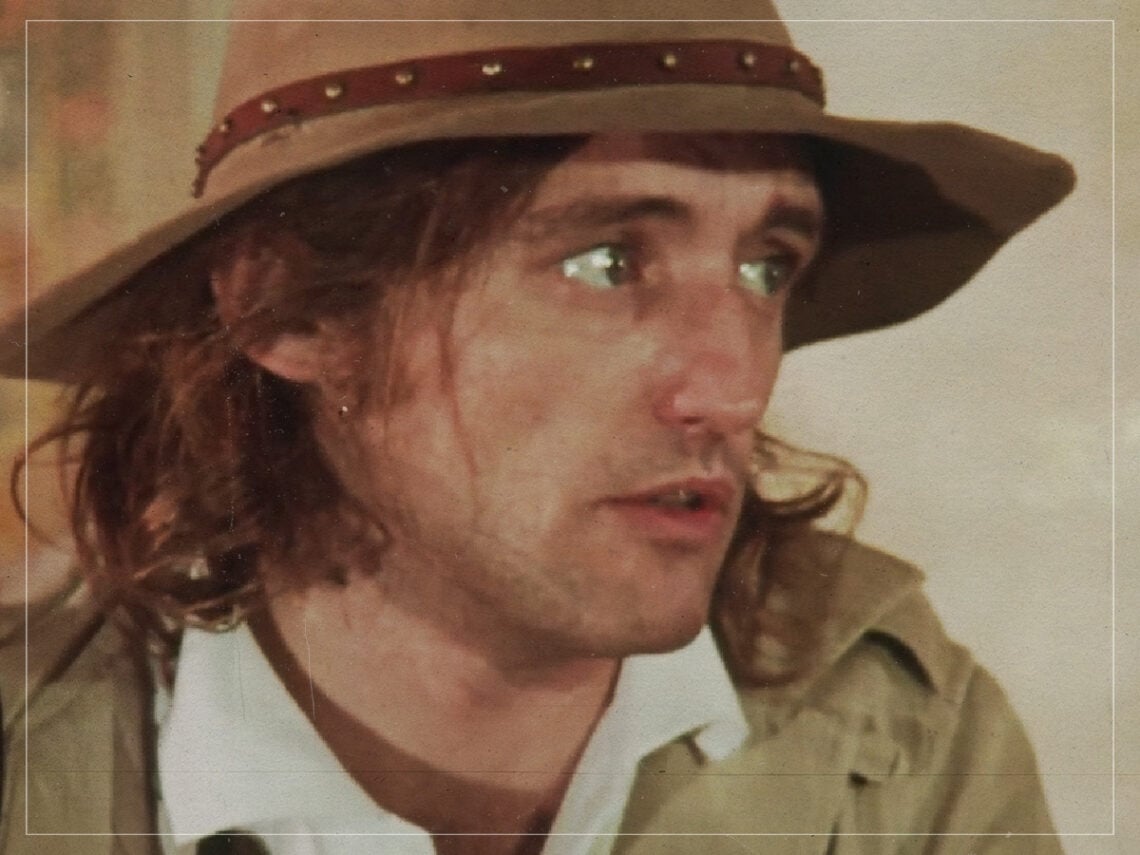
“Pitchforks, machetes, the works”: The night a gunpoint citizen’s arrest almost got Dennis Hopper killed

Dennis Hopper lived a wild life. You wouldn’t even be able to make a biopic about the man, because it would be impossible to fit every story into a reasonably timed film. I mean, from participating in Russian roulette to shooting a tree on acid (thinking it was a bear), and even snorting someone’s ashes, there’s a lot of ground to cover, and that’s only scraping the surface.
It’s hard to comprehend that he was able to act and direct movies for as many years as he did because he was stuffed like a rag doll with every drug imaginable and doused in enough alcohol that if you held a flame near him, he’d have exploded from whatever concoction was inside of him, but he was able to light enough joints and enough cigarettes to miraculously survive until the age of 74, which wasn’t bad going for someone who seemed to be one step away from death for the whole of the 1960s and the 1970s.
He was an endlessly fascinating man, but his art proves that he was so much more than just a Hollywood daredevil. His directorial debut, Easy Rider, is a sublime meditation on the ‘American Dream’, while Out of the Blue, in which he also starred as a criminal, abusive father, is an underrated masterpiece, a true tragedy, and of course, there were his unforgettable performances, too, like playing the deranged Frank Booth in David Lynch’s Blue Velvet.
He could be terrifying when he wanted to be, but also strangely hilarious, and you can say that about him off-screen, too, and a bizarre story involving a citizen’s arrest is just one of many examples of his odd life behind the scenes, where he was constantly getting into the strangest scrapes that often sounded too good to be true.
Whether certain stories were true, or just some drug-fuelled tales Hopper lied about to the press, that’s anyone’s guess, but one of the most perplexing is the one that involves him forgetting that he wasn’t in a western film, instead trying to take matters of the law into his own hands. He was living in Taos, in New Mexico, at the time, and recognising that the area faced considerable crime levels, he said, “I had a lot of trouble at first from the local Spanish, who didn’t want to see an influx of Anglos, especially hippies. Most of the residents live on about eight hundred dollars a year, 85 per cent of the land belongs to the government, and there’s a lot of violence.”
It was here that, during a car ride with his brother and some friends, they stopped some teenagers to ask for directions, but the youngsters eventually started to cause a scene. “At first, I was threatened, and then a bunch of guys tried to pull my brother and me out of our car on a country road and beat us up. I’d seen too many John Wayne movies, so I made a citizen’s arrest and held them all at gunpoint until the police arrived,” Hopper revealed.
When the police arrived, it was Hopper and his pals who were arrested, not the teenagers, and they were held on an $8,000 bail. “A crowd gathered at the police station, and the police said, ‘We’re going to let you out a side door. We can’t protect you, because of the lynch situation’. There were 60 or 80 farmers outside, and then five guys just back from Vietnam came in and told me, ‘We’re going to kill you’.”


For some reason, there was significant opposition from locals to Hopper and his friends, and the police didn’t care about these threats. In another article, Hopper told the story similarly, only this time he emphasised just how dramatic the scene really was, saying, “There was a lynch mob out there of a good 150 people wantin’ to hang our asses. It looked like a scene out of Viva Zapata—pitchforks, machetes, the works.”
The actor also claimed to have tracked down the teenagers’ high school, barged into an assembly, and threatened everyone with a machine gun, but it’s hard to believe that part, mostly because, by this time, Hopper was already a star, having been nominated for an Oscar for Easy Rider and appearing opposite Wayne in True Grit, so surely he wasn’t taking guns into high-schools in his spare time? Unsurprisingly, this part of the story has never been corroborated, but the first half seems likely. After all, having recently worked with Wayne had probably gone to Hopper’s head.
