


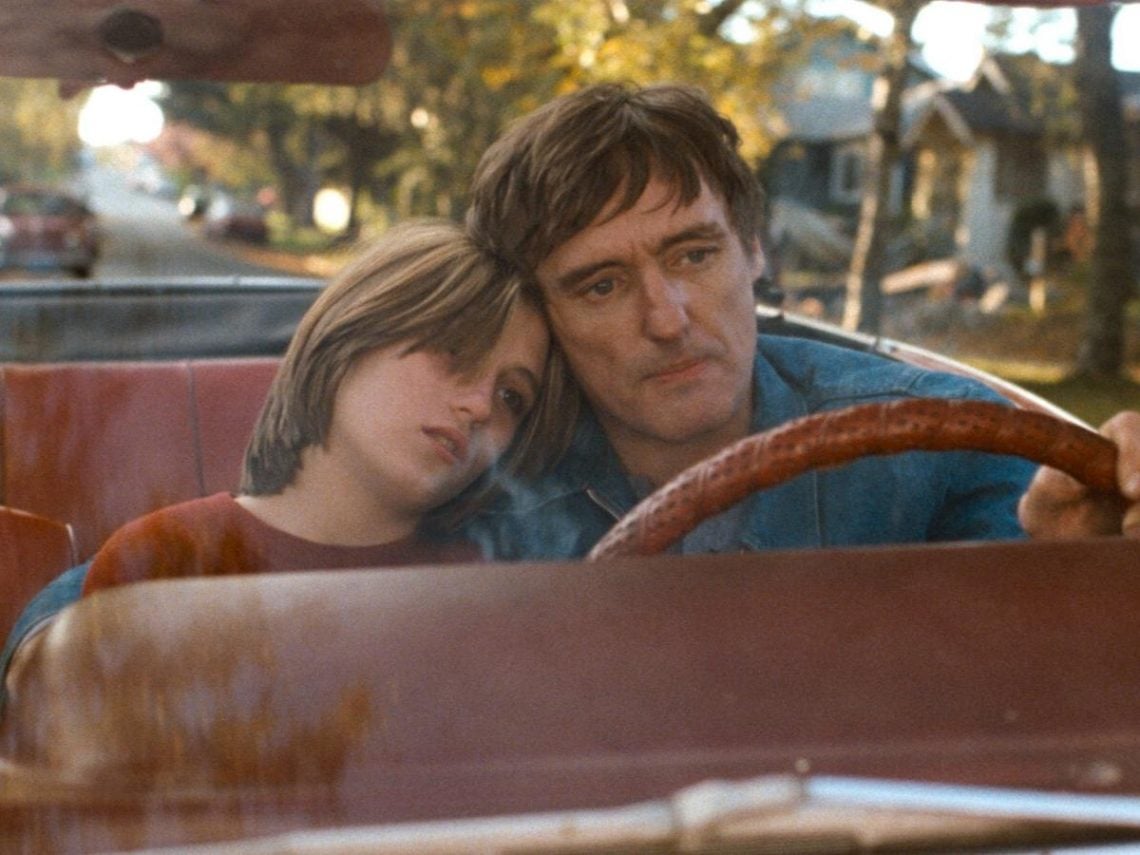
Revisiting Dennis Hopper’s tragically beautiful coming-of-age tale ‘Out of the Blue’

Dennis Hopper gained quite a reputation in Hollywood for his wild and volatile nature, a run of incidents that led him to be nicknamed ‘Hollywood’s Original Hell-Raiser’. After directing and starring in the hugely successful Easy Rider in 1969, he made The Last Movie in 1971, which did not share the same fate. The poor reaction to his sophomore effort prevented Hopper from directing another film until the 1980 effort Out of the Blue.
Initially helmed by Leonard Yakir, the film was described as “a conventional family-friendly drama about a troubled girl’s rescue by a well-meaning shrink”. However, the producers were unhappy with how the film was going, and Hopper, one of the film’s stars, was asked to replace Yakir. Using lead actress Linda Manz’s personality and interests in counterculture as inspiration for her character, Hopper made a coming-of-age film imbued with a punk spirit and a distinctive roughness around its edges.
Out of the Blue is bleak and nihilistic, yet beautiful and unforgettable. The film follows Cebe, a 13-year-old girl obsessed with punk music and Elvis Presley. She lives with her heroin-addicted mother whilst her father, Don, serves time in prison for a drunk-driving incident that killed a busload of school children (Cebe was in the passenger seat). Everyone knows Cebe’s name, and her reputation as an outspoken and reckless teen masks her miserable home life, loneliness, and desire to be loved.
She retreats to her father’s wrecked truck at night and communicates with men on a CB radio, where she attempts to spread her punk aphorisms. “Disco sucks. Kill all hippies. Pretty vacant, huh? Subvert Normality,” she blurts. With a lack of adult role models and love for disgraced icons such as Johnny Rotten, it doesn’t take long for Cebe to go off the rails. After witnessing her mother shooting up, she takes off into the city, where she meets a slimy cab driver who makes sexual advances towards her. Cebe quickly escapes and ends up at a punk gig, where the band let her play the drums on stage with them. She looks genuinely happy in this fleeting moment – something that is few and far between for the rest of the movie.
As the film progresses, optimism seems pointless for both the characters and the audience. Don’s release from prison brings the hope of living like a happy family – of course, this comes crashing down immediately when it becomes apparent that he is still an addict. Hopper’s cynical vision of America is hard to watch because it exposes the American Dream in all of its falseness. There is no salvation or redemption for anyone in Out of the Blue, and the harrowing final act pushes the film to uncomfortable extremes to convey just how unfair life can be – even to a child.
The suitable rawness of the film, due to Hopper’s rewriting of the script every morning, works perfectly to convey the hopelessness of being a teenager, especially one caught between careless family members and poverty. Manz’s rambunctious performance is incredible, and it is a great shame that the actor only starred in a small handful of roles afterwards.
Contentious director Harmony Korine has cited Out of the Blue as one of his favourite films, which says a lot about its impact. The film’s influence is strikingly apparent in his directorial debut Gummo, a groundbreaking exploration of unique characters living in a poverty-stricken town. Korine’s love for Out of the Blue led him to recruit Manz to play a small role in Gummo as Solomon’s mother. Gummo star Chloë Sevigny is also a big fan of Manz, who, alongside Natasha Lyonne, helped to pull Out of the Blue from its relative obscurity by crowdfunding its restoration and re-release in 2019.
According to Lyonne, “The world at large doesn’t always make sense to me, and there are safe havens. Linda Manz in Out of the Blue is one of them.” Manz’s tender portrayal of troubled girlhood is magnetic and enthralling. Despite her determined attempts to spread her punk doctrine, flip off the world around her and stride into the unknown, Manz permeates her performance with underlying uncertainty and childishness. A quiet melancholy pervades underneath the ‘Elvis’ emblazoned denim jacket (which Sevigny now owns), greased back hair and a hardy demeanour.
Hopper stays true to his image and betrays Hollywood tradition by ending Out of the Blue without a trace of hope. Cebe, marred by her upbringing, takes her quests for escapism to new levels and the results are catastrophic. Rebellion is futile, and happiness is impossible to grasp in Out of the Blue.
Yet Hopper’s last directorial feature slowly paved the way for his return to Hollywood as a respected actor. A showstopping performance in David Lynch’s Blue Velvet eventually revived his career in 1986. Hopper died in 2010, and Manz followed ten years later, yet both actors left an indelible mark on cinema, aided by the vividly devastating Out of the Blue.
