


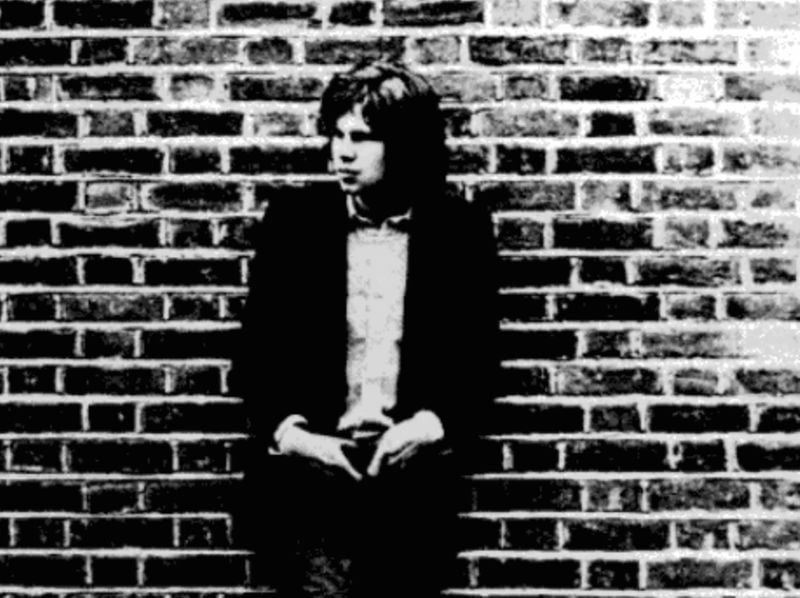
Revisiting Nick Drake’s debut album, ‘Five Leaves Left’

Nick Drake is now recognised as one of the most profound folk artists to have emerged from England in the 1960s, yet his talents were largely ignored during his lifetime. The musician released three albums before overdosing aged 26, which have been posthumously appreciated for their beautifully introspective qualities. Drake’s warm voice, skilful guitar playing and poetic lyricism have inspired and comforted listeners for decades since his music was reissued and reappraised in the late 1970s. His sister Gabrielle once shared: “A lot of young people find his music such a help. And that, I think, would have pleased him so very, very much.”
During school, Drake played piano, clarinet and saxophone, eventually forming a band called The Perfumed Gardeners with some friends. However, in 1965, he purchased his first acoustic guitar, on which he learnt how to finger-pick and experiment with open-tuning. These skills would form the basis of his sound, which continued to develop as he moved to Cambridge for university in 1967. By December, Drake had begun playing in local coffee shops and clubs, which led him to perform at an event at The Roundhouse in Camden. The performance piqued the interest of Fairport Convention bassist Ashley Hutchings, who declared: “He looked like a star. He looked wonderful, he seemed to be 7 foot.”
Hutchings introduced Drake to producer Joe Boyd, and the two immediately connected, soon providing the musician with a recording contract and the offer to produce his first album. The result was Five Leaves Left, released in July 1969. The album, comprised of ten songs, incorporated classic English folk music with lush string arrangements, with Drake’s rich vocals shining over the top. According to sound engineer John Wood, the singer “would track live, singing and playing along with the string section” without overdubs. Drake enlisted the help of his friend Robert Kirby to arrange the majority of the strings on Five Leaves Left. Wood recalls that despite Kirby’s lack of experience in a professional musical environment, “We were flabbergasted. He was so good.”
Opening the album is ‘Time Has Told Me’. Despite Drake’s reputation as a vision of melancholy (Kirby once told a fan site, “Nick seems to have become the patron saint of the depressed”), this track is rather hopeful. “Time has told me/You’re a rare, rare find”, he sings, evoking a sense of optimism in the passage of time and letting life take its course. Yet beneath all of Drake’s more sanguine lyrics is an innate sadness propelled by introspection, which would ultimately be his downfall.
One of his finest tracks, ‘River Man’, follows, which contains haunting strings that creep up on Drake as he contemplates his mortality. He addresses a ‘River man’, presumably a reference to Herman Hesse’s novel Siddartha, wherein the titular character discovers the importance of the interconnectedness of life’s opposites, such as birth and death. Drake explores how pleasure and pain are both necessary in life, evident in the lines, “For when she thought of summer rain/ Calling for her mind again/ She lost the pain/ And stayed for more.”
Drake’s lyrics teeter on the precipe between optimism and hopelessness, with the fourth number ‘Way to Blue’ another excellent example of Drake’s desperate attempt to launch himself from sadness. He pleads: “Tell me all that you may know/ Show me what you have to show/Won’t you come and say if you know the way to blue?” Although blue is typically representative of melancholy, his quest to find “blue” is perhaps his desire to find freedom reflected in the vastness of the sky. The musician was greatly inspired by the Romantic poets; thus, it is likely that his idea of heaven and happiness could be found within nature.
Not all of the songs on Five Leaves Left are imbued with a glimmer of hope. ‘Day is Done’ is particularly forlorn, as Drake sings about the ultimate meaninglessness of life: “When the day is done/ Down to earth, then, sinks the sun/Along with everything that was lost and won/ When the day is done.” Furthermore, Drake seemingly predicts his fate on the bleak ‘Fruit Tree’ which sees the musician contemplate fame and success, stating that artists are more likely to find recognition once they’re dead: “Fame is but a fruit tree/ So very unsound/ It can never flourish/’Til its stock is in the ground.” Listening to the track, infused with beautiful oboes and English horns, is particularly chilling, knowing Drake would die just five years later.
Over these ten tracks, Drake demonstrated himself to be a rare talent, imbued with an introspective and poetic nature that made his songwriting feel simultaneously intimate and elusive. Five Leaves Left is a beguiling listen, remarkable for its meditations on the dichotomy of life, depicting both sadness and optimism amongst pastoral flutes, vibraphone, oboe, guitar and piano. Ending with ‘Saturday Sun’, Drake reminds us not to let life pass us by, a key motif on the album. The musician’s debut album might not be as hypnotic as his seminal Pink Moon, released three years later, but it remains a tender and timeless classic.
