


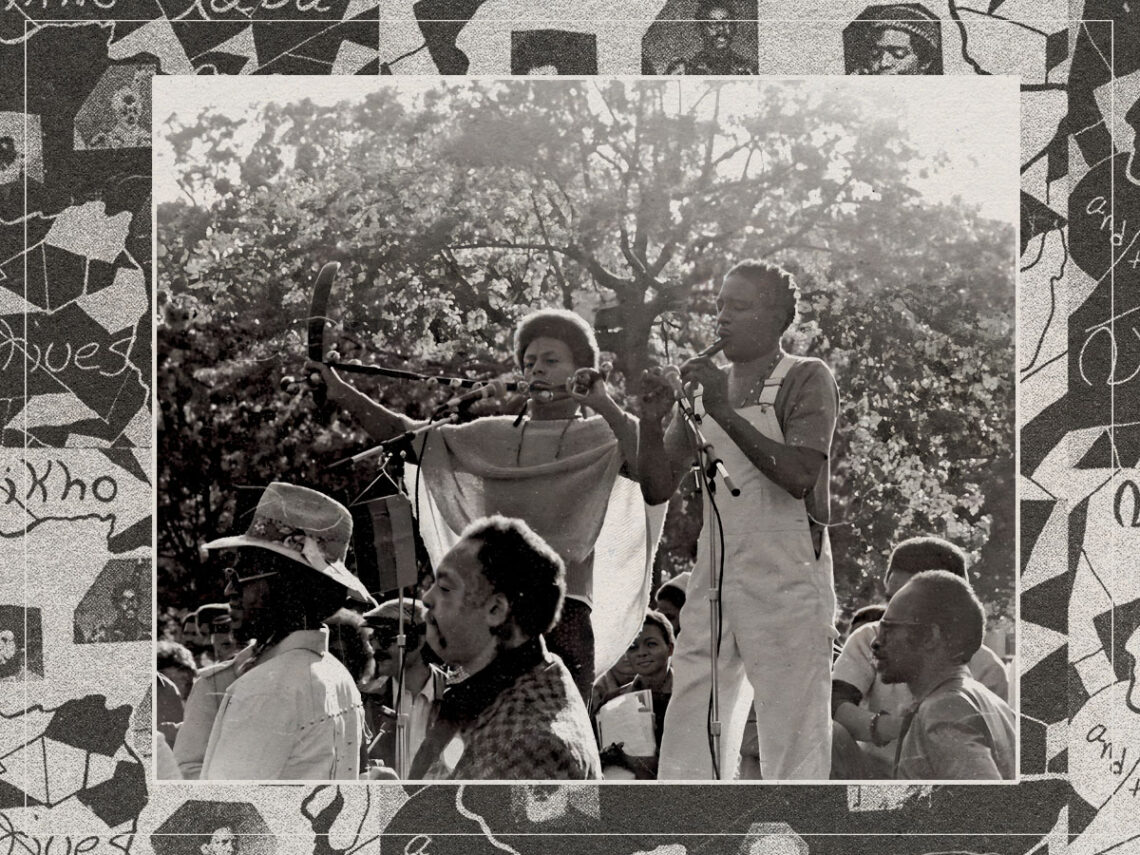
Ndikho Xaba: the exiled jazz musician who created a masterpiece

Throughout history, the greatest artwork has been born out of the most horrific circumstances. Oppression, prejudice and subjugation seemingly provide adequate inspiration for radical and revolutionary work. It should come as no real shock, therefore, that the horrific violence and oppression faced by Black South Africans under the reign of apartheid gave way to some truly groundbreaking, revolutionary artistic expression. Jazz master Ndikho Xaba remains among the most prominent examples of this South African cultural revolution.
While pioneering punk groups like National Wake were waging a cultural war on the oppressive state of South Africa from inside the country, many artists were not afforded that luxury. Depending on who you ask, Ndikho Xaba was either exiled from the country in 1964 due to his criticism of the state and anti-apartheid stance within his music, or he moved to the United States in the 1970s of his own free will. The former eventuality certainly seems more reasonable, especially given the widespread subjugation of writers and artists in South Africa during that period, which saw prominent figures like Louis Moholo relocate to Europe.
Whatever the truth is behind how Xaba ended up in the US, he certainly found a natural home within the vibrancy of the San Francisco Bay scene of the 1960s. Before the gentrifiers and tech bros moved in, San Francisco was the artistic capital of the United States, fostering an incredible psychedelic scene storied by the likes of Jefferson Airplane and the Grateful Dead. In addition to mind-bending psychedelia, the city also provided a home for the experimental world of avant-garde jazz. Ndikho Xaba fit right in.
Gaining prominence as a noted songwriter, bandleader and pianist, performing alongside such legendary names as Pharaoh Sanders, Sun Ra and even Alice Coltrane, Xaba quickly rose to the top of the San Fran jazz scene. Although he was operating far away from his homeland, Xaba never lost sight of the horrifically prejudicial regime which he was born under. His music was rebellious and revolutionary in a much more substantial way than the vast majority of the American jazz scene.
During his time in America, Ndikho only recorded one album, but you cannot improve on perfection. Released as Ndikho Xaba and the Natives in 1971, the record featured a backing band including Plunky Branch and Lon Moshe, but the unique stylings of Xaba himself were the definitive highlight. Incorporating the traditional funk elements of his South African homeland, the record perfectly blends African jazz with the avant-garde expressionism of the West Coast’s vibrant jazz scene.
Within the short track listing of five unforgettable songs, Xaba creates some of the most radical and politically charged jazz of all time. Drawing parallels between the struggle of Black South Africans under apartheid and the Black Power movement within the USA, Xaba provided a rallying cry both for his contemporaries back in South Africa and the African diaspora within the United States.
Originally, the album was released as a limited run of only 100 copies on the short-lived Trilyte Record label, making it a highly sought-after record for jazz obsessives. Thankfully, in recent years, it has experienced a long-awaited resurgence, repressed on Mississippi Records in 2022, bringing the vitally important historical and cultural artefact to an entirely new audience.
