


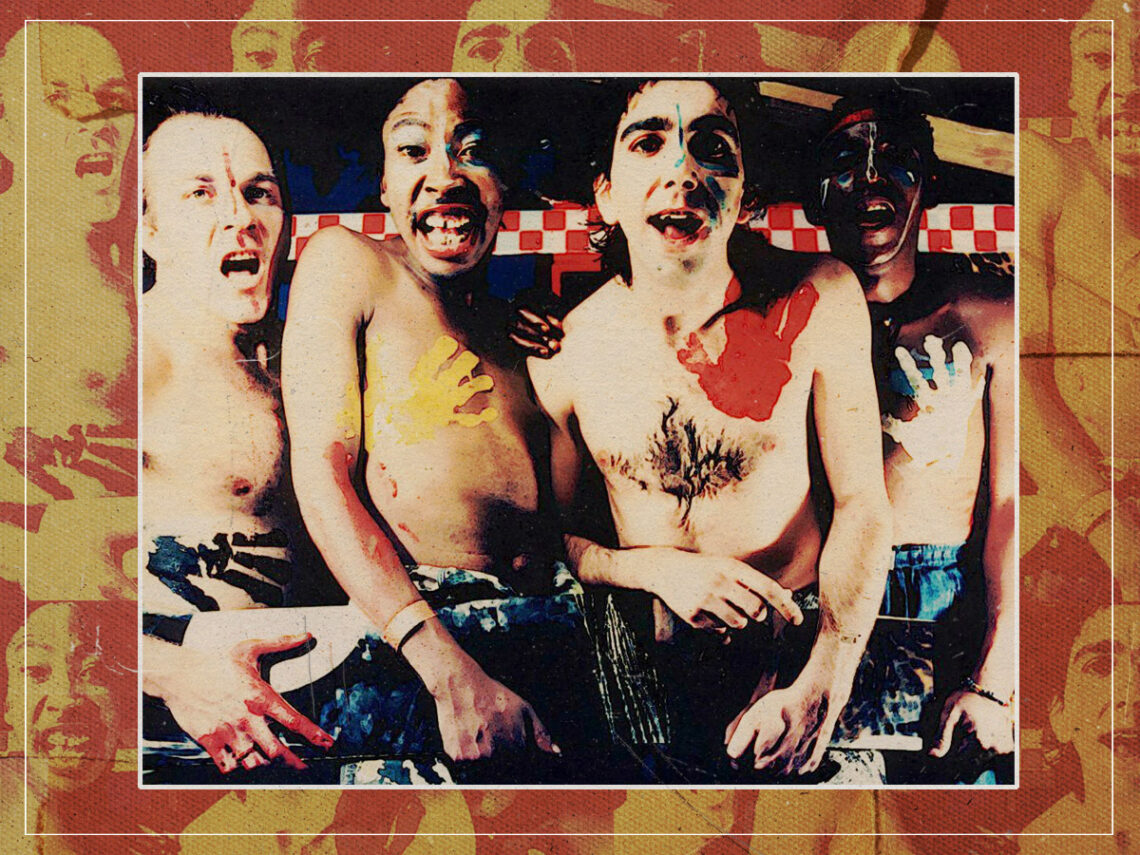
National Wake: the multi-racial South African punk band that defied apartheid

Punk rock was formulated as a musical rebellion, both against the complacency of mainstream pop music as well as against the oppression of world governments. The early punk scene, particularly in America and the UK, was largely characterised by vapid tracks which featured distorted buzzsaw guitars without any real substance. However, it progressively became much more politically literate, with anarchist groups like Crass spearheading politically charged punk rock.
The discourse surrounding punk often centres around bands from the US and UK, but if you expand your search to further reaches of the globe, there are some incredible acts to discover. During the 1970s, there were few countries with as much need for something of a revolution as South Africa. Under the oppressive system of apartheid, South Africa witnessed strict racial segregation, during which the country’s white minority subjugated the Black population.
Amid this institutionally oppressive backdrop, the punk band National Wake formed out of an underground jam in a Johannesburg commune. Communes were not particularly uncommon within 1970s South Africa, but mixed-race living arrangements certainly were. Vocalist and guitarist Ivan Kadey of National Wake noted that, “Occasionally, the police would break in and harass everyone, threaten arrest.”
Adding, “They’d have had reports that we were smoking marijuana, or that there was a black guy living in the house, and they’d come to find him – he was actually hiding in someone’s bed who he was sleeping with, she had him tucked under the covers.”
The mere existence of a punk band in 1970s South Africa was inherently controversial, but National Wake upped the ante by featuring a mixed-race line-up in direct opposition to the racial segregation of apartheid-era South Africa. Kadey, who was an architecture student at the time, once said, “This was a system that was to be denied. That was basic to our existence. We lived a life in opposition to government policy. The music was meant to be protest music. It was ‘fuck you’ music.”
Musically, the band took inspiration from first-wave punk groups like The Clash, in addition to incorporating influences of two-tone ska and traditional South African rhythms. Even without the politically radical context in which they were formed, National Wake’s music stands up among some of the more prominent artists of the early punk scene – it is certainly more captivating than the manufactured masquerade of punk purported by the Sex Pistols.
In many ways, however, it really didn’t matter what National Wake sounded like. As Kadey explained to AnOther, “Just getting up together and playing on stage was already a political statement – an act of defiance.” The band did manage to release one studio album, a self-titled effort released in 1981. However, a reflection of South Africa’s authoritarian regime at the time, copies of the album were suppressed by the government, meaning only around 700 copies were sold.
Although National Wake were fairly short-lived, splitting up in 1982, they formed an incredibly important chapter within South African protest music. The country is not often known for its proficiency in punk rock, but National Wake represented something much greater than punk – it was a rebellion which transcended music.

Never Miss A Beat
The Far Out Punk Newsletter
All the latest Punk content from the independent voice of culture.
Straight to your inbox.