


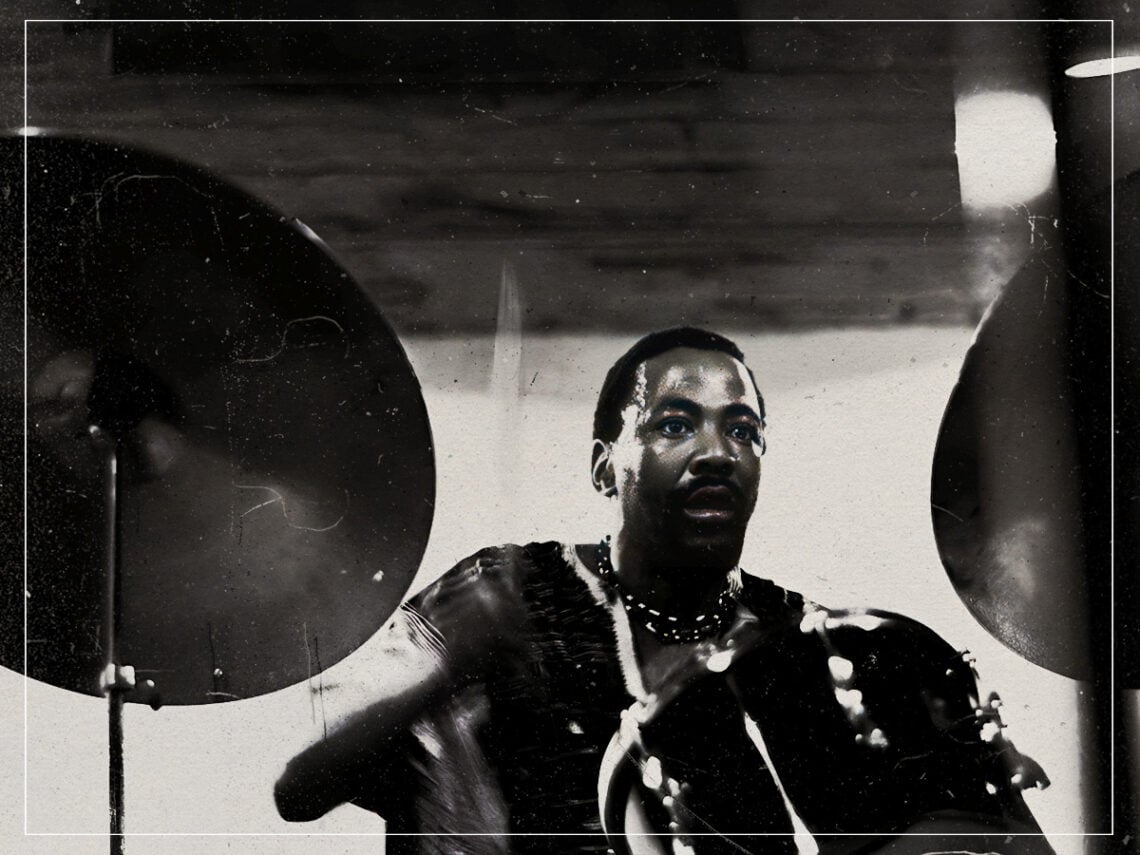
Louis Moholo: the leader of avant-garde jazz fighting against apartheid

During the horrific period of apartheid in South Africa, many social and cultural protests against the regime chose to focus on joy in the face of oppression. Several famous artists and musicians of the time opted to celebrate the happiness and optimism of Black traditions and culture. Prominent jazz artists such as Abdullah Ibrahim or Zim Ngqawana showed the South African government that the spirits of the Black population would never be broken.
On the other hand, the period also produced artists like Louis Moholo, who chose to portray the extreme violence and brutality of apartheid through his music. His frantic, anxiety-inducing avant-garde compositions are a sonic assault on the senses that creates a sense of the horrors faced by the Black population of South Africa under apartheid.
Apartheid, on the face of it, was a period of racial segregation in South Africa which occurred throughout much of the 20th century. Although the white population of the country was a minority, the system of apartheid meant that they were politically and economically dominant, whilst Black South Africans were seen as being on the lowest rung of society. Early apartheid was characterised by repressive policies of segregation, similar to those faced by Black Americans in the USA under Jim Crow laws. However, the system grew more and more militant as the years passed. Thousands of Black people in South Africa faced institutional violence, with many murdered or unfairly detained.
The prevailing art and music scene among Black South Africans at the time chose to depict optimism and the triumphant joy of Black people against the violence and terror of apartheid, but Louis Moholo chose to magnify this terror within his music. Perhaps this was a result of the fact that Moholo was not actually operating in South Africa at the time.
Emigrating to Europe in the mid-1960s, Moholo, along with other South African exiles, began performing in Britain. In addition to providing valuable contributions to the development of avant-garde jazz in the UK, Moholo and his contemporaries raised awareness among European audiences for the struggle of Black people under apartheid.
The fiercely confrontational avant-garde compositions of Moholo formed an invaluable contribution to instrumental protest music, as well as bringing protests against the regime to a wider audience. It is no easy feat to create such effective protest music without the inclusion of lyrics, but the chaotic menagerie of Moholo’s sound brought attention to the institutionalised genocide of apartheid South Africa.
As the leader of the South African avant-garde jazz movement, Moholo spent much of his career performing tirelessly with a variety of high-profile artists, ranging from Steve Lacy to Irène Schweizer, as well as various groups like Brotherhood of Breath and The Blue Notes. The drummer returned to South Africa in the mid-2000s, in a post-apartheid landscape, which welcomed the artist with open arms.
