


‘National Anthem’: redefining gender norms in the wild west through queer stories

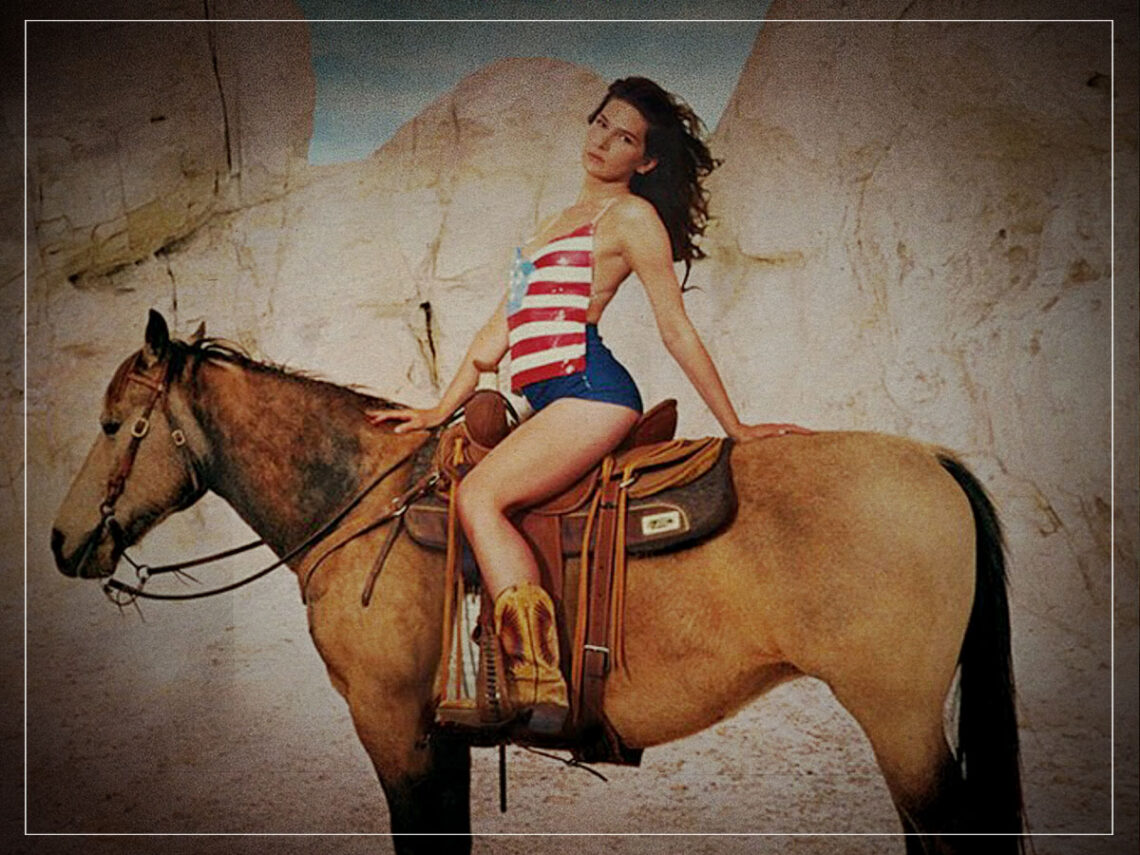
If I asked you to picture the wild west, your mind might wander to images of rocky landscapes, dusty orange earth and macho cowboys in fringed hats and plaid shirts. It’s a famously harsh and unforgiving landscape, and one that has made the perfect backdrop to films like The Good, The Bad and The Ugly, The Wild Bunch and Butch Cassidy and the Sundance Kid, creating a rigid landscape that naturally lends itself to creating tension but also reflects the inflexibility of the gender norms at the time.
The men in these films are often characterised by their adherence to hyper-masculine ideals, with a rugged appearance, natural inclination towards violence, and either assuming the role of the hero or villain, with little room for reinvention or expression outside of these binaries. The same goes for the women, who are either painted as being prim and proper ‘ladies who lunch’, damsels in distress or wicked harlots, luring in unsuspecting men with their scandalous knee-high boots and no socks, oh my!
It’s a genre that is familiar and well-versed in its own lore, with countless nods and references to this era from modern directors such as Quentin Tarantino, the Coen brothers and Jane Campion, who have all spun their own twist on the style. However, there is only one film in recent years that has done something truly revolutionary with the genre, morphing a traditionally oppressive landscape into something fluid and freeing, offering a new interpretation of the western.
National Anthem was the feature debut from director Luke Gilford, released in 2023. It follows a young man called Dylan, who is working as a construction worker in rural New Mexico to support his family, becoming the breadwinner due to his mother’s struggle with addiction. However, his life changes after stumbling upon a queer rodeo ranch, joining their community and their creation of a new American dream.
The film reframes what traditionally is a very conservative space as a queer utopia, redefining the language of the wild west by showing it as a place that encourages fluidity and freedom of expression, with a tangible love and warmth seeping from every frame as it shows the liberating power of friendship and community.
When we first see the ranch, it comes across as this ethereal and other-worldly place, showing this community through a hazy reverence, allowing us to see the true beauty and power of the landscape once separated from the toxic culture that can get in its way. Dylan desperately needs kinship and connection, and it’s truly so beautiful to see him flourish in the company of people who understand and care for him, exploring the idea of chosen family and how it is never too late to discover who you really are.
The music is composed by Perfume Genius, only adding to the kaleidoscopic and all-encompassing feelings of joy, with a lush visual language and dreamy colour palette as we see slow-motion sequences of people sleeping in the dust of the desert in silk dresses and riding horses against the expansive orange sky, living in their own slice of heaven.
We’ve seen many queer stories that dwell for too long in tragedy and pain, but National Anthem doesn’t do this, instead lingering in a wonderful ‘what if?’; what if we were free to live authentically and away from the gaze of those who pass judgement? What would our world look like if we didn’t restrict the potential of vibrant people who have their voices stifled?
In his reimagining of this space, Gilford poses all of these questions, making something that feels uplifting and hopeful, yet also highlights how this is not a reality for many, and there are people in the queer and trans community around the world whose personhood and freedom is under threat, reminding us of a world that lies within our grasp but needs our attention in order to reach it.
Despite its lack of wider distribution and mainstream attention, National Anthem still managed to make an entrance with its raw beauty and reimagining of queerness in a red state. It’s an ode to the power of authenticity, and much like the strength and beauty of the wild west, it is an untameable force to be reckoned with that will always find a way into the light.
