


N Senada and The Residents: Cult band or cult group?

Like most emotionally stunted man-children, I love superhero comics. When I tell people this, a number of them will respond along the lines of, “I’d like to give them a try, but there’s just so much lore, I don’t know when to start.” The truth is that these people are on to something. Comic book mythology is dense, ever-changing and frequently completely impenetrable. However, no matter how confusing the backstories of Spider-Man and Superman get, they’ve got nothing on The Residents.
Principally, because you can take for granted that the likes of Peter Parker, Clark Kent and the lads are all, y’know, fictional. The fact that these exploits are stories depicted on a page helps you at least process what you’re actually reading about. When one reads about The Residents, pretty soon you’re thrown headfirst into a backstory where truth and fiction jostle each other and are deeply intertwined.
I mean, right off, there’s the fact that The Residents are completely anonymous and always have been. Enough digging can lead you to a vague collective of musicians called The Delta Nudes, operating out of Shreveport, Louisiana (or San Meteo, California, depending on where you look), who released a number of albums in the underground, experimental music scene. The kind of stuff that made Captain Beefheart look like The Carpenters.
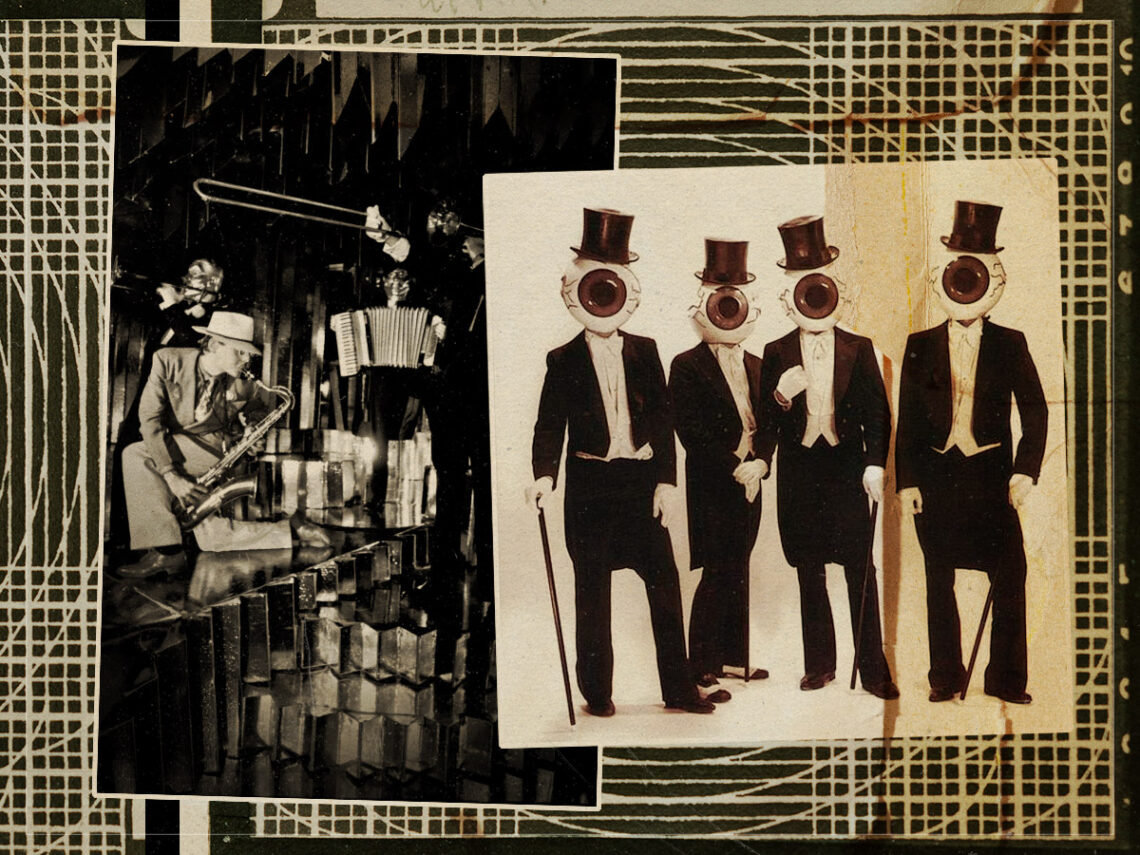
Then, at least according to the legend, in 1970, they came into the orbit of a mysterious figure called N Senada, or ‘The Mysterious N Senada’ if you want to be formal about it, a German composer, musicologist and saxophonist who took the band under his wing. The recently rechristened Residents began making entire albums based on his compositions, most notably an album recorded specifically as a demo for Warner Brothers Records. It was politely declined.
Undeterred, the story goes that The Residents kept him as something of a spiritual advisor for the whole 1970s. Working with the band on studio albums and the occasional live show, where he’d appear on stage with his trademark shoulder-length blonde hair and full-length trench coat. His masterpiece with the band was reportedly their 1979 album Eskimo, an album so inspired by his multiple Arctic expeditions that he kept a flask full of Arctic air in the studio at all times for the sake of ‘inspiration’.
His work with The Residents continued until his tragic passing in 1993. However, The Residents weren’t going to let their mentor’s work die with him. In 1996, they released their version of N Senada’s masterwork, a 1936 piece of experimental classical music called Pollex Christi (The Thumb of Christ). The album consists of 20 minutes of recycled movements from classical music, interwoven with the themes from American TV shows of the late 20th century.
See what I mean about comic book mythology? Once you parse the sheer amount of lore and history surrounding The Mysterious N Senada, you’re then left wondering, “Is any of this real?!” If you want my answer to the question, probably not. The depths that Hardy Fox has gone to give The Residents a sense of genuine mystery know no bounds, and if you don’t believe me, spool around their fan wiki for a few minutes.
However, I am saying all this despite the existence of photographs depicting the man clear as day. So, who knows? The world is a far more mysterious and magical place than we give it credit for, and who am I to take that away from a band who spent their whole career trying to maintain that magic and mystery? Probably best to do what any journalist worth their salt does—print the legend.
