


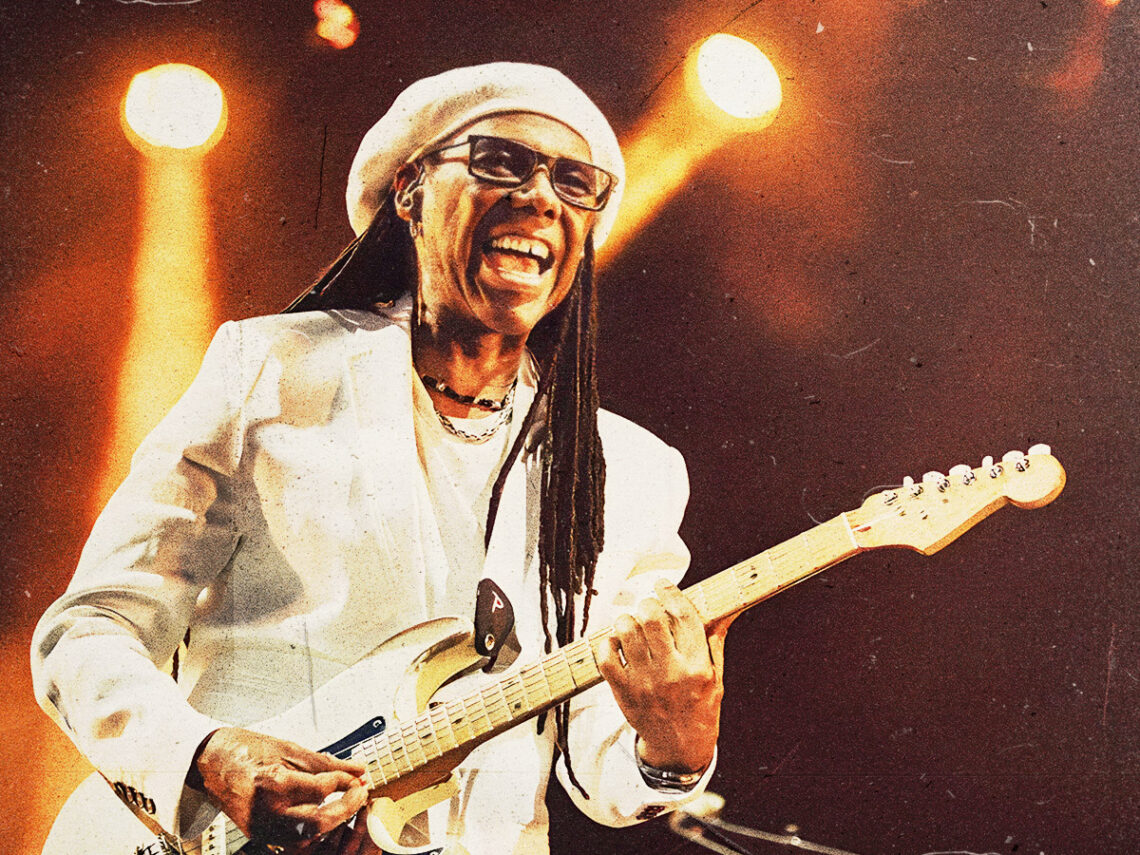
The musician Nile Rodgers thought was God: “I needed to learn that”

Nile Rodgers is nothing short of a goliath within the music industry. Over the course of his long and illustrious career as a musician, songwriter and producer, Rogers has had a part to play in more hits than the Mafia. From David Bowie’s ‘Let’s Dance’ to ‘Get Lucky’ by Daft Punk, Rodgers’ talents have an uncanny ability to transcend both time and genre. Throughout his career, however, the songwriter has always held a special place in his heart for the unforgettable funk of the disco era.
Of course, Rodgers would make his first steps into the music industry during the 1970s, forming the New York group Chic. Nowadays, Chic are hailed among the finest products of the disco age but, at the time, Rodgers was not convinced of their disco credentials. In fact, the band had formed with a manifesto of combining soul, funk and jazz, in a style akin to that of Bryan Ferry and Roxy Music. “Chic wasn’t a disco band,” Rodgers has since attested, “We had a couple of disco hits, but if you buy a Chic album, we were just a regular R&B band”.
Saying that Chic had “a couple of disco hits” is like saying Ferrari have made a couple of good cars. Songs like ‘Le Freak’ and ‘Everybody Dance’, in many ways, defined the sound of the New York disco scene. By extension, Nile Rodgers was a defining figure of disco. However, the man himself was never one to revel in his own superiority, always looking for the next big sound, and ways of improving his own music.
So, when Donna Summer came out with the seminal track ‘I Feel Love’, Rodgers was hooked. “When I first heard Donna Summer and Giorgio Moroder doing that stuff,” he shared, “I thought the guy was God – I still think he’s God. But I thought he was God from a groove point of view”. This mystique around Moroder apparently came from his use of a sequencer within the track, which Rodgers could not wrap his head around. “I couldn’t believe how anyone could play like that,” he recalled, “Damn, I needed to learn that. I wanted to learn that so bad. I wanted to be that guy so much. I just thought it was the funkiest thing I could imagine”.
His love for the sequencer sound inspired the writing of Rodgers’ track ‘I Want Your Love’, “If you listen to that, that’s me imitating a sequencer,” the songwriter said, “I didn’t know you could buy something that goes [imitates sequencer], And when I wrote ‘I Want Your Love’ I was literally trying to do that”. In fairness, Rodgers is probably one of the only musicians proficient enough to successfully recreate the sound of a sequencer without actually using one.
His efforts to recreate the sounds did elicit some compelling results. However, it was not long before Nile Rodgers found out that you could, in fact, just buy a sequencer. “It wasn’t until a month later that I found out there was something called a sequencer,” he remembers, “I thought it was just the name of a synthesiser, just a cool name. I didn’t know it had a clock function”. Once he had his hands on the right equipment, there was no stopping the disco-inspired greatness of Rodgers.
He might have been apprehensive to call Chic a disco band despite a mounting body of evidence in support of that claim, but Rodgers’ impact on the scene is all-encompassing. Even in the modern day, after having worked with the greatest names in music, the producer still finds time to work with up-and-coming names in disco. Most recently, for instance, he has collaborated with the New York-based vocal group Say She She, bringing the euphoric sounds of disco to an entirely new generation.
