


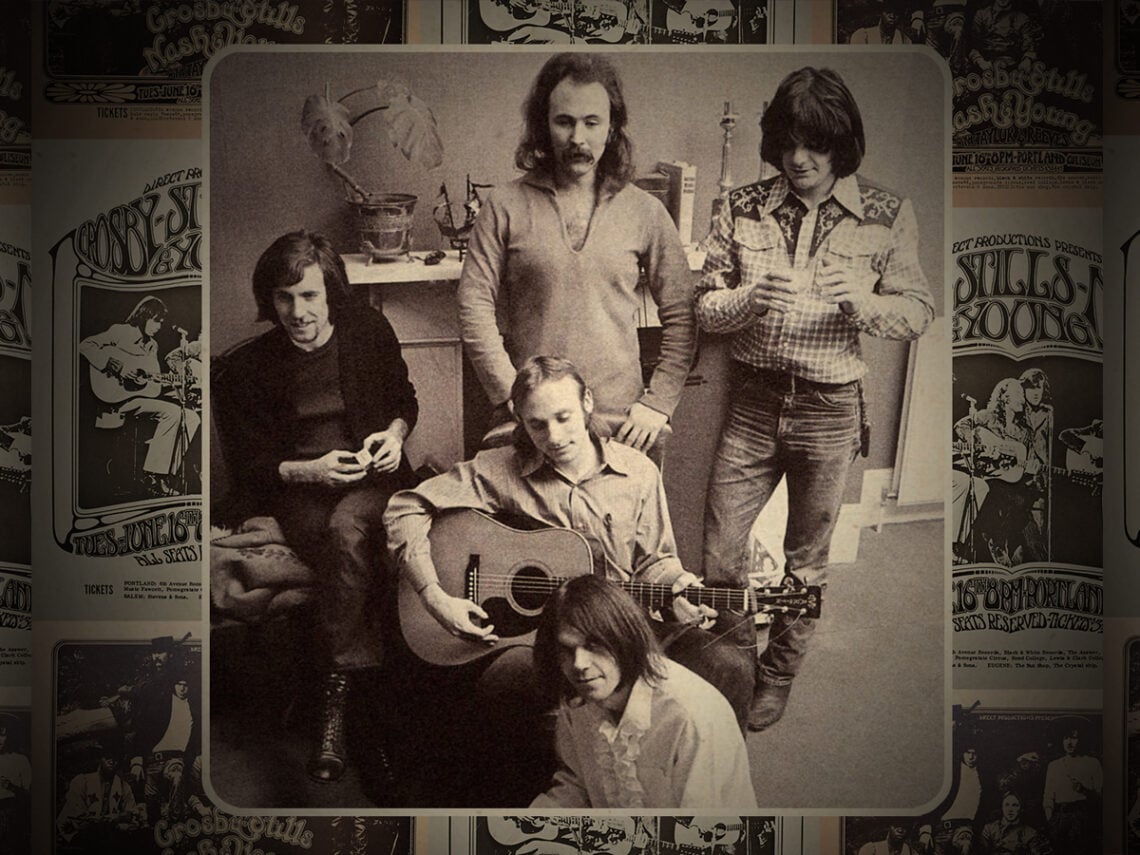
“Extremely good”: The musician Neil Young called the glue of CSNY, even after their 1970 split

The rugged streets of Blackpool are worlds away from the glittering hills of Laurel Canyon, yet somehow, Graham Nash bridged the two, leaving the humble origins of the former and ending up in the latter, where he became the beating heart of the counterculture movement’s most beloved band.
Despite the relative obscurity of his upbringing in terms of the vibrancy of Los Angeles’ hippie music community, Nash fit like a glove. His songwriting was tinged with the idealism of the era, and his voice was soft and delicate to match, making him the perfect suitor for this budding three-piece band he was about to join.
Crosby, Stills, and Nash proved that the spiritualism behind the artistic meaning of music was more important than the common ground of their upbringings and personal lives – this bohemian counterculture was a mindset more than anything else, and under the warm Californian sun, they could all adopt it wholeheartedly.
But when it counted, the humility of Nash’s northern upbringing pulled through…you see, in 1970, when Crosby, Stills and Nash embarked on their sophomore record, with the help of their new bandmate, Neil Young, the alchemic balance of the trio’s shared spirituality was challenged – Young was a fiercely uncompromising individual who threatened to tip the entire balance of the band on its head.
Of course, the album that followed, Deja Vu, didn’t portray that – it was as stunning and balanced as the first, bolstered by the added edge of Young’s enigmatic guitar playing. But behind the scenes, it was as fraught as everyone expected, with the respective egos of each member clashing in a band plagued with crippling drug addictions and heartbreaking love affairs.
But while Nash had spent years in the idealism of Laurel Canyon, he still hadn’t lost that hardened quality of his British upbringing and became the stubborn glue that kept this otherwise fraying band together. His stiff upper lip caught the attention of his transatlantic bandmates, not least Neil Young, who remarked at his enduring quality.
“Nash is a very straight, very sincere kind of organised guy, dedicated to quality and very reliable,” he remembered. Clearly, those qualities were a distinction from the rather unpredictable nature of the remaining two members.



But Nash was more than relationship glue – his falsetto harmony was, in many ways, the secret sauce of the band’s masterful vocals. Young remembered, “And he’s an extremely good singer. Amazing pitch. He likes to be on top of it. He takes a lot of pride in being totally able to accomplish whatever it is that has to be done. Without Nash, there would be no Crosby, Stills and Nash at all. It would have been over a long time ago.”
He probably serves as the most overlooked member of the band, but as Young rightly points out, he may just have been the most important. The layered harmony to Stephen Stills’ vocals, the loyal companion to David Crosby through his darkest times and the strongest challenger to Neil Young, who had to earn the trust of Nash before joining the outfit. So while the band may have grown in Laurel Canyon, their spirit was made in Blackpool.
