


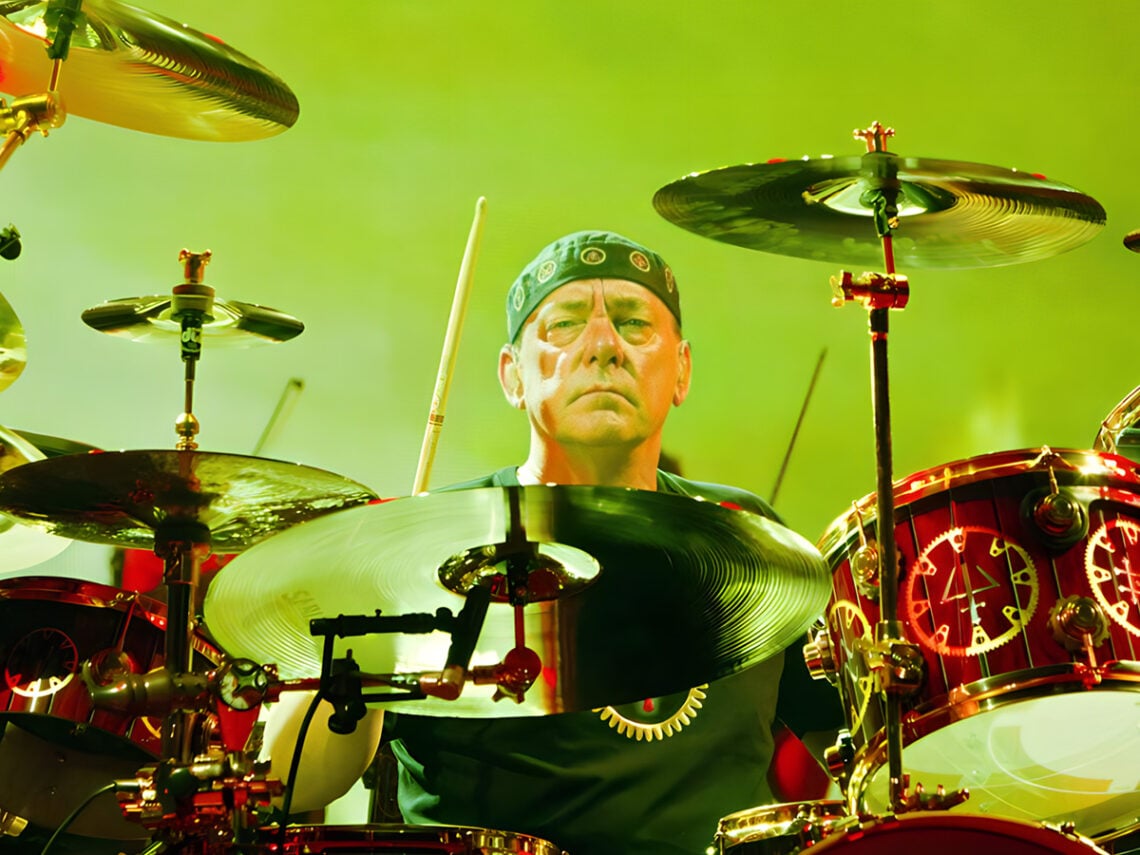
The one musician Neil Peart said could break hands: “His feel is great”

There aren’t many fields of rock and roll drumming that haven’t been covered by Neil Peart.
Even if there are thousands of people who have tried to copy his drumming style, there’s a good chance that no other band is going to sound half as good as Rush withoutPeart delivering those massive fills. But even Peart had his fair share of drummers who could give him a run for his money when they stepped behind the kit.
If there’s one thing that you can’t argue with when it comes to Peart, it’s stamina. In the grand scheme of rock drummers, ‘The Professor’ only stood a few rungs below Keith Moon and John Bonham in terms of technical ability, and even when interpreting the legends like Buddy Rich in Gene Krupa, there was no doubt that he could play nearly anything that he got his hands on if he was looking for a bit more of a challenge.
But rock and roll drumming isn’t always meant to be about playing the most complex drum fills anyone has ever heard. That was reserved for the more intricate players in the scene, and there was nothing that hit the spot better than someone laying down the right groove for a song. Then again, it’s hard to get that kind of mentality out of someone known for playing the most complex progressive music ever conceived.
Rush’s discography wasn’t built for that kind of musical framework, but Peart was still willing to learn. He may have reached the heights that most drummers only dream of, but that didn’t stop him from wanting to learn some more, whether that was working in the world of fusion or working with Freddie Gruber to help align himself more with drumming that relied on feel instead of bashing away in odd time signatures.
Because that’s what many of his favourite modern drummers were like. There were already the biggest names in Motown that could get the best feel for a song, but in terms of being able to swing, Peart was stunned at what he heard coming out of Phil Gould of Level 42. Other percussionists may have been technicians, but what Gould was was beyond everyone’s wildest dreams in many respects.
A lot of what he played was behind the beat, but even if Peart had countless hours of practice, he still couldn’t manage to match him, saying, “A good drummer that I like who plays simply is Phil Gould, who used to be with Level 42. He plays very simple, R&B-influenced drumming, but when he pulls a fill out, it’ll be a beautiful fill. And his feel is great. If you try to tap along with their downbeat-on-the-three type of songs, you’ll just about break your hand trying to come down behind the beat as much as he does.”
That’s not always what Rush calls for, but it is the kind of drumming that the purists will love. Bernard Purdie might not have been the most on-tempo by any stretch, but there’s no scientific way that anyone could possibly hate on a Purdie shuffle even if they’ve been playing the same tune “the right way.” It’s all about the feel, and that’s what’s lost on so many drummers relying on their rudiments.
As much as people like the idea of rearranging their songs and making sure they are the best technical players in the world, Peart knew there was more to life than playing like that. “Feel” isn’t something that can be learned; it only comes from those who are willing to listen to their fellow musicians and react to what they’re doing.
