


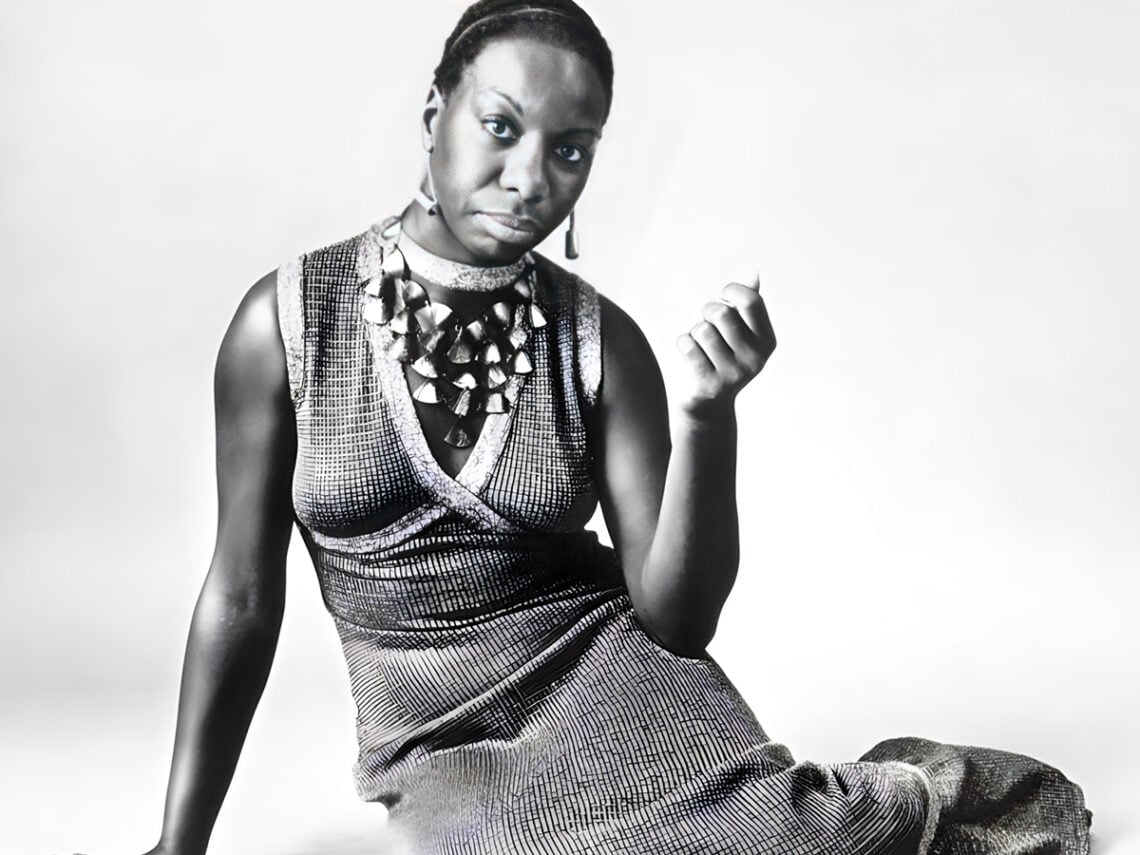
The musician who inspired Nina Simone to dedicate her “life to music”

The relationship Nina Simone had with music was not just an ordinary day job. It was a worship. It was a prayer. It was a lifeline.
Let’s not forget that the strongest and most pivotal foundations on which Simone decided the sonic path of her life did not lie with jazz, which arrived a little later. In the earliest days, her sights were not set on smoky bars and world rapture. It was on poise, precision, and a particularity in playing. She wanted to be a classical concert pianist.
As much as it seemed a world away from what she ended up becoming, those threads of classical influences were firmly woven into everything Simone ever did as an artist, and never once left the essential fabric of who she was. Deep down, there was a part of her that never let go of that dream, despite it being realised in very different ways to what she first imagined.
At the heart of it all was JS Bach, the German composer who may have died in 1750, but lived on in ways he never could have conceived of in his lifetime, namely through Simone. To her, he was the god that all piano-playing was rooted in, that nothing before, or in the long time since, could ever come close to beating.
But make no mistake: despite how prodigal she was in her own right, the whole point of Bach was that his music was far from a walk in the park, not even to Simone. Yet the moment when the pieces of the puzzle finally locked, and the notes unscrambled themselves, was like no other. Put simply, it was the key to the rest of her life.
“Once I understood Bach’s music, I wanted to be a concert pianist,” Simone famously said. “Bach made me dedicate my life to music, and it was that teacher who introduced me to his world.”
He was the professor, the mentor, the model who may have come from another time entirely and might now have been a physical part of her life, but his presence was still felt every step of the way.
Even though Simone had her own ambitions to become the first-ever Black concert pianist to play in Carnegie Hall, it was clear that the inspiration that Bach served her was never far from view at every turn. Take the example of her version of the song ‘Love Me or Leave Me’, which featured on her debut album Little Girl Blue in 1959.
Her take on the track included a powerful piano solo, and if you listen carefully, you can pick up on the fact that Bach’s ‘Fugue in C Major’ is encompassed in the mix. In this sense, her admiration never needed to be forthright or overdone – but it was there, present and steady, embedded into the very soul of all that her music ever was.
Frankly, that sent a far more profound message than any other form of platitude or compliment ever could. Without him ever knowing it, Bach was an essential part of Simone’s life, and therefore an even more essential part of the world at large. From classical to jazz and everything in between, those threads never stopped being spun.
