


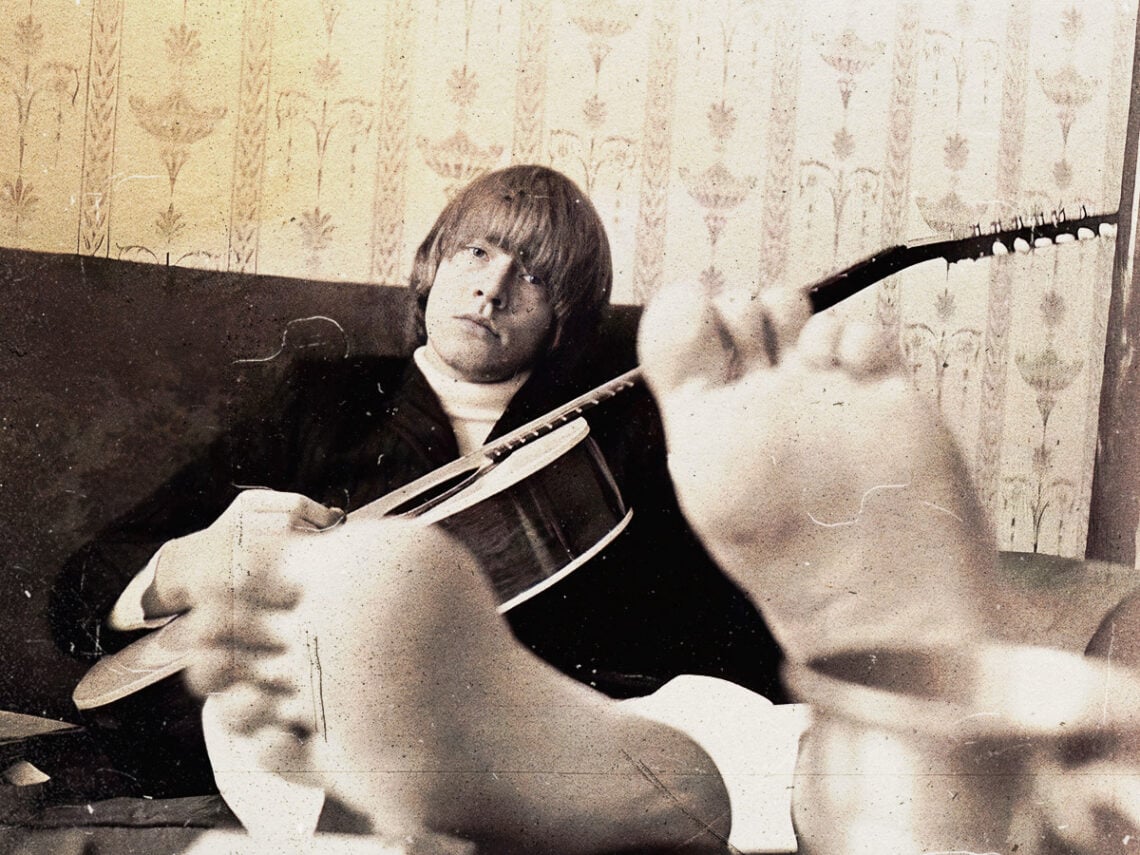
Jimi Hendrix: The musician Brian Jones called “the most exciting guitarist I’ve ever heard”

The number-one thing any musician can hope to do is inspire someone else. Even if an audience doesn’t understand what your music is all about at the time, it’s all worth it when someone starts taking the crux of what you started with and creating an entirely new style of music around what you were hinting at. Although Brian Jones and the rest of The Rolling Stones claimed to be students of the blues every time they performed in their early days, the 1960s was an open book for them to start exploring everything under the sun.
For Jones, though, branching out was the next logical step after playing blues clubs. He may have been more than a little bit disappointed seeing Mick Jagger and Keith Richards start taking over different aspects of the band, but he was more than happy to satisfy what the group needed by learning as many instruments as he could for the song.
If ‘Paint It Black’ needed a sitar, Jones would learn it. If they needed to play slide, he would play slide. Making a few forgettable singles in a vain attempt to compete with The Beatles? Well, not that they should, but Jones could still be of service when he had the chance. But for all the instruments he played, a lot of people forget how essential his guitar playing was to the start of the group.
He had followed in the footsteps of every great blues guitarist that came before, and despite knicking the name of his new band from a blues song, he was still trying his best to mould himself into the best blues cat he could be. So when England was slowly being taken over by blues rock, seeing Jimi Hendrix come over from the States made every single guitar player look like a wannabe rock and roller.
While Hendrix didn’t always look the part as a blues guitarist, he had that fire in his soul from the minute he picked up the guitar. Some of his tunes might not have been the easiest to understand with every psychedelic lyric that came out of his mouth, but once he bothered to kick on his distortion and play some leads, it was enough to leave every guitarist stunned over the span of three minutes.
Even though there was room for the guitar to grow in a rock context, Jones always had a certain admiration for what Hendrix brought to the table, calling him “the most exciting guitarist I’ve ever heard.” But that kind of excitement had more to do with how Hendrix thought about music than the raw notes that he was playing.
Looking through the precious few albums that we have of his recorded output, Hendrix always viewed music in a much broader context than his peers. From dabbling in soul on Axis Bold As Love to birthing the concept of progressive jamming on Electric Ladyland, Hendrix was always trying to reach for something beyond rock and roll, even motioning to jam with Miles Davis before his tragic passing.
We might never know what Hendrix could have made with some of his peers, but there’s a good chance that Jones saw a kindred spirit in the way that he played. Neither of them had the same musical upbringing by any stretch, but when listening to Jones and Hendrix side by side, they both had that hunger to reach into themselves and pull out something new for the world to see.
