


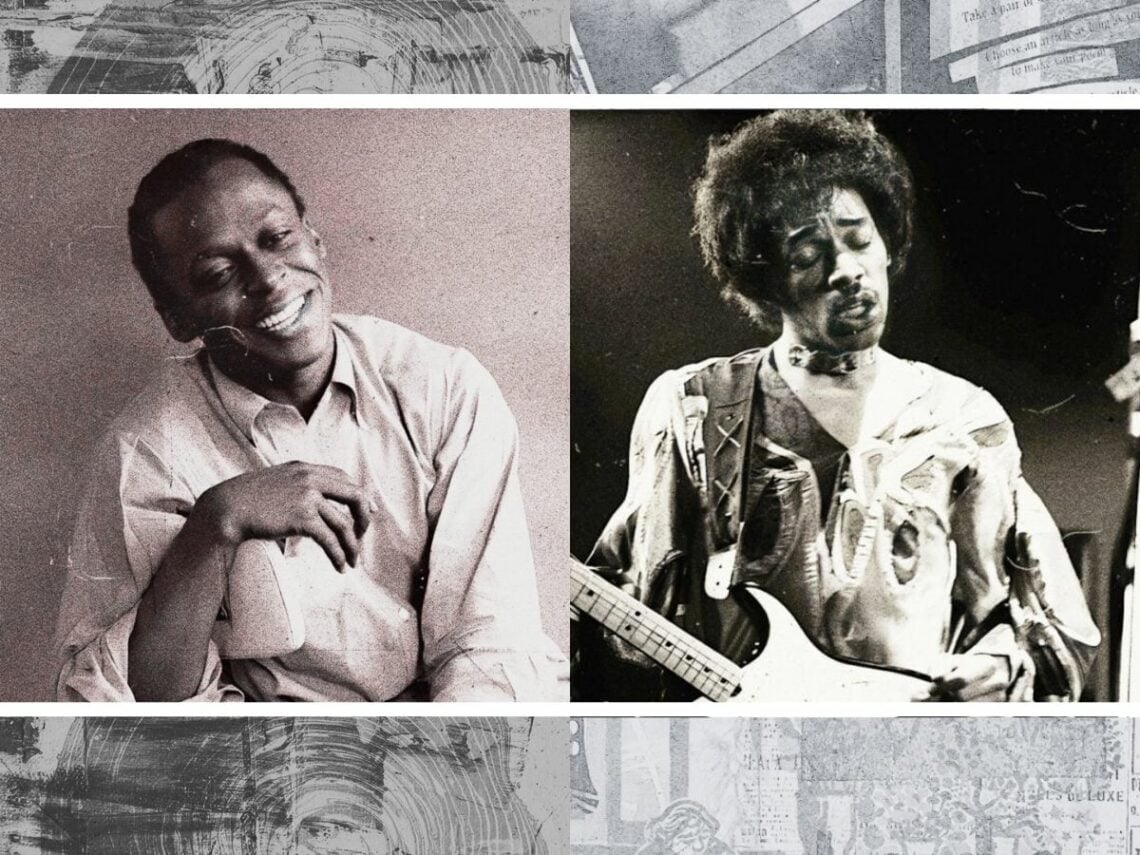
The greatest collaboration that never happened: Jimi Hendrix and Miles Davis

Musicians often look inward to create. To discover unique, personal methods of expression. But sometimes, making something impactful isn’t a solo effort. When visionaries come together, it is almost ritualistic. An exchange of sacred knowledge, passion, culture, and sheer technical skill. It is through collaboration that the sharing of musical styles is encouraged, and artists have greater reach. There have been timeless collaborations. Equally, there are some that probably never should have happened. In the middle sits the partnerships that almost took place but were never fully realised. Leaving you to ask yourself, what kind of magic would happen if they had been? One partnership that the industry held high hopes for was a brewing alliance between Jimi Hendrix and Miles Davis.
In the 1960s, Hendrix was developing a reputation as a trailblazer. His hallucinogenic potion of heavy rock, blues, funk and psychedelia brought him recognition as one of the best guitarists of all time, with songs such as ‘Purple Haze’, ‘Voodoo Child (Slight Return)’ and ‘Foxy Lady’ continuing to mould musical landscapes.
Meanwhile, Davis was a jazz legend. The distinguished trumpeter was a major player in the development of new movements. When the 1960s rolled around, his Second Great Quartet began dabbling in free jazz, pushing boundaries with a spontaneous, avant-garde approach. Davis was in the middle of his heyday. He’d been at the forefront of prominent shifts for two decades, but the world was changing. Music was changing. It was loosening up, embracing spirituality and surrealism while promoting the “peace and love” mantra that guided the counterculture.
Davis was exploring new ideas. It would have made perfect sense to team up with Hendrix. They were both dominating their respective musical spaces, and Davis was eager to surround himself with youthful, creative artistry. Davis admired Hendrix’s innovative guitar techniques, and Hendrix greatly respected Davis’ ability to redefine his style consistently as an established jazz aficionado.
However, their relationship wasn’t completely in harmony. Davis was introduced to Hendrix by his then-wife and funk singer, Betty Davis. Betty was an unapologetic vanguard of the counterculture, serving as an inspiration for both men. However, she encouraged collaboration between them and her connection with Hendrix complicated things. Davis was known for his volatile temperament, and this behaviour seeped into his interactions with the guitarist. His hostile edge towards the six-string maestro was believed to be influenced by Betty, creating strain and a sense of intimidation for Hendrix.
Betty Davis wasn’t the only person who urged a creative union between Hendrix and Davis. It became a conspiracy among a group of musicians who looked to conjure up ways of making it happen. When producer Alan Douglas joined the mix, the collaboration seemed like a viable possibility. Douglas was in discussion with arranger Gil Evans, who historically played a key role in Davis’ work. They were intent on taking the pair’s complex acquaintanceship up a notch, proposing a project between Davis and Hendrix with the support of Tony Williams and the Evans orchestra.
Everything was to go ahead at the end of the 1970s, but plans stopped when Hendrix died just a week before the first rehearsals. This was five months after Davis found his footing in jazz fusion and released the psychedelia-drenched Bitches Brew. There was a lot to anticipate from this collaboration. Davis was inspired, diving headfirst into a hypnotic sound that aligned with Hendrix’s work. An orchestral element had been agreed upon, which would have added remarkable dimension to their dynamic atmospheres.
It is difficult to envision the immense textures that would have been produced, but Evans got as close as he could on The Gil Evans Orchestra Plays the Music of Jimi Hendrix, illustrating what Hendrix’s potent guitar mastery may have sounded like alongside the elaborate structure and improvisation of jazz. Although the true potential of the partnership was forced to be left unexplored, Hendrix and Davis have sustained their individual roles as impactful, revolutionary artists who will undoubtedly continue to influence future generations.
