


“The murder in the bathtub”: A real-life murder delayed the debut of Alfred Hitchcock’s ‘Psycho’

The modern horror genre owes a lot to Alfred Hitchcock’s Psycho. Released in 1960, the movie shocked audiences with its unapologetic depiction of violence and sexuality, revolutionising the genre through its emphasis on realism – there are no scary monsters or spectral figures in sight.
Thus, Psycho shifted horror cinema on its axis, paving the way for the slasher genre, which would explode in the 1970s following the release of movies such as The Texas Chainsaw Massacre, Black Christmas and eventually Halloween. Hitchcock’s proto-slasher was one of the first horror movies to welcome explicit violence, although it is still very tame by today’s standards.
What made Hitchcock’s approach so unsettling was its refusal to rely on the supernatural. Instead of monsters lurking in the shadows, the threat came from an ordinary motel room and an ordinary man. That unsettling proximity to reality forced audiences to confront the idea that horror could exist anywhere.
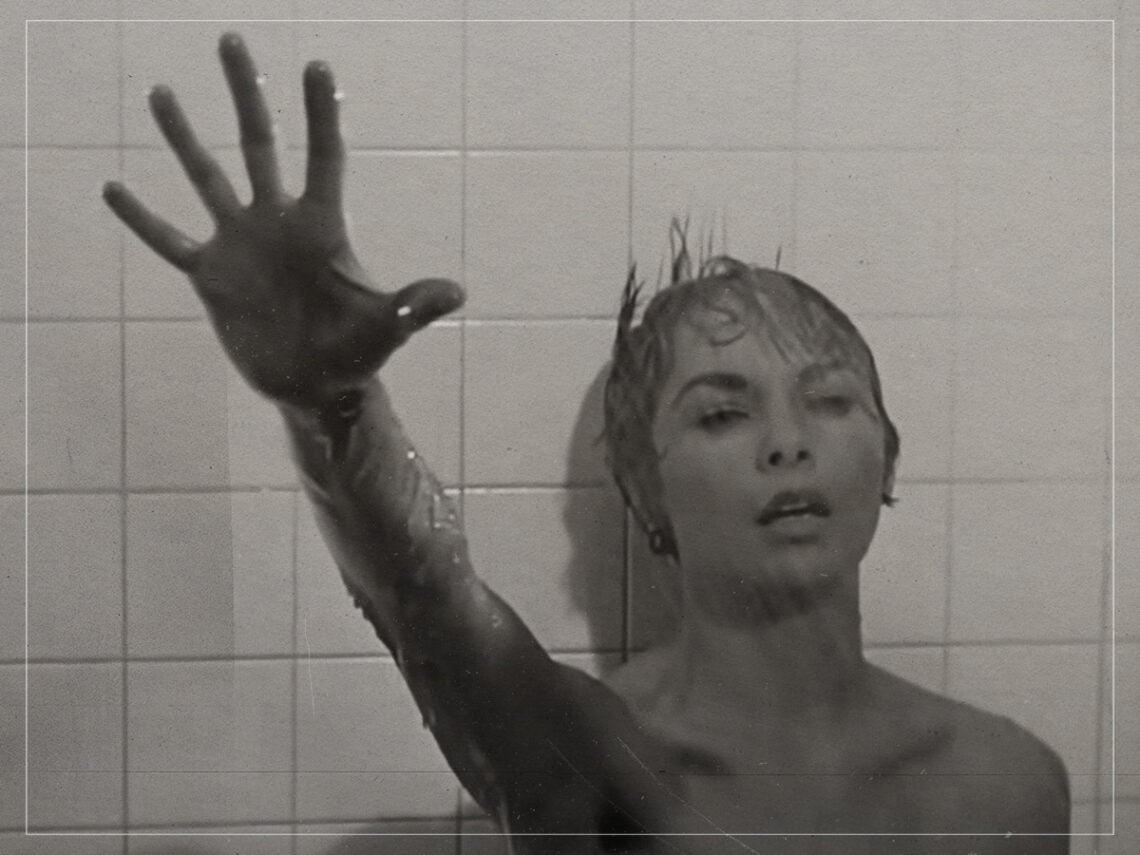
Still, in the iconic shower scene – perhaps one of the most famous scenes in cinema history – we see the knife make contact with Janet Leigh’s stomach and blood circling down the drain. The sequence features a recognisable score that is now synonymous with the image of a wielded knife, terror-inducing close-up shots and quick cuts, all weaving together to make one horrifying cinematic ordeal.
French filmmaker François Truffaut once asked Hitchcock why he made Psycho, to which he answered, “I think the murder in the bathtub, coming out of the blue, that was about all.” The shocking scene is burnt into even the most casual film fan’s mind, influencing every horror movie released in its wake.

However, before Psycho was set to air on television for the first time in 1966, a real-life murder stifled CBS’ plan. After paying $800,000 for the rights to Psycho, the company shelved their scheduled screenings out of respect for Valerie Percy, a young woman who was murdered just days before the movie was set to make its television debut.
Born the daughter of Chuck Percy, a Chicago senator, Valerie was the victim of a brutal murder after someone broke into her home and stabbed her 12 times. A crime psychiatrist named Dr Edward Kelliher explained, “The facts so far revealed indicate that the murderer knew Valerie and that he went to her home for the purpose of murdering her,” suggesting that “the murderer wanted to attack her personally.”
Valerie’s mother, Loraine, even witnessed the killer standing next to Valerie’s body after he had committed the crimes, although he quickly shone a torch into Loraine’s face to prevent her from identifying him, subsequently escaping from the building. As a result, Loraine could only give vague details of the man’s appearance, making it hard for investigators to uncover who was responsible for the vicious slaying.
The killer was never caught, and Valerie and her family have failed to receive justice for the killing. When the movie was eventually shown on television in 1967, the shower scene was heavily edited and shortened.
The eerie overlap between fiction and reality cast an uncomfortable shadow over the film’s television debut. Psycho had already blurred the boundary between entertainment and dread, but the tragedy surrounding Valerie Percy made that line feel alarmingly thin. For CBS, postponing the broadcast was less about censorship than sensitivity.
