


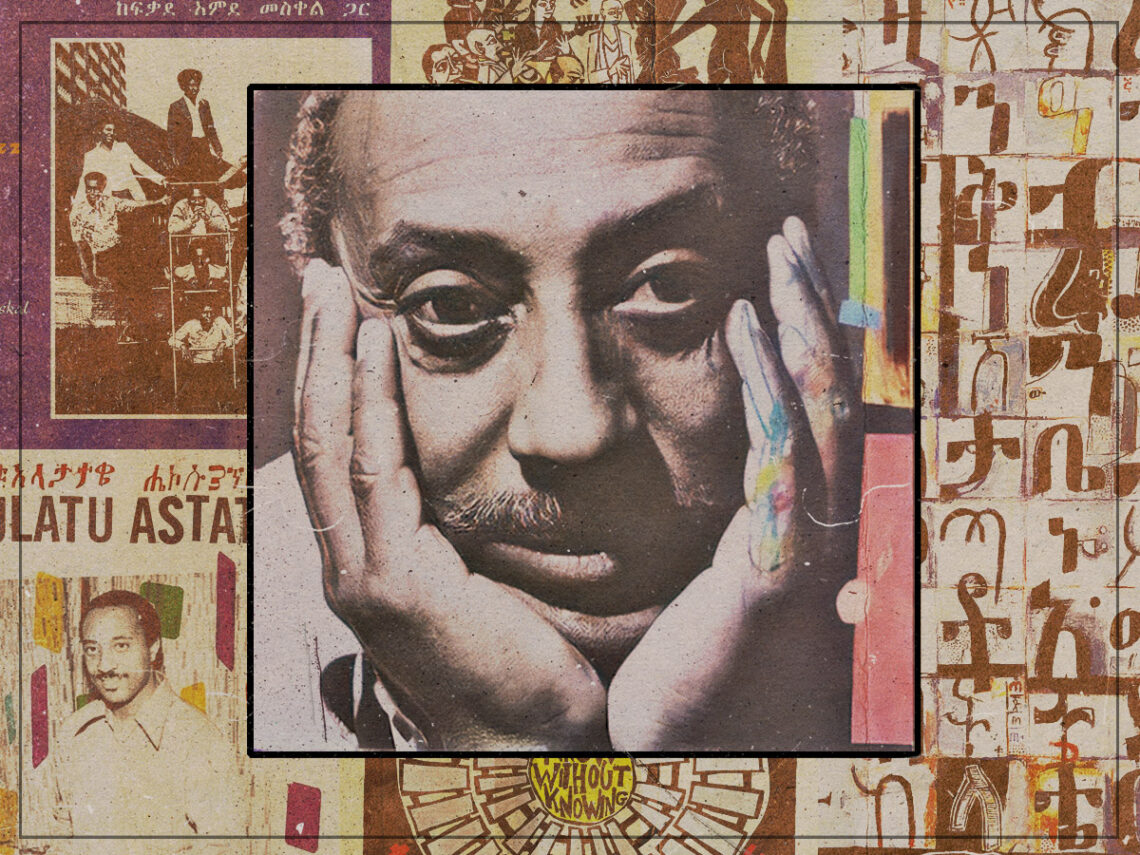
Mulatu Astatke: the wild life of the funky father of Ethio-jazz

The story of how a genre jumps and moves between cities and continents is always interesting. Usually boiling down to the fascinating life story of one ordinary individual, most of music history starts and ends with intriguing people. One of those people is Mulatu Astatke, the man to thank for Ethio-jazz.
Born in Jimma, Ethiopia, Mulatu Astatke was fortunate to be sent abroad for his education. His parents put him on a plane to Wales in the late 1950s, hoping he’d learn engineering and forge a stable career from it. This son had a very different plan, however.
Astatke already had a keen interest in music. Loving it from a young age, his move abroad was more of a secret mission under the guise of his parents’ idea. Instead of taking up his studies in engineering, he enrolled at Lindisfarne College near Wrexham and then went on to get a music studies degree from Trinity College of Music in London.
Finally able to study what he loved, it seemed there was no stopping Astatke. He became a frequent collaborator with jazz singer and percussionist Frank Holder, falling in love with the jazz form. Not content to leave his learning there, in the 1960s, Astatke moved again to study vibraphone and percussion at the Berklee College of Music.
Astatke’s obsession with jazz only grew. During his studies, he discovered Latin jazz specifically and began merging it with the Afro-sounds he loved from his home country. In 1966, he put his new sound on record as he released his first albums, Afro-Latin Soul, Volumes 1 & 2. Mixing traditional jazz forms with his vibraphone performances and congas playing Latin beats. The melting pot created a sound no one had heard before, one that Astatke would spread across the world.
But perhaps most importantly to the artist, he brought the sound back to his homeland. By the late 1970s, Astatke was a renowned musician in New York, collaborating with many notable artists. However, he was getting homesick. So, in the 1970s, he returned to Ethiopia, bringing his music under his arm.
Appearing as a special guest on jazz legend Duke Ellington’s 1973 tour of Ethiopia, Astatke finally introduced his music to the place that helped inspire it. Sharing his unique take on jazz that would become known as Ethio-jazz thanks to its mix of traditional and afro sounds, it was an epic homecoming.
His most well-known album, Mulatu of Ethiopia, was recorded in New York the year before his homecoming. But to honour its distinctly Ethiopian sound, it was released on Amha Records in Addis Ababa, Ethiopia.
Astatke remains a vitally influential figure, helping expand jazz geographically and stylistically. His music has been repeatedly sampled by artists including Nas, Kanye West, Damian Marley and more. Staying forever passionate about spreading and sharing the sounds of Ethiopia, Astatke’s wealth of music, collaborations and live performances are a beautiful testament to the power of global music.
