


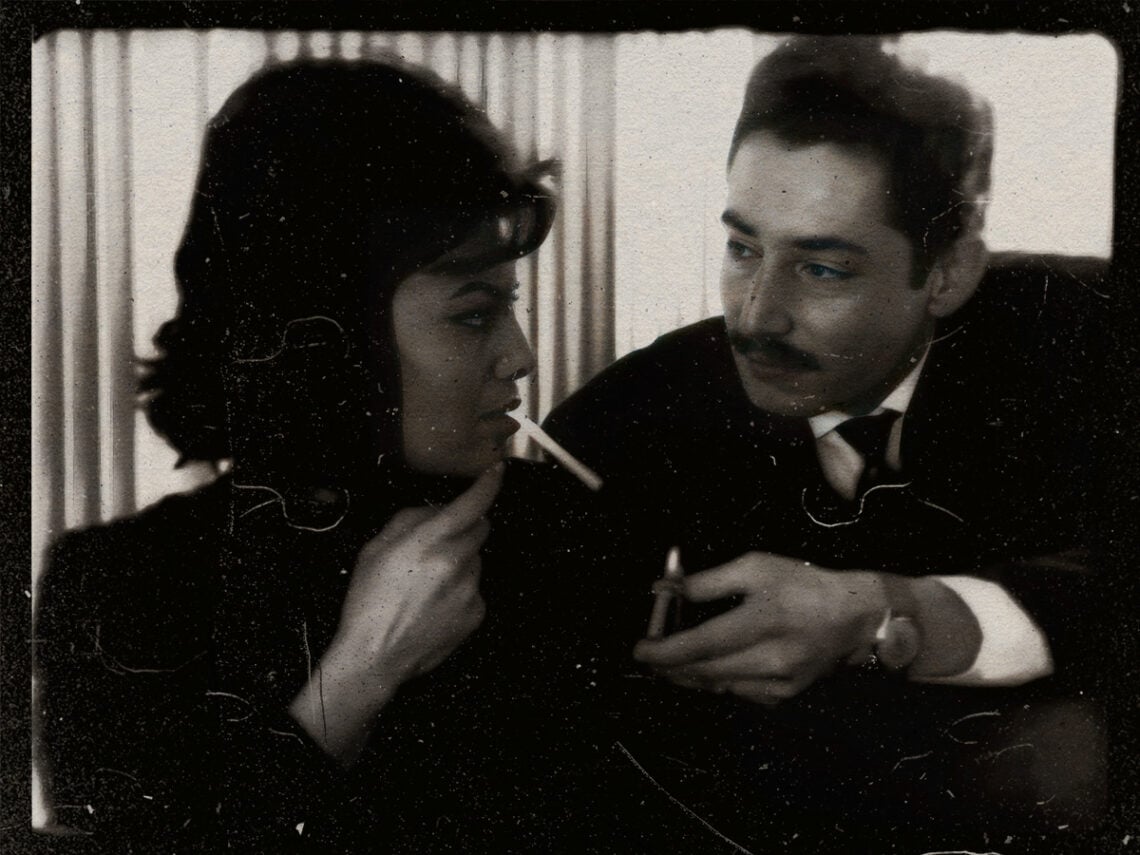
‘Serpent’s Skin’: How Hajir Darioush’s breakthrough movie birthed the Iranian New Wave

Before the mid-1960s, the cinema of Iran was characterised mainly by a certain degree of moral and ideological simplicity. The popular genre of Filmfarsi, which dominated even until the late 1970s, usually presented melodramas or comedies with stereotypical characters and straightforward moral lessons. Such films, like Esmail Koushan’s Pretty Foe, rarely ventured into socio-political critique or complex storytelling – they used simple ‘comedy of errors’ plotlines and generally played for laughs or romance.
Similarly, movies produced during the Pahlavi era often echoed state-endorsed ideologies, emphasising the virtues of modernisation and Westernisation in line with the Shah’s own policies. While exceptions like Ebrahim Golestan’s The Brick and the Mirror offered more intellectual engagement, they were outliers in a landscape primarily focused on entertainment or state-sanctioned themes. This was just over a decade before Iran’s cultural revolution of 1980, which replaced secularism with a strict form of political and religious Islam.
So, when Hajir Darioush’s Serpent’s Skin emerged in 1964, it marked a radical departure from the norm. Darioush’s audacious storytelling and nuanced direction introduced a new level of sophistication that was virtually unheard of in Iranian cinema at the time. The film encouraged audiences to engage in critical thought, question the status quo, and explore the grey areas of morality and identity.
Based on DH Lawrence’s Lady Chatterley’s Lover, Dariosh’s experimental short work follows a middle-aged modern Iranian woman confronted with her own age after striking up a tentative romance with a much younger man. The technical aspects of Serpent’s Skin also marked a massive divergence from established norms.
Darioush opted for a minimalist approach, with meticulous framing and subtle lighting that lent the movie a raw emotional gravity and frequently intercut between multiple narrators to paint a more vivid picture of contemporary Iran. These elements contrasted sharply with the high-octane visuals and melodramatic performances characteristic of Filmfarsi and other mainstream Iranian productions.
The influence of Serpent’s Skin on the Iranian New Wave was profound. The groundbreaking work of Darioush inspired upcoming directors like Abbas Kiarostami, Jafar Panahi, and Asghar Farhadi. They would go on to adopt and further refine the storytelling techniques and technical prowess that Serpent’s Skin had pioneered. Films like Kiarostami’s 1990 Close-Up or Panahi’s The Circle, which came a year later, would continue to challenge and provoke both Iranian and international audiences, just as Darioush had done.
Nearly six decades later, Serpent’s Skin remains a touchstone for scholars, critics, and auteurs who explore the complex landscape of Iranian culture and cinematic expression. Its impact on the Iranian New Wave has been enduring, paving the way for seminal entries to Iranian cinema like Ana Lily Amirpour’s A Girl Walks Home Alone at Night, marking it not just as a groundbreaking film but as a historical landmark that redefined what the country’s cinema could be.
