


‘The Testament of Ann Lee’: A cinematic epic Kristen Stewart crowns as one of the greatest ever made

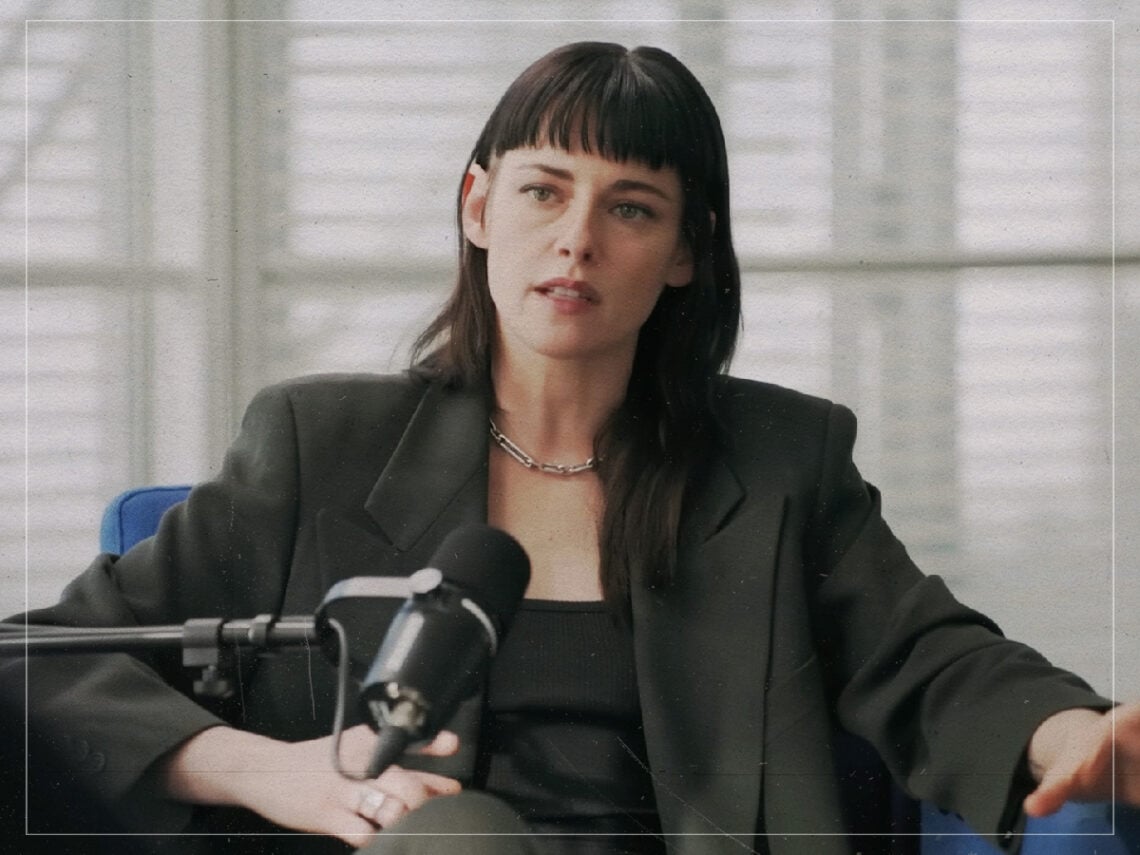
Now that she is a filmmaker in her own right, Kristen Stewart has become an advocate for other female directors.
Anyone who has been paying attention would recognise that it was always unfair to criticise Kristen Stewart for her role in The Twilight Saga; not only did she have zero creative control over the ridiculous Stephanie Meyer adaptations, but she and co-star Robert Pattinson actually did their best to elevate the weak material, and since the conclusion of the franchise with Twilight: Breaking Dawn- Part 2 in 2012, Stewart has continued to prove herself as one of the best of her generation.
The actor is clearly admired by her peers, for in addition to earning a well-deserved Academy Award nomination for ‘Best Actress’ for her performance as Princess Diana in Spencer, she became the first American actress to win a Cesar Award from the French Academy, which awarded her for her incredible turn in Clouds of Silas Marias. Regardless, she has continued to double down on her success by becoming more ambitious, as she most recently helmed her debut feature with The Chronology of Water.
Stewart isn’t the only young performer to have recently made their debut, with the last year seeing amazing first features from Harris Dickinson with Urchin, Eva Victor with Sorry, Baby, and Scarlett Johansson with Eleanor the Great.
However, Stewart has also taken the opportunity to praise the community of female directors who inspired her, and had significant praise for Mona Fastvold and her work on The Testament of Ann Lee.
Fastvold is best known for her creative partnership with her husband, Brady Corbet, as they work together to write and produce films, and while Fastvold directed The Sleepwalker and The World to Come, Corbet helmed The Childhood of a Leader, Vox Lux, and The Brutalist, the latter of which earned ten Academy Award nominations, including ‘Best Picture’ and ‘Best Original Screenplay’ for the couple.
The Testament of Ann Lee shares the epic scope of The Brutalist, but it’s also a full-on musical with some of the most inventive song and dance sequences in quite some time. Amanda Seyfried gave the best performance of her career as the titular religious leader, who inspired the ‘shaker’ movement that pushed for a more puritanical relationship with God through the dearth of earthly pleasures, so it’s not hard to see why it appealed to Stewart, given its feminist themes and strong portrayal of women.
While the epic genre tends to be dominated by masculine stories, Fastvold crafted a generational story about a woman whose ambition and singularity caused a ruckus amongst conservative dissenters. Even when removing the aspect of faith, which is something that film expands upon in great detail, The Testament of Ann Lee is an amazing, visceral, transformative experience.
There are also a lot of parallels to be drawn between the film and Stewart’s The Chronology of Water, as they both explore the lives of real women who recovered from trauma, only to end up making the world a better place. The Testament of Ann Lee provided Seyfried with the type of showcase role that she had long-since deserved, and The Chronology of Water gave Imogen Poots an opportunity to prove what she was capable of in a leading part. Should both Stewart and Fastvold continue to make movies in the coming years, then the industry will be in a healthy place.
