


Is the ‘Mommy’ needle-drop the greatest cinematic ‘Wonderwall’?

Oasis’ 1995 rock anthem ‘Wonderwall’ is one of those songs that seems to follow you around in life, able to find you even when you’re cowering in the corner praying for its demise. Similar to the omnipotent existence of The Killers’ Mr. Brightside or Queen’s ‘Bohemian Rhapsody’, it’s impossible to frequent a boozy pub karaoke night or a student music recital without hearing someone try to copy the wailing vocals of Liam Gallagher.
As a result, ‘Wonderwall’ has been condemned to the darkest pits of the music world, reserved for young kids who don’t know any better to play or for Oasis themselves if the feuding brothers ever decide to sort out their seemingly petty differences. Still, this hasn’t stopped brave directors from using the popular tune in TV shows and movies in the decades since the song hit our eardrums, with ‘Wonderwall’ appearing in everything from Lena Dunham’s Girls to HBO’s multi-award-winner Succession.
But only one movie has dared to use the sensational anthem, Xavier Dolan’s gorgeous coming-of-age Palme d’Or nominee, Mommy. Released back in 2014, Dolan’s beloved drama stars Antoine Olivier Pilon as Steve, a teenage boy with ADHD and violent tendencies who struggles to maintain a relationship with his mother amid fears he might be institutionalised for his behaviour.
A vulnerable protagonist who finds comfort in the love of his mother and the fantasy of his own imagination, Dolan reflects this internal struggle through his use of the unique 1:1 aspect ratio, squishing Steve in the frame. Yet, this choice isn’t set in concrete, with Dolan allowing the screen to grow and shrink as per the protagonist’s mental state, with this first occurring in a scene that perfectly utilises Oasis’ anthem.
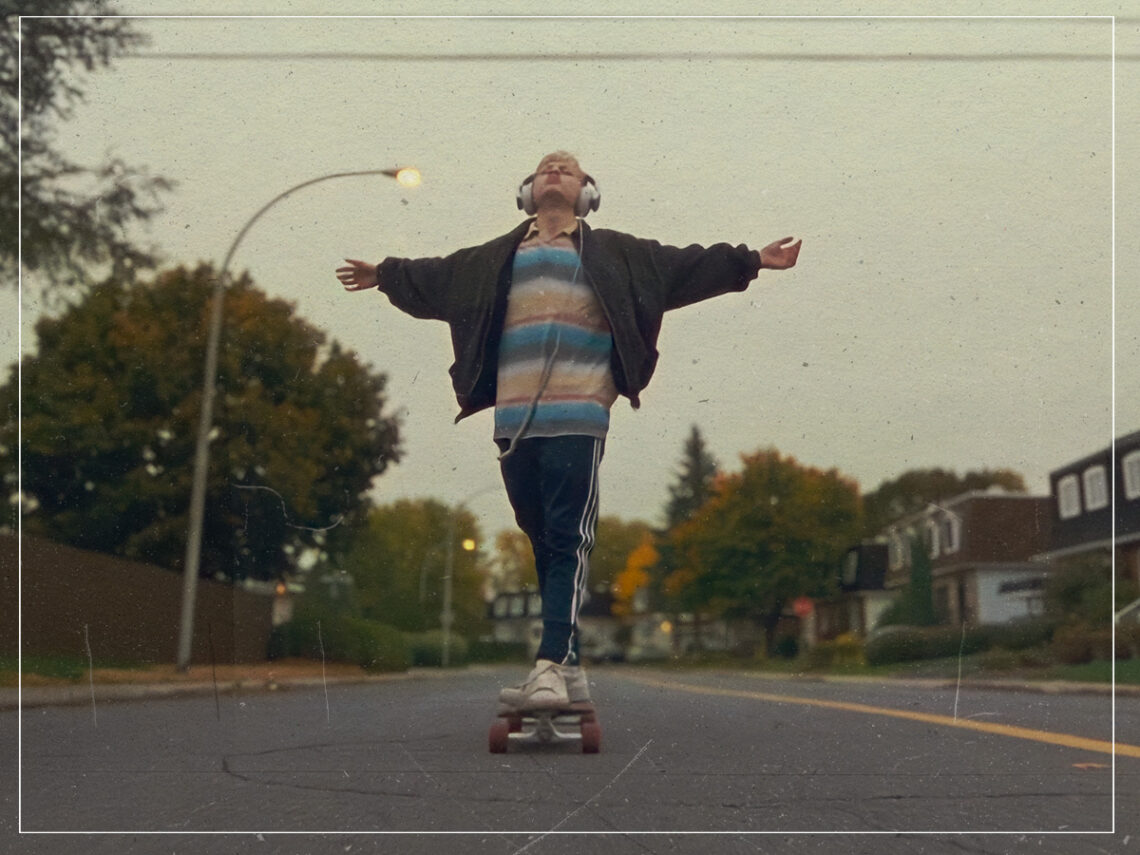
Presented in montage, Dolan suggests that positivity is on the horizon for the family, with Steve skateboarding down the road in a moment of rare liberation for the character. Wearing headphones and presumably listening to ‘Wonderwall’ too, the character parts the black blocks to the left and right of the screen and enjoys some unabashed clarity, helped by the support of his mother and neighbour, Kyla, a teacher on sabbatical.
Reborn, even if just momentarily, with a refreshed perspective, Oasis’ tune well reflects this transition, speaking to the protagonist’s vulnerability and dreams for a better future where someone or something might come and save him from his struggles. “It’s a song about an imaginary friend who’s gonna come and save you from yourself,” Noel Gallagher said of the song during a conversation about its meaning from back in 2002, with this concept feeding back into the scene’s tonal intentions.
His brother later colourfully added, “It’s not a fucking rock and roll tune. There’s quite a vulnerable statement to it,” with ‘Wonderwall’ perfectly reflecting the band’s softer side, which acts in contrast to their steely Mancunian resolve.
Certainly not alien to the use of fitting pop tunes throughout his filmography, Lana Del Rey’s ‘Born to Die’ appears in the beautifully-paced climax, Dolan’s use of ‘Wonderwall’ seems to cut through the snobbery attached to the song, allocating and wrenching the soul of its existence.
