


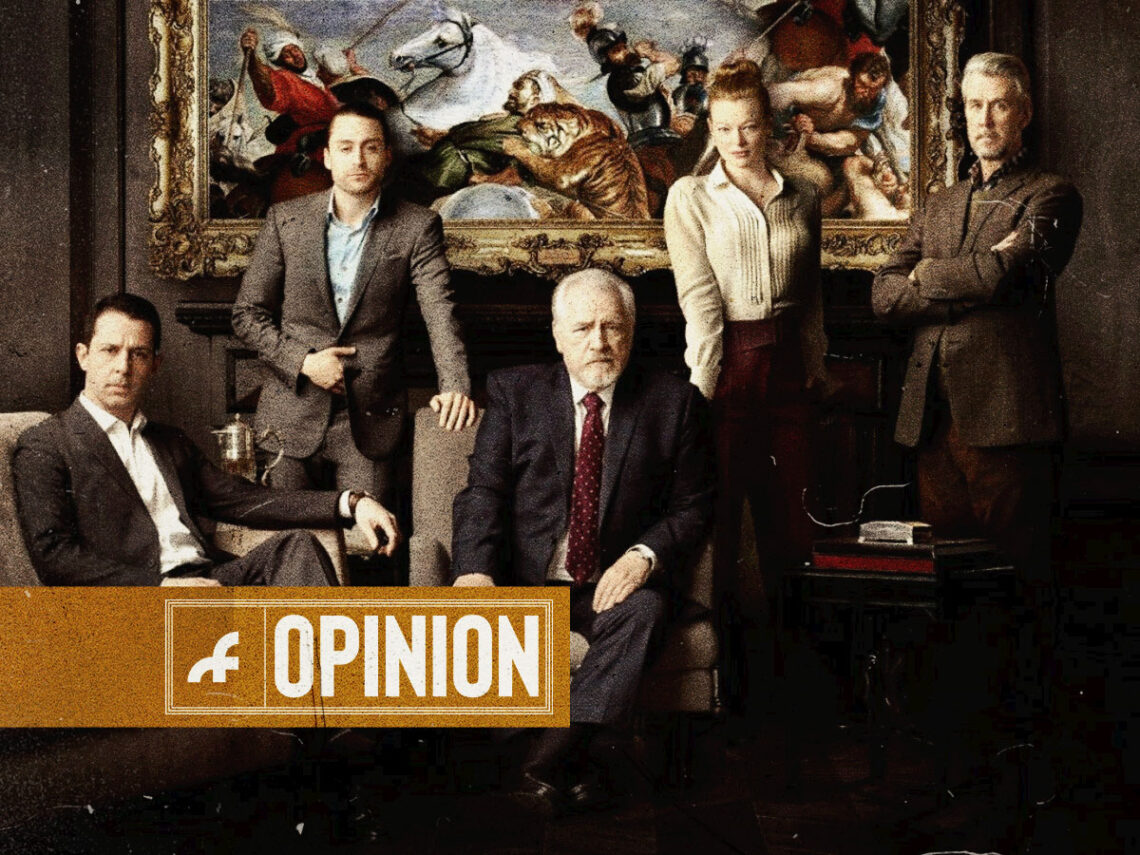
Does the end of ‘Succession’ mark the end of HBO’s golden age of television?

Not long before Walter White’s venture into meth cooking, the death of Jon Snow, or the fall of Kendall Roy, television was widely considered to be inferior to film. With limitations on runtimes, smaller budgets, and capped profits, for a long time, television lacked the prestige of its Hollywood peers.
But with the dawn of a new century, television took hold of its reputation and entered its golden age. As technology improved and streaming prevailed, a new wave of showrunners helmed some of the highest-quality television ever made. At the centre of this movement was HBO. The premium subscription service used the slogan, “It’s not TV. It’s HBO”, to set itself and its output apart from the monotony of cable shows.
True to its slogan, HBO really did spearhead the modern golden age of the platform. The movement began in the late 1990s with the births of both Carrie Bradshaw and Tony Soprano. Sex and the City and The Sopranos changed expectations of television with masterful writing and long-standing cultural relevance. They’ve become some of the most referenced television shows of all time, and the latter is widely accepted as one of the greatest.
After the successes of The Sopranos and Sex and the City, HBO channelled this momentum well into the 2000s. They were the force behind Breaking Bad and The Wire, both of which, alongside The Sopranos, are considered some of the greatest endeavours in television. Breaking Bad even received the title of “most critically acclaimed TV show of all time” in the 2013 Guinness World Records. Marked by complex themes and gritty realism, HBO’s output secured their place as the purveyors and taste-makers of modern, respected television.
Further cultivating its brand, HBO delivered the ambitious adaptation of George R. R. Martin’s Game of Thrones throughout the 2010s, now one of the most iconic series of all time. Alongside its huge critical acclaim and massive, devoted following, Game of Thrones elevated the style of HBO. The broadcasting company was not only increasing the prestige of television thematically, but visually.
By the final season of the show, each episode was costing around $15million. With a star-studded cast, detailed makeup and styling, and breathtaking cinematography, Game of Thrones proved that television could contain all the complexities of big-budget cinema. It also demonstrated HBO’s ability to cause a cultural stir. A huge pop cultural phenomenon, the show dominated social media for years.
Since then, HBO has delivered masterpiece after masterpiece. From the gorgeous cinematography and masterful writing of Big Little Lies to the clever mixing of comedy and tragedy in Barry. From the haunting depiction of Chernobyl to the nihilism of Nathan Fielder’s The Rehearsal or Veep, Sharp Objects, The Last of Us, and The White Lotus. HBO has been behind almost every high-art television show for the last two decades, allowing creators to run with their ideas and prioritising art and audiences.
Between the mass of excellent TV that HBO has supplied in the last few years, few have garnered as much buzz as Jesse Armstrong’s Succession. It contained all the elements of HBO’s golden era with witty writing, complex themes, a mixing of comedy and drama, an outstanding ensemble cast, social commentary, a sense of prestige, stunning cinematography, an iconic theme song, the list goes on.
The show’s final season made history with the announcement of the Emmy nominations in 2023, becoming the first show to pick up three ‘Lead Actor’ nominations. They’re joined by Bob Odenkirk for Better Call Saul, Pedro Pascal for The Last of Us, and Jeff Bridges for The Old Man, making the latter the only actor to not be nominated for an HBO show. The ‘Supporting Actor’ category only further proves HBO’s continuing award dominance – every actor in the category received a nomination either for Succession or for The White Lotus.

Set to sweep award season, Succession’s final season couldn’t have been received much better. After the third episode of the season caused a social media frenzy with the long-awaited death of CEO Logan Roy, Armstrong’s Shakespearean media masterpiece ended with the series’ least dramatic season finale. Leaving little catharsis for fans, Succession ended, expectedly, with the Roys doomed to continue their cycles of familial and capitalist abuse.
It could even be said that the Succession finale rounded up the show too well. Since the season finale, aside from award season buzz, the once inescapable hype around the show has completely dissipated. Few audiences have been clamouring for the show’s return, instead accepting the subtlety and tragedy of its end. Though the show’s cultural impact is sure to rival the likes of The Sopranos and Breaking Bad to be remembered as one of the greatest shows of all time, HBO has lost its most hyped show.
With the recent ending of Better Call Saul too, HBO’s current programming is lacking. While House of the Dragon retains the interest of some Game of Thrones fans and The Last of Us has gamers lauding Pedro Pascal, the subscription’s dramatic output leaves much to be desired. Though both shows have received critical acclaim and have the capacity to cause huge cultural waves, both are also in their infancy, and it’s uncertain how long they will sustain the network’s prestige.
As a prequel series, House of the Dragon lacks the potential for longevity and originality, instead capitalising on HBO’s existing audience of Game of Thrones devotees. The White Lotus remains, too, though its writing sometimes feels incomplete, and its anthology-style plotting has the potential to become gimmicky or tired. However, the post-apocalyptic The Last of Us likely promises more for HBO, demonstrating their capability to adapt a beloved video game to screen.
HBO’s most recent endeavour into drama, The Idol, contrary to the buzz and love that usually surrounds their shows online, has been ridiculed and criticised by audiences and critics alike. With cringe-worthy sex scenes, sub-par acting, and more style than substance, the Lily-Rose Depp-led drama appears to demonstrate HBO’s grip slipping. The series continues the luxurious and stylish feel which has become central to HBO’s programming, but it prioritises this over the thematic complexities which once dominated the network’s shows.
As for series’ HBO has in the pipeline, their upcoming collaboration with A24, which adapts Viet Thanh Nguyen’s The Sympathizer, might mark a return to the network’s usual quality. Nonetheless, the project is only a miniseries, lacking the longevity to capture HBO’s previous numbers and devotion. The Regime faces the same problem.
A TV adaptation of Bong Joon Ho’s Parasite is reportedly in the works, which could go either way with audiences who loved the South Korean original. Another Game of Thrones spin-off is also in early development, set to tell Jon Snow’s story, but even the network’s head of drama, Francesca Orsi, shared her doubts about whether the series will make it to air during an interview with Deadline.
Amidst stylish but substanceless dramas and an influx of adaptations, miniseries, and mixed Game of Thrones-adjacent content, it seems that HBO might be losing their grip on the golden age of television. Their current programming provides little in the way of shows that might cause the same stir as their previous output. To ensure that the end of Succession doesn’t mark the end of HBO and the golden age of television, the network needs to return to a focus on prestigious-feeling, complex television.
