


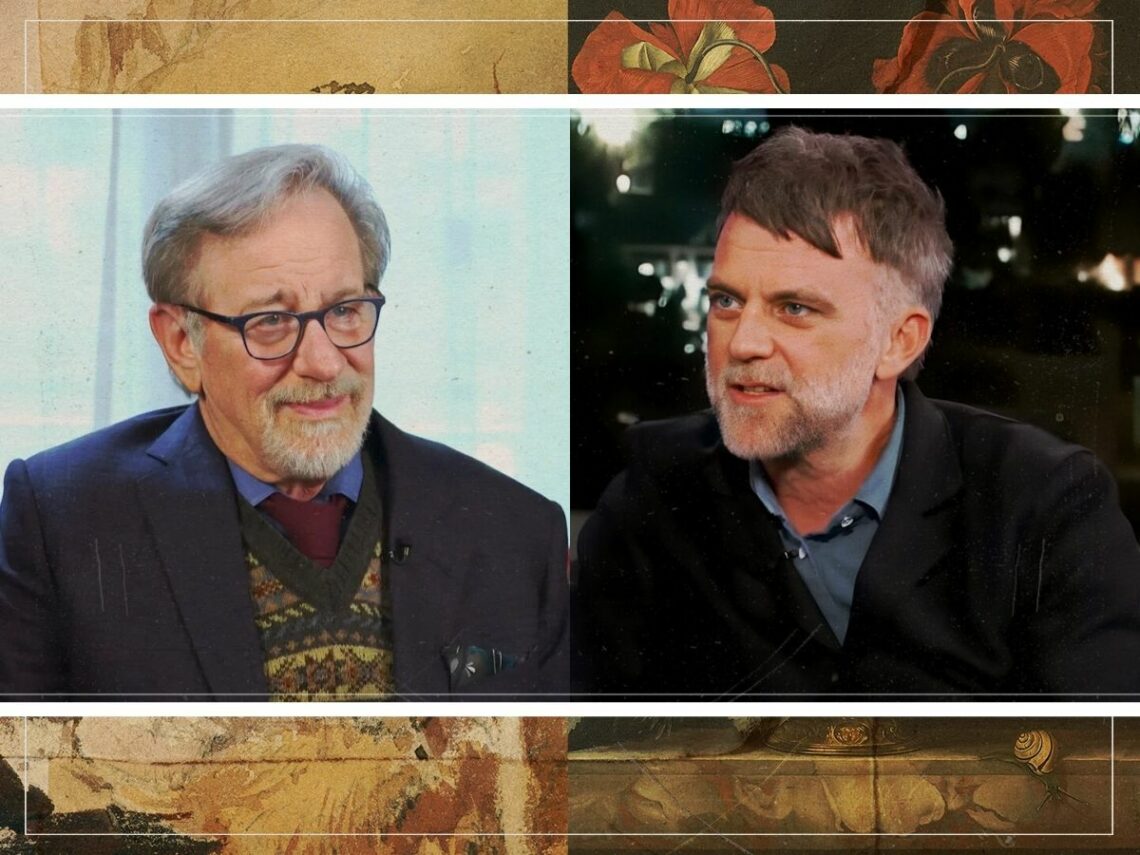
The moment Paul Thomas Anderson met Steven Spielberg: “I think you’re going to make a lot of money”

If you ever want to feel like you’ve wasted your life, just ponder the terrifying fact that Paul Thomas Anderson was only 27 years old when Boogie Nights was released. Not only that, but the modern classic 1970s porn drama was actually his second film.
Once that pesky existential crisis wears off, though, you’ll be free to ruminate on what the stratospheric success of that film must have been like for a guy who hadn’t even hit 30, yet suddenly found himself the talk of the town in Hollywood. He even sat down for lunch with his idol, Steven Spielberg, who gave him so invaluable advice.
In truth, Anderson was never a guy to wait around. At only 17, he made a short mockumentary entitled The Dirk Diggler Story, and it formed the basis of what would eventually become Boogie Nights ten years later. In the intervening decade, though, he cobbled together $10,000 from college money, his girlfriend’s credit card, and gambling winnings to produce a short film called Cigarettes & Coffee. He then expanded his short into a feature film, which became 1996’s Hard Eight. That film – about an elderly gambler and a homeless man he befriends – brought Anderson to Hollywood’s attention, and he soon parlayed that buzz into Boogie Nights.
After the town went wild for his sophomore effort, though, Anderson found himself in situations he’d never imagined in his wildest dreams. It seemed like everybody wanted to be in the PTA business. In a 1998 interview conducted at the height of Boogie-mania, he told Playboy, “A powerful, charismatic studio head sat me down yesterday and said, ‘Your next three movies are green-lit. Keep them all under $15million. You’ve got the final cut, you don’t have to do a preview, and you’re set. Go. Shake my hand, yes or no.”
This would be enough to make most young filmmakers sign away their souls, but Anderson isn’t like most young filmmakers. He claimed he told the executive, “Well, I don’t fuck on the first date. I’m sorry, I can’t do that,” before explaining that he was wary of having to deal with the other 40 execs at the studio who would also want to throw their two cents in. The deal would only make sense to him if he got to know those people first because he insisted, “I have to protect myself and the actors in the movies I make. I’ve got to know more.”
This was an incredibly ballsy response from someone who had very little track record in Hollywood. However, the executive must have liked the cut of his jib because he simply laughed and semi-jokingly offered Anderson a $30million budget for each film. Ultimately, the executive accepted, “I understand, and I’ll bet you don’t call me” – and he was right.
Someone Anderson did call back, though, after hearing they wanted to meet him for lunch, was none other than Steven Spielberg. As a kid whose first movie obsessions were Jaws and Close Encounters of the Third Kind, this was an enormous deal for Anderson. He stated, “When God calls, you show up. You take off the blinders, you tuck in your shirt, and you go and see him. It was thrilling.”
The two directors ended up having lunch on the very day Boogie Nights opened, and Anderson felt like a wide-eyed kid again. He eventually plucked up the courage to ask, “What do you think of the way we’re releasing the movie?” and Spielberg replied that he thought the strategy was great. He even went so far as to say, “I think you’re going to make a lot of money,” to which Anderson quipped, “Well, you’re the only human being who knows.”
Spielberg was right, though – Boogie Nights wound up almost tripling its $15million with a worldwide box office return of $43,111,725. The two men aren’t natural companions in the great cinema of life. Anderson is certainly a more adventurous storyteller, while Spielberg has a wider idea of what constitutes entertaining cinema. However, the one thing they do share is an innate love for the movies.
The Jurassic Park director has long been a champion of all things cinema and has resolutely defended any director’s right to tell their story how they see fit. If there was one piece of perfect advice he offered Anderson, it was that. Boogie Nights was Anderson’s tale, his vision and his vision alone would take it into the successful lane of cult adoration it still finds itself in.
