


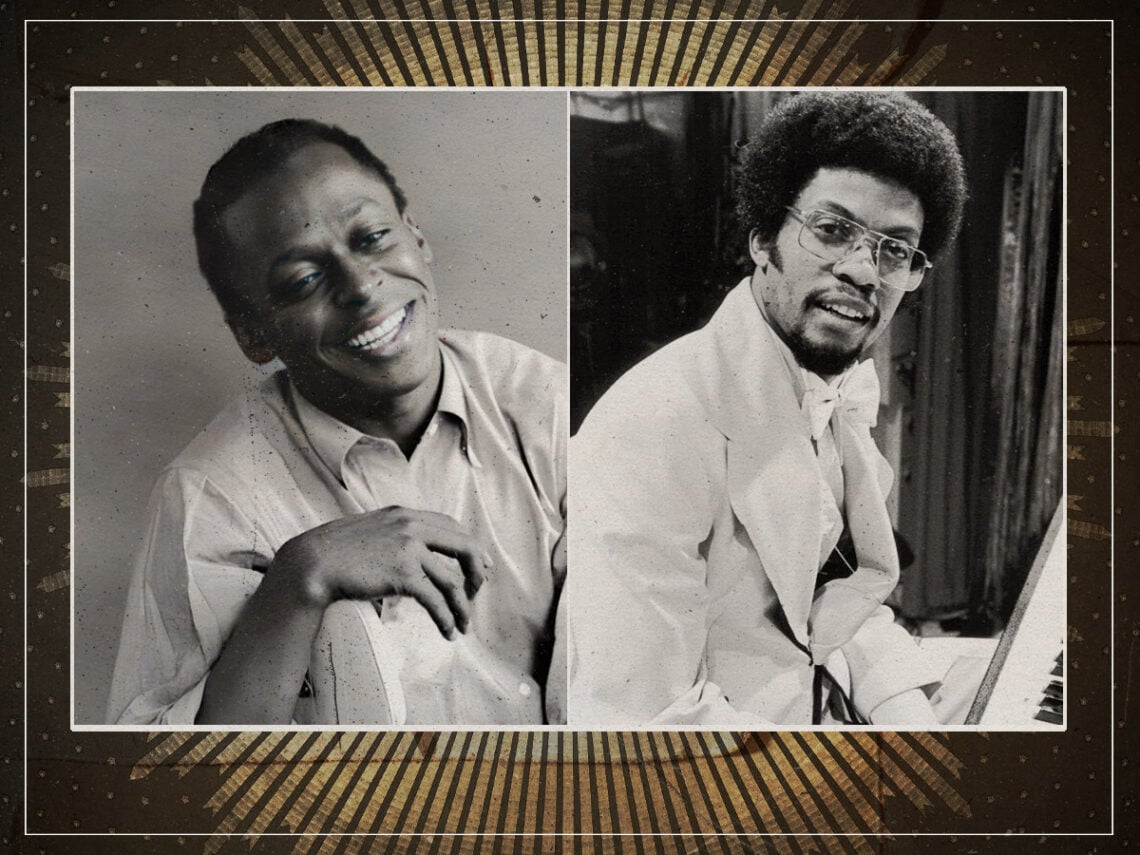
“There are no mistakes”: What did Miles Davis think of Herbie Hancock?

Despite its reputation among non-believers, the world of jazz is made up of some of the most talented and professional musicians of all time. Storied by improvisation and experimentation, far too many figures in jazz were written off as charlatans, making it up as they went along. In reality, to become familiar enough with a complex piece of music to tear it down and rebuild it while performing live on stage is the pinnacle of musical proficiency. That is not to say, of course, that jazz artists like Miles Davis never made mistakes, but rather that they viewed mistakes in a different way than artists of other genres.
Miles Davis was, in many ways, the archetypal jazz musician: a prolific and incredibly skilled artist with a tireless penchant for experimentation. Throughout his long and illustrious history, ranging from his Birth of Cool period to the psychedelic mastery of Bitches Brew, Davis blazed an incredible trail, which countless future artists followed. Even outside the world of jazz, rock and pop musicians flocked to Davis’ discography, worshipping him for his incredible artistry, which had something of a universal appeal.
Over the years, this unparalleled reputation caused more than a few musicians to want to collaborate with Davis. Everybody from Sonny Rollins to Chaka Khan worked with Davis, but the trumpeter, famously, was not the easiest person to collaborate with. Perhaps due to his strong artistic ethos and hard-headed ideas, many fellow musicians found it difficult to work with the jazz star. The same cannot be said, however, for Herbie Hancock, the jazz icon who became an essential member of Davis’ Great Quintet during the 1960s.
In the present day, Hancock himself is lauded as a pioneer of modern jazz and fusion, being one of the very first figures in the movement to embrace new technologies like synthesisers. During his days with Davis’ group back in the 1960s, however, Hancock learnt many valuable lessons from the trumpeter, shaping his musical world view and inspiring much of his later work down the line. For instance, the apparent perfectionist Miles Davis was the one who taught Hancock about the value of so-called ‘mistakes’.
As Hancock himself once recalled, “I remember that we were playing ‘So What’ and it was a really hot night. The music was on. Right in the middle of Miles’ solo, when he was playing one of his amazing solos, I played the wrong chord. Completely wrong. It sounded like a big mistake.”
Playing a bum note in front of one of the greatest musicians of the 20th century was always going to be a pretty embarrassing affair, but Davis seemed to take it in his stride. “Miles paused for a second,” Hancock continued, “And then he played some notes that made my chord right, made it correct.”
After all, jazz is rooted in improvisation and adapting to your musical surroundings. ‘Mistakes’, as Hancock called them, simply provided a new avenue for the music to go down and adapt itself to. Davis seemed to concur with that idea, with Hancock recalling, “Miles didn’t hear it as a mistake, he heard it as something that happened. Just an event. That was part of the reality of what was happening at that moment, and he dealt with it. Since he didn’t hear it as a mistake, he felt as if it was his responsibility to find something that fit.”
Nobody but Davis could make such a profound impression in so few words. That inherent message of mistakes providing an opportunity to explore other musical possibilities never left Hancock. “That taught me a very big lesson,” he said, “about not only music, but about life.” So, throughout his own celebrated solo career, Hancock was never particularly afraid to hit a wrong note or chord, as Davis had shown him that mistakes are only noticeable if they are not followed up by something interesting.
