


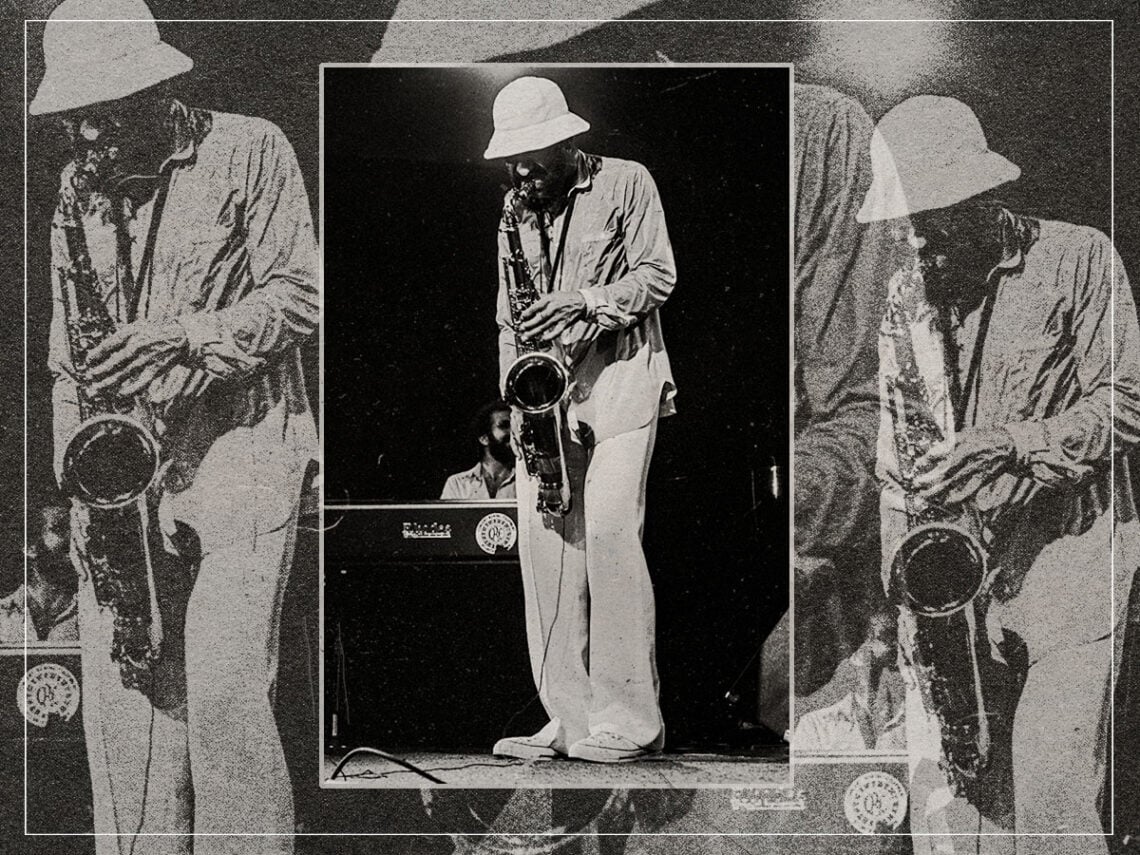
The Redemption of Sonny Rollins: from armed robbery to the greatest sax in jazz

Poverty, heroin and armed robbery are three things you might expect to find in a Quentin Tarantino film, but not things you would expect for one of the most respected careers in all of jazz music. Sonny Rollins is an absolute titan of jazz and tenor saxophone, with an utterly unforgettable sound. Perhaps the greatest saxophonist of all time, rivalled only by the likes of John Coltrane or Charlie Parker, Rollins’ life nearly took a very different path, with the musician once spending ten months behind bars after a foiled armed robbery.
Growing up amid the backdrop of the Harlem Renaissance, Rollins’ life could have gone one of two ways. On one hand, the young man was surrounded by incredible literary and musical figures, living on the same block as legendary writer and pioneering civil rights activist W.E.B. Du Bois and regularly encountering the likes of Duke Ellington, Coleman Hawkins and Roy Eldridge during day-to-day life. On the other, Harlem during the 1930s was a very dark place. With the country deeply entrenched in the Great Depression, predominantly Black neighbourhoods in places like Harlem felt the strain more than most. As a result of extreme poverty and a lack of other options, many young people of the time turned to a life of crime.
For a while, it seemed as though Rollins had chosen the right path. Heading across Greenwich Village, the young saxophonist found inspiration in the city’s blossoming jazz scene. Although encountering legendary figures like Billie Holiday and Charlie Parker set Rollins on his path to jazz greatness, it also led to his early downfall. Heroin was rife throughout the 1950s jazz scene in New York, with the drug plaguing everybody from Miles Davis to Rollins’ hero, Charlie Parker.
Rollins’ first exposure to the brown powder came with Billie Holiday, who had herself been put onto it by trumpeter and husband Joe Guy. Seeing his musical heroes descend into addiction, it was inevitable that Rollins would soon follow suit, believing it would make him sound like Charlie Parker. Switching the tenor sax for the needle, Rollins’ journey as a junkie would lead him to the lowest point in his life, locked up in the infamous Rikers Island Jail.
The musician served two stretches behind bars, firstly in 1950 for a foiled armed robbery, which earned him ten months, then again for using heroin while under probation. Looking back upon that time, Rollins told Uncut in 2021, “In retrospect, it was the first of my sabbaticals! Unlike the others, it wasn’t self-imposed. But it was a learning place.”
Adding that prison allowed him to focus entirely on music, “The prison was a brutal place, but fortunately, I was involved in the music, and I largely avoided the brutality.”
Coming out of prison in the mid-1950s, the influence of Charlie Parker finally helped Rollins kick the habit of heroin. Parker was too far gone by that point. His life had been indefinitely altered by his addiction, but it wasn’t too late for Rollins. As he explained, “When he found out that I was using drugs, he was heartbroken. When I saw how upset he was, I thought, ‘Wow, I’m killing Charlie Parker.’ So that got me to finally go to different places.”
Heading to rehab and getting his life back on track, the post-heroin Sonny Rollins quickly became noted as one of the great tenor sax players to ever grace the airwaves. Capable of producing a stunningly captivating sound, he is undoubtedly one of the biggest figures in jazz history. The landscape of the genre would have been very different without Rollins’s road to Damascus moment following his release from Rikers and his dedication to Charlie Parker.
