


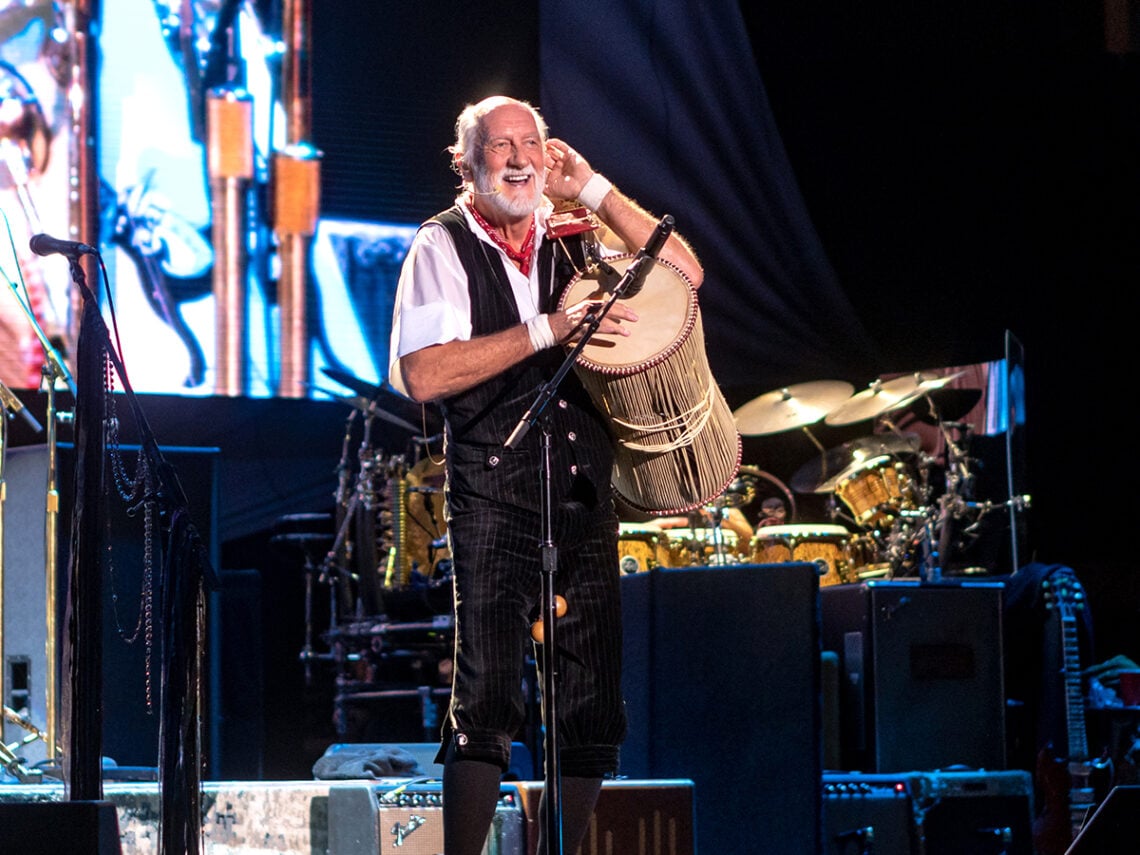
Mick Fleetwood’s favourite 1960s Fleetwood Mac songs

As much as Fleetwood Mac have become a part of the furniture of modern rock music, not all of them have exactly been stalwarts to the cause. In fact, it’s only Mick Fleetwood and John McVie – the group’s namesakes – who have stuck at it the whole way through, with the likes of Stevie Nicks and co. jumping on the bandwagon some seven years into the ride.
In that sense, there was an entire era before the supersonic 1970s heights of Rumours somewhat lost to the superficial listeners of only ‘Dreams’ and ‘The Chain’. To that end, the years in which Peter Green, the band’s real founder, was in tow is a treasure trove of hits that put Fleetwood Mac on the market long before many of the songs which dominate their legacy.
As one who has been there through it all, Fleetwood has more than earned the right to say his piece on which tracks are his favourites. Of course, mega chart successes like ‘Go Your Own Way’ worm their way into special places for all the acclaim it brought them as a group, but it would do the drummer a huge disservice to think that he’s forgotten about the songs from where it all began. In fact, it’s quite the opposite.
Among his top choices, Fleetwood began by citing 1968’s ‘Love That Burns’ as among the very best. Taken from the band’s second record Mr Wonderful, the song probably won’t be found on many greatest hits compilations, but nonetheless, for Fleetwood, it was a “full-on training ground.”
Speaking of his bandmate turned musical hero and of the era, he said: “Peter Green. Fleetwood Mac. This is probably almost my favourite song. It kills me. Peter kills me. He was my friend, remains a friend, and he started Fleetwood Mac with me in 1967.”
“When I hear this,” he continued, “it’s all about a young chap, me, knowing why Peter was so overjoyed to be playing the music that he loved so much.” That music was a far cry from anything Fleetwood Mac would later go on to be associated with – they began life mainly as a blues band – but it’s clear that without it, Fleetwood’s career would never have been the same.
From there, he went on to single out another blues effort, which summed up the band’s quintessential early sound. That was ‘Rattlesnake Shake’ from their subsequent album Then Play On, released in 1969. Fleetwood reminisced on ‘Rattlesnake Shake’ by recalling: “On this song, you hear structure, yes, but you also hear me being incredibly free to break into the shuffle at the end, which was not supposed to happen, but it did and we went, ‘Oh my God, we really like that.’ I really loved that because it was my way of participating in creating the character of the song.”
Finally, he rounds off his memories of the band’s swinging ‘60s era by returning to the song that gave them one of their earliest successes, in the form of ‘Oh Well’, also from Then Play On. “It’s two minutes of madness that I love,” Fleetwood said. “It’s a stop-and-start song, and to this day I get the heebie-jeebies thinking that I’m going to mess it up – which is good because that’s the child in me.”
In many ways, the song captures the exact magic of what Fleetwood Mac was all about in those days, as well as giving an eye to the future on what they would become. It’s still one of their most revered hits. “The structures that I was able to put together make it something that is very unique. It’s become a real staple of the diet, way more so than I ever realised with our contemporaries and the best of the best – they’re absolutely fascinated with this song.” Between artists’ fascination and Fleetwood’s fondness for the track, it’s clear that ‘Oh Well’ set the group apart from their very early days – and they would never look back.
Fleetwood Mac, in a lot of respects, were a completely different band from their nascent ‘60s hits to their final record, Say You Will, in 2003. With no less than 17 records spawned in that time, however, you can understand why they would want to live out the rest of their glory years on stage rather than in the studio. Various lineups may have come and gone since the halcyon days of the ‘60s, most notably Peter Green who held fort at the time, but it’s certain there would be no Fleetwood Mac without those early blues beats.
