


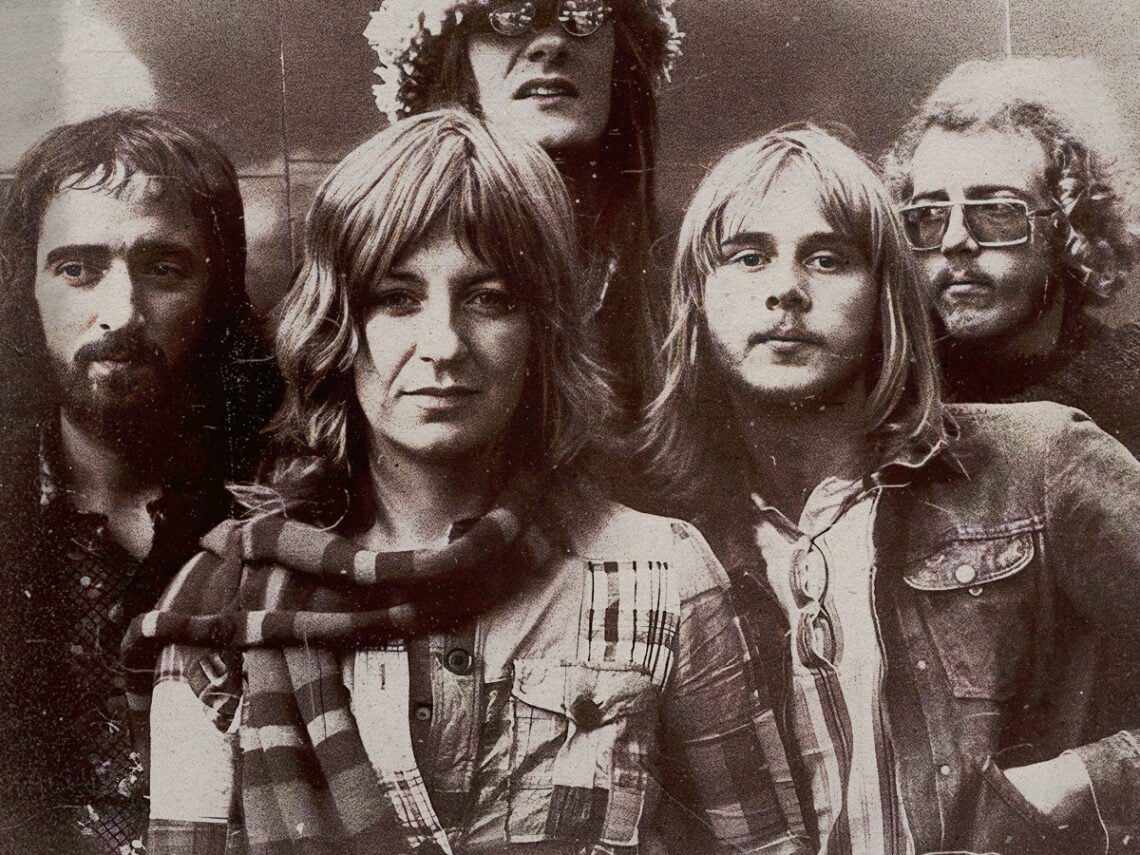
Mick Fleetwood’s eight favourite Fleetwood Mac songs

Mick Fleetwood is one of the most celebrated drummers of all time, a musician who is the glue that kept Fleetwood Mac ticking for over 50 years. On reflection, looking back on a simply remarkable career, I realise there really isn’t much that Fleetwood hasn’t achieved. There is a reason the drummer is widely credited as an integral figure in the world of music.
Most fans will undoubtedly have a different opinion on what can be regarded as the best Fleetwood Mac songs in existence. However, very few people are more qualified to discuss the topic than Mick Fleetwood himself. The drummer is one of only two omnipresent band members – alongside John McVie – with the group exploring a plethora of different line-ups over the last half a century.
The classic rock band ventured from a blues rock beginning to becoming pop-rock pioneers when Stevie Nicks and Lindsey Buckingham joined the mix and added fresh impetus following Peter Green’s tragic departure. Nevertheless, thanks to Mick’s steady beat behind the kit, the band has always had a solid identity. In short, they’ve got grooves no matter what genre they populate.
And that has attracted a legion of fans over the years. In fact, more so than any of their peers, they continue to attract new fans in droves. With a host of new fans now flocking to check out the band who soundtracked the most famous TikTok video of all time, it led us to ask one question: which songs would the leader of the band pick as his favourites?
While revered by many, Mick Fleetwood is one of the most under-celebrated figures of pop music. With his band, he, alongside a string of other talented musicians, changed the face of pop music. They gave it a sun-shining hue and a golden-flecked core that meant the make-up of music as we know it would change forever. He made listening easy, and it was something everybody wanted to get down to.
With a repertoire that Fleetwood Mac can boast, picking out just one track is almost impossible. With that in mind, the drummer could not narrow it down to less than eight when asked by Music Radar. We are going to take a look through these eight delights from various stages from the iconic band’s career that saw them go from session musicians starting out on their own in 1967 to Grammy Award-winning global juggernauts.
Mick Fleetwood’s favourite Fleetwood Mac songs:
‘Love That Burns’ (1968)
Fleetwood’s first choice comes from the Peter Green era of the band with a track taken from their sophomore effort, Mr Wonderful, which was released in 1968. The song is a world away from the type of music that would appear on their seminal Rumours album, but it’s an incredible piece of music nonetheless.
“Peter Green. Fleetwood Mac. This is probably almost my favourite song. It kills me. Peter kills me. He was my friend, remains a friend, and he started Fleetwood Mac with me in 1967,” he said of the song. Not necessarily the biggest hit of the band’s career, the selection is born from Fleetwood’s own connection to the track.
“This is me in my full-on training ground,” he continued. “This is the essence of playing Oh Daddy, the essence of what I was able to get out of playing a form of music that allowed me, as a young chap, to express myself so thoroughly, not only vicariously through Peter – because I loved his playing so much – but when I was privileged to be playing behind somebody so talented. When I hear this, it’s all about a young chap, me, knowing why Peter was so overjoyed to be playing the music that he loved so much.”
‘Go Your Own Way’ (1977)
The second choice from the drummer comes from almost a decade later, from the Rumours era of the band. Following Peter Green’s departure and the start of their global dominance, there’s one song that will always follow the group. ‘Go Your Own Way’ is probably Fleetwood Mac’s most well-known number and one that simply couldn’t be left off Fleetwood’s list.
“Lindsey walked in with a demo, in his wonderfully ordered fashion from the days when he’d just joined Fleetwood Mac until he realised that John and I played in a certain way,” remembered Fleetwood when recalling his favourite songs, “Which was compliant to the structures and aspirations of a songwriter”.
Adding: “I love playing this song. It’s one of my favourites because I get to kick the hell out of my drums, and it’s got that wonderfully primal part. It’s a great ‘let loose’ stage song, in which I can revert to my old animal ways and not be quite so polite. Lindsey is a full-on rock ‘n’ roller on this song, and that I love.”
‘Rattlesnake Shake’ (1969)
Moving on, Fleetwood returns to the Peter Green period for his next choice, the excellent ‘Rattlesnake Shake’. This is easily the standout moment of 1969’s Then Play On and fully deserving of its place on this esteemed handpicked list. It really does represent what the band was first about.
“On this song, you hear structure, yes, but you also hear me being incredibly free to break into the shuffle at the end, which was not supposed to happen, but it did and we went, ‘Oh my God, we really like that.’ I really loved that because it was my way of participating in creating the character of the song,” he says. At the time, fans adored the way it somehow stayed true to the blues yet advanced the genre in a new, exciting way.
Adding: “It incorporated the freedom to go off on a tangent, to jam – the classic ‘Do you jam, dude?’ We learned that as players. You hear that alive and well in the double-time structure that I put in at the end, which on stage could last half an hour. It was our way of being in the Grateful Dead.”
‘Walk a Thin Line’ (1979)
‘Walk a Thin Line’ is one of Lindsey Buckingham’s finest moments from 1979 effort Tusk, a project which saw the band boldly deviate away from the sound of Rumours which had gifted them such rich successes and was a testament to the group that they shied away from the easy road.
“This is a Lindsey Buckingham album, written for the Tusk album,” recalled Mick Fleetwood in his insightful conversation. “I redid it this for The Visitor, the album I recorded in Africa, and the reason I did so was because I really loved the song and wished that I’d written it. I approached it with a whole ensemble of African musicians, so as a percussion player, during these recordings, I was, as we say in England, ‘like a pig in shit.’ I had the greatest time playing with these musicians on this rendition of this particular song.”
He added: “George Harrison was my ex-brother-in-law, so when I came back to England, he put some beautiful slide guitar on the track for me. I adore him and his music, and he is sorely missed.”
‘Dreams’ (1977)
The list wouldn’t be complete without the inclusion of ‘Dreams’; the track remains Fleetwood Mac’s only song to top the Billboard chart in the States, and it embodies everything great about their seminal LP Rumours. This track played a pivotal role in the band becoming their household name today and should rightly be considered one of their best.
“Dreams is a given,” Fleetwood says. “I think it’s the most famous song that Stevie ever wrote. The intro, I think is one of those stupidly simple things that came from the drummer who played with Al Green and The Staple Singers, so it’s from my love of what I call ‘greasy music.’ It has a real feel, and it’s lazy, behind the beat – stupidly simple but well-thought-out”.
“The tempo of the song, I’ve been finding out, is something that really appeals to drummers, so I take that as a compliment. It’s something I took from great players who I love so much: Keep it greasy and stay in the slot. Gotta be in the slot!”
‘Oh Daddy’ (1977)
Christine McVie wrote ‘Oh Daddy’ for Fleetwood, even if he didn’t know it initially. At the time, Fleetwood was the only father of the band, with two daughters. Therefore, the Rumours track holds a real poignancy for the drummer. “I’m a sucker for this one because it really is a structured song, which is so appealing to me as a player,” Fleetwood explained. “Basically, it’s me playing a slow blues with Christine.”
He continued: “Sentimentally, I say this because I didn’t know it at the time, but I found out not too long afterwards that the song was actually written about me. At that point, I was the only daddy in the ranks of Fleetwood Mac. Christine is a sister of mine and truly a great musician – and a blues player.”
This is an ode to the glue that kept the band together, and such a sentiment was deemed so central to their lore that it squeezed the classic B-side ‘Silver Springs’ off of Rumours. Moreover, it is gorgeously performed by the late, great McVie.
‘Oh Well’ (1969)
The drumming maestro returns yet again to the halcyon days of the Peter Green era, a time when the band’s dynamic was a lot more straightforward, and they didn’t have to deal with the pressures that came with being one of the biggest bands in the world. “It’s two minutes of madness that I love. It’s a stop-and-start song, and to this day I get the heebie-jeebies thinking that I’m going to mess it up – which is good because that’s the child in me.”
Fleetwood added: “The structures that I was able to put together make it something that is very unique. It’s become a real staple of the diet, way more so than I ever realised with our contemporaries and the best of the best – they’re absolutely fascinated with this song.” It has since been covered countless times, proving the drummer’s point. From Haim to your local cover band, ‘Oh Well’ has transcended modern music—it’s a jam for the ages with plenty of chops on display.
‘Tusk’ (1979)
The final track is the titular number from Tusk, a number that encapsulated the decadence of Fleetwood Mac during this time — ‘Tusk’ is pure unadulterated chaos which feels like the polar opposite of Rumours which is perfect because of its imperfections.
Speaking about the track, he said: “This is Mick Fleetwood gone AWOL. I really enjoyed working with Lindsey, who put the structure down. The song had basically been discarded during the Tusk sessions, and no one knew what to do with it. We’d made this jam song. The crazy jungle beat is very much a Mick staple diet.
“The song came back to life, on the face of it, from an asinine idea I got when I was on holiday in France. There was a brass band walking around the village, and I came back and said, ‘We need to put the USC Marching Band on this,’ and everybody thought I was crazy. Of course, we did it, and it’s become one of the classic Fleetwood Mac songs in concert.”
