


“I am not God, but I am Michelangelo Antonioni”: Dissecting the brilliance of ‘Blow-Up’

Michelangelo Antonioni’s Blow-Up is a complex film, and one that has perplexed viewers for decades. The movie encapsulated the swinging sixties by documenting London‘s youth, highlighting the dominance of new styles and music. However, the Italian director captured the era through a fragmented lens, which can be seen visually and narratively.
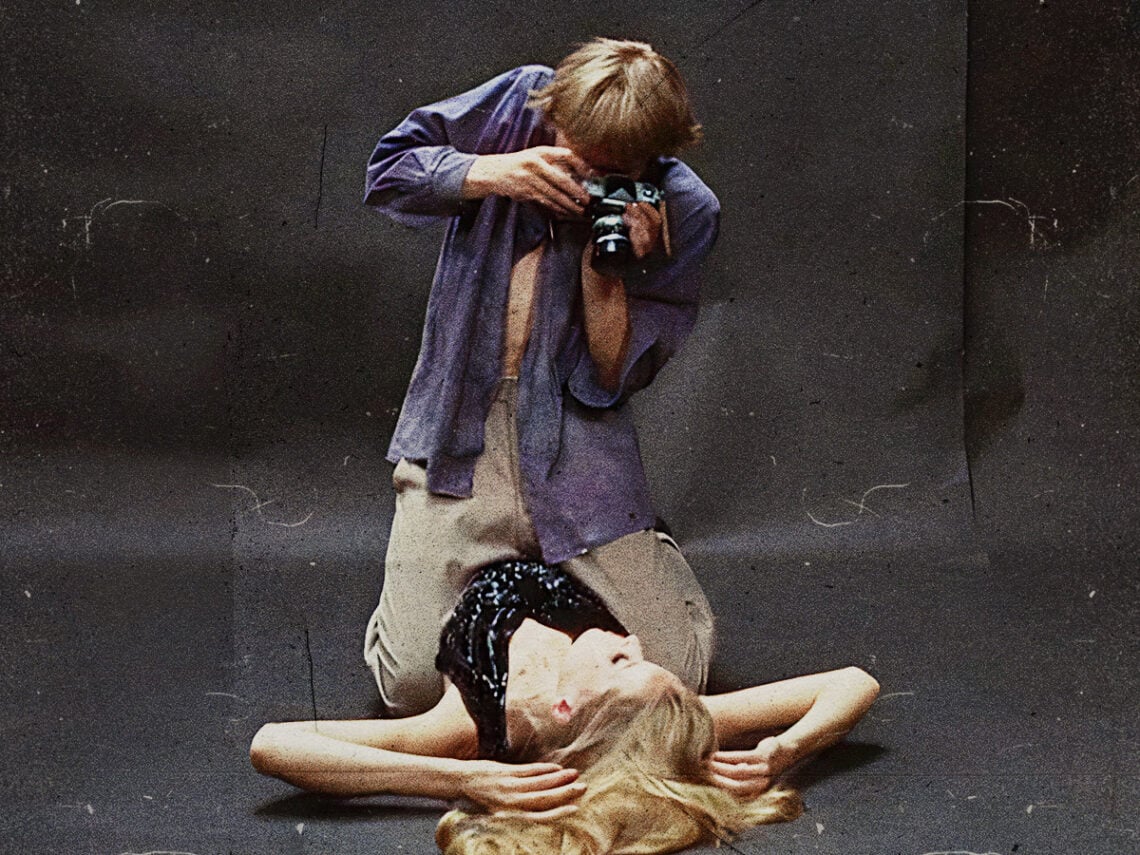
Blow-Up follows David Hemmings as a young photographer, slightly sleazy and morally dubious. When we see him in the studio near the film’s beginning, his shirt is barely buttoned, and he straddles his model on the ground, leaning in to kiss her neck between photos. However, the photographer soon becomes obsessed with an image he captures in the park, which reveals a murder when blown up to a larger size in the studio.
Antonioni never gives concrete answers to the film’s many questions, which has annoyed many contemporary audiences. We never discover who is responsible for the murder or why it happened; all we know is that the event is important to our protagonist. However, Antonioni found this technique incredibly important to his filmmaking ethos – giving everything away would remove the importance of mystery, which is central to the human condition.
The director once briefly explained his interpretation of the movie to Alberto Moravia, stating: “The story is important to me, of course, but more important are the images. [The photographer] wants to see something more closely. But when he enlarges the object it breaks up and disappears. So there’s a moment when one grasps reality, but the next moment it eludes us. This is roughly the meaning of Blow-Up“.
Hemmings’ character slowly detaches from the modern world, with Antonioni honing in on the contrast between reality and fantasy, the illusion of freedom and the mystery of perception. It’s a complicated film, yet it captures a specific moment in time perfectly. Just 20 years after the end of the war, Antonioni was interested in looking inwards.
The director once explained his thoughts on filmmaking during an interview with Dangerous Minds. He said: “I had arrived a little late on the scene, at a time when that first flowering of films, though still valid, was already beginning to show signs of exhaustion. Consequently, I was forced to stop and consider what subject matter was worth examining at that particular moment, what was really happening, what was the true state of things, what ideas were really being thought.”
He continued: “And it seemed to me that perhaps it was no longer so important to examine the relationship between the individual and his environment, as it was to examine the individual himself, to look inside the individual and see, after all he had been through, […] to see what remained inside the individual, to see, I won’t say the transformation of our psychological and emotional attitudes, but at least the symptoms of that restlessness and behaviour which began to outline the transitions that later came about in our psychology, our feelings, and perhaps even our morality.”
The film also starred Peter Bowles, who was initially given a significant speech which revealed more of Blow-Up‘s meaning than Antonioni intended. Thus, he cut the scene, much to Bowles’ annoyance. “In my innocence and no doubt arrogance, I thought that a terrible mistake had been made. So I said […] that Antonioni mustn’t cut that speech, that it was essential to the whole film. I demanded to talk to him about it,” he told the Guardian in 2005.
He recalled that Antonioni said: “‘If I leave the speech in, everyone will know what the film is about, but if I take the speech out, everyone will say it is about this, it is about that, it is about the other. It will be controversial.’ So it was cut”. For Bowles, Antonioni was unlike any director he had ever interacted with, working extremely closely with his actors to get their lines just right.
Antonioni reportedly said: “When you work with other directors you give them your performance and they film it. Not with me, Peter. You see I have chosen you for how you look. I have chosen all your clothes. If I move my camera six inches, I would ask you to do that line in a different way.”
The actor remembered: “Upon this, he put his arms around me and held me close to him and said, ‘Peter, believe in me. Trust me. I am not God, but I am Michelangelo Antonioni’.”
Antonioni’s movie won the Palme d’Or at Cannes Film Festival, and its well-received raciness helped the easing of the censorial Hays Code. Blow-Up is now a cult classic, loved not only for its rich themes but also for its time-capsule quality, capturing London’s swinging era like no other piece of cinema, complete with a fantastic score by Herbie Hancock.
