


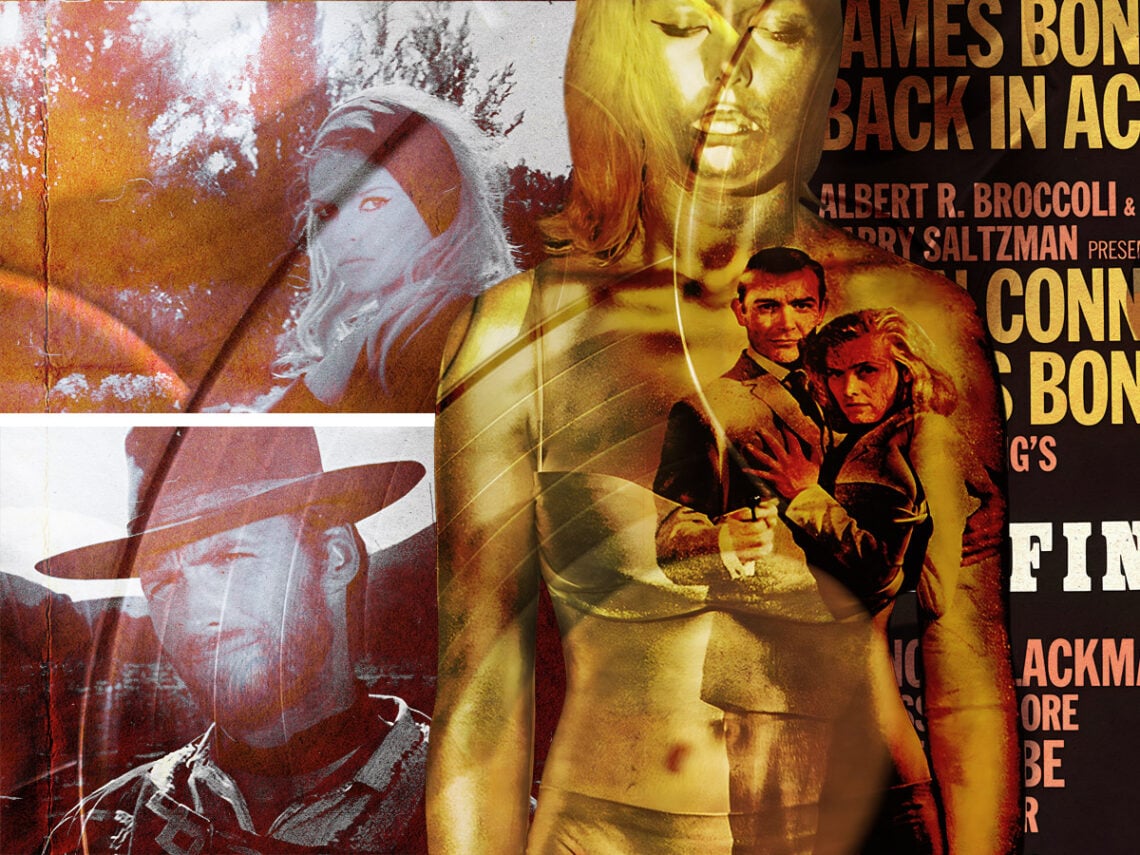
The 10 best movie soundtracks from the 1960s

The 1960s was a groundbreaking time for cinema. In Europe, movements such as the French New Wave were wildly popular, with directors like Jean-Luc Godard, Francois Truffaut and Agnes Varda rewriting the cinematic rules. Elsewhere, the James Bond series began, introducing the world to one of the most enduring movie characters in history.
Moreover, at the end of the decade, a wave of young American filmmakers was beginning to challenge the studio system, resulting in the New Hollywood movement that spawned directors such as Brian De Palma, Francis Ford Coppola and Arthur Penn.
It’s safe to say that the 1960s were a transformative period, with huge developments in the production of movies and special effects, as demonstrated by films such as Stanley Kubrick’s 2001: A Space Odyssey. With new and innovative movies cropping up across every area of the globe, a wealth of incredible soundtracks were there to accompany them, encapsulating this huge cinematic shift.
From Herbie Hancock’s Blow-Up score to the gentle folk tunes of Simon and Garfunkel that soundtracked The Graduate, here are ten of the greatest movie soundtracks of the 1960s.
10 best movie soundtracks of the 1960s:
10. 2001: A Space Odyssey (Stanley Kubrick, 1968)
Stanley Kubrick’s great masterpiece, 2001: A Space Odyssey, explored some weighty themes about the evolution of man and the dangers of rapid technological advancements. It was not a small-scale production by any means, with plenty of professionals on hand to make the depiction of space look as accurate as possible. Naturally, the epic project had to be accompanied by an equally impressive soundtrack.
The film used many classical pieces, such as ‘Blue Danube Waltz‘ by Johann Strauss II, ‘Atmosphères’ by György Ligeti and ‘Also Sprach Zarathustra‘ by Richard Strauss. The film’s opening sequence uses the latter piece, which has since become a cinematic staple, with Kubrick’s movie significantly aiding its popularity.
9. A Hard Day’s Night (Richard Lester, 1964)
At the height of Beatlemania, Richard Lester decided to immortalise the phenomenon on-screen with A Hard Day’s Night. The comedy follows The Beatles as they play fictionalised versions of themselves, preparing to perform on television. Throughout the film, they escape crazed fans, look after Paul’s grandfather, court women, party, and get themselves into bizarre situations.
The movie helped pioneer the concept of music videos and inspired many British comedies in the following years, thanks to its fast-paced editing and jumpcuts. However, the soundtrack, consisting of some of the band’s greatest early cuts, from ‘Can’t Buy Me Love’ to ‘She Loves You’ is one of the film’s highlights.
8. Blow-Up (Michelangelo Antonioni, 1966)
Michelangelo Antonioni’s Blow-Up perfectly encapsulated the Swinging Sixties through its depiction of free love, iconic fashion and London’s bustling music scene. The film follows David Hemmings’ character Thomas, a sleazy fashion photographer, as he seeks to uncover the mystery he accidentally captures on film. With appearances from a young Jane Birkin and a performance from The Yardbirds, Blow-Up is a fascinating time capsule.
The Palme d’Or winner is a cult classic for many reasons, and its score is just one of them. Composed by Herbie Hancock, the jazz soundtrack perfectly accompanies the events on screen, emulating both the hedonism, sexiness and thrills that make the film so enjoyable.
7. Camille 2000 (Radley Metzger, 1969)
The 1969 film Camille 2000 received terrible reviews upon its release. The Radley Metzger-directed film, a director primarily known for his erotic dramas, wasn’t exactly a masterpiece – it was more like artsy softcore porn. The film centres around Marguerite, who sleeps with countless wealthy men until she falls for Armand. We can’t help but wonder how such an extraordinary score – easily one of the best of the decade – was wasted on such a below-average movie.
Created by the prolific Italian composer Pierro Piccioni, who worked on many iconic films in the following decade, the score evokes sensuality and romance, but it also retains a playfulness akin to Blow-Up‘s score. Luscious strings are intertwined with jazz and rock-influenced moments, yet it feels like a completely cohesive record.
6. Goldfinger (Guy Hamilton, 1964)
It would be rude not to include a James Bond score on this list; after all, the iconic theme contains one of the greatest riffs in music history. Although the signature piece was first introduced in Dr No, the Goldfinger soundtrack is arguably better, partially because of its astounding eponymous title track, performed by Shirley Bassey.
The rest of the score, which incorporates the iconic Bond riffs alongside mysterious and sexy brass cuts, was created by John Barry. He once declared Goldfinger one of his favourite works, explaining on a DVD audio commentary that it was “the first time I had complete control, writing the score and the song.”
5. The Good, the Bad and the Ugly (Sergio Leone, 1966)
One of the most iconic scores in music history, embedded deep into popular culture, is Ennio Morricone’s The Good, the Bad and the Ugly. Sergio Leone’s iconic spaghetti western, starring Clint Eastwood, Lee Van Cleef, and Eli Wallach, is widely recognised as a landmark of the genre. The highly influential film is known for its stylised violence and distinctive uses of close-ups. However, above all, it’s recognised for its score, which is even familiar to those that have never seen the movie.
Morricone’s theme for The Good, the Bad and the Ugly is synonymous with the western genre, its melody an attempt to mirror the howl of a coyote. Moreover, the music that plays during the final sequence is almost as iconic, appropriately aiding the trio’s last battle.
4. The Graduate (Mike Nichols, 1967)
Over the years, many movies have attempted to communicate the overwhelming feeling of entering adulthood, no longer reliant on the school system to guide us. Yet few have captured this as Mike Nichols did in The Graduate. The movie stars Dustin Hoffman as a 21-year-old recent graduate, floating through life aimlessly. Then he meets Anne Bancroft’s older Mrs Robinson, embarking on a life-changing affair.
A collection of Simon and Garfunkel songs soundtracks Nichols’ iconic film, which bolstered the folk duo’s popularity. Some songs were written for the movie, with the track ‘Mrs Robinson’, lyrically amended to be included. The soundtrack also includes their popular songs ‘The Sound of Silence’ and ‘Scarborough Fair’, alongside a few instrumentals by Dave Grusin.
3. Le Mepris (Jean-Luc Godard, 1963)
Le Mepris, otherwise known as Contempt, was Jean-Luc Godard’s sixth feature film and remains one of his most critically revered. It features Brigitte Bardot as Camille, the wife of a playwright, Paul Javal (Michel Piccoli), who has been hired to work on a Fritz Lang film. Set in Italy, the film explores the crumbling relationship between Paul and Camille, which mirrored Godard’s failing marriage to Anna Karina at the time.
Hailed as one of the most outstanding achievements of the French New Wave, its memorable not only for its script, performances and stunning cinematography but also for Georges Delerue’s mesmerising score. It’s moody and intense, reflecting the drama on screen, yet it also has many romantic moments.
2. Psycho (Alfred Hitchcock, 1960)
The horror genre owes a lot to Alfred Hitchcock’s Psycho, which was released just after the censorial Hays Code was eased. Thus, it featured violent and sexual images that wouldn’t have previously been allowed, making it an incredibly shocking picture upon its debut. The suspense-laden film has inspired generations of filmmakers, helping to advance the slasher genre.
One of its most iconic scenes is the shower sequence. Alongside the scene’s innovative cinematography and anticipatory atmosphere, most people best remember the score created by Bernard Herrmann, with its stabbing chords becoming a prevalent leitmotif in cinema. According to Hitchcock, “33% of the effect of Psycho was due to the music. Psycho depended heavily on Herrmann’s music for its tension and sense of pervading doom.”
1. The Thomas Crown Affair (John McTiernan, 1968)
Starring Steve McQueen and Faye Dunaway, the heist thriller The Thomas Crown Affair received mixed reviews upon its release in 1968. The Norman Jewison-directed movie was criticised for being underdeveloped, although the brilliance of the actors’ performances was undeniable. Another excellent feature was the soundtrack, created by legendary French composer Michel Legrand.
The score contains the dreamy song ‘The Windmills of Your Mind’, sung by Noel Harrison, which won ‘Best Song’ at the Oscars. The rest of Legrand’s soundtrack, which was nominated for ‘Best Original Score’, moves between sultry jazz-inspired sounds, intense cuts with rapid drums such as ‘Polo’, and effortlessly idyllic slices of romance.
